Known by the Scars

I have a few scars. One is on my left hand, a reminder from when I was in a wreck back in the day. I pulled out in front of a full-sized truck, thinking it was a four-way stop. It was not.

Thankfully, I ended up being okay aside from a deep cut on my hand from the dashboard and being generally stiff and sore the next day from the impact. My scar is a reminder of how God saved me from my own foolishness that day.

I remember that Jesus also has scars. His resurrected and glorified body still had the nail piercings on His hands and feet, as well as the wound in His side. Those were the proofs that it was really and truly Jesus raised from the dead.

But also it’s a way of giving value to all those who have scars of their own. Some are more obvious than others. Some are hidden, but some are in places where we can’t hide them. Some of us are ashamed or embarrassed by our scars.

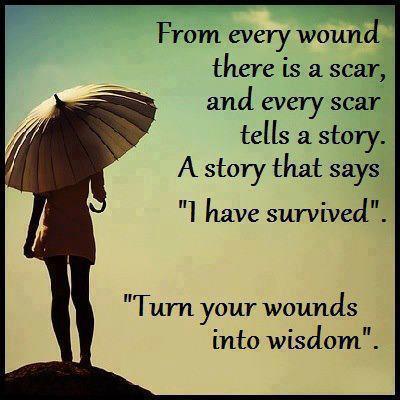
But scars tell a story where you survived. Scars are the reminder of something that could have killed you but didn’t. Scars are proof of a divine intervention. In a way, when you can wear your scars proudly, you identify with Jesus and His own scars.

Most of all, your scars should remind you that Jesus bore the wounds that gave Him the scars for you and for me. He was wounded for our transgressions, as it says in Isaiah 53. By His stripes, we are healed. He bore what we should have born because of our sins, and we get the rewards of a perfect life that should only belong to Jesus. That’s the great exchange. That’s the gospel.

Scars can be something to hide, like those humiliating moments or shameful parts of the past, or they can be part of your testimony. A pastor once said that true healing is evident when that part of your story that you swore you’d never tell anybody becomes the first line of your testimony.

“Do you know what St. Peter says to everyone who tries to get into heaven?” 

“Peter says, ‘Don’t you have any scars?’ And when most would respond proudly, ‘Well, no, no I don’t,’ Peter says, ‘Why not? Was there nothing worth fighting for?” (Matthew Perry, Friends, Lovers, and the Big Terrible Thing).
Stories from Scars

I have a scar on my left hand. It goes back to when I was 18 or 19 years old. I was driving down Poplar Avenue in Memphis, Tennessee to Cat’s Music to do some trading of music. At some point, I passed my destination. Later on, I came to a two-way flashing red light stop.

The problem was that I didn’t know it was a two-way stop. Even if I had known, I probably still wouldn’t have known what to do. The result was me pulling out in front of a full-sized truck and getting hit in the driver’s side door.

In case you’re wondering, I survived. I ended up with a rather garish wound on my left hand. At first, I could see clear to the bone. That’s when I realized that it hurt. A lot.

Thankfully, that was the extent of my injuries. Unfortunately, my car did not survive the encounter. But to this day, I carry the scar as a reminder of the foolishness of my youth and the ever-present and ever-protective grace of God.

Scars tell stories. They speak to wounds that have healed but left visible reminders. As much as the memorial stones set up by the people of God in olden times, scars are a kind of memorial to a time when you survived. They are a testimony to how God met you in the moment of your wounding and carried you through it.

Every time I see my scar, I see God’s goodness. Every time my hand cramps up when I’m writing, I think back to how close I came to not being here. I’m still thankful.

Scars can be shameful if you focus on the wound and the hurt, but they can be sacred if you choose to see how God turned that painful moment into something beautiful and good.

“Darkest water and deepest pain
I wouldn’t trade it for anything
‘Cause my brokenness brought me to you
And these wounds are a story you’ll use

So I’m thankful for the scars
‘Cause without them I wouldn’t know your heart
And I know they’ll always tell of who you are
So forever I am thankful for the scars” (Ethan Hulse, Jon McConnell, Matthew Armstrong, Matthew Hein).

Palm Sunday

“Almighty and everlasting God, who, of thy tender love towards mankind, has sent thy Son, our Savior Jesus Christ, to take upon him our flesh and to suffer death upon the cross, that all mankind should follow the example of his great humility: Mercifully grant that we may both follow the example of his patience, and also be made partakers of his resurrection, through the same Jesus Christ, our Lord. Amen” (from the 1662 Book of Common Prayer).

Today is Palm Sunday, a week out from Easter Sunday. This is traditionally the day that Jesus rode into Jerusalem on a donkey to shouts of “Hosanna!” and “Blessed is He who comes in the name of the Lord.”

The crowd was cheering and laying down palm branches before His path. Apparently, in that day palm trees symbolized victory and triumph. Maybe the crowd was anticipating an imminent overthrow of Roman rule. Maybe they were expecting Jesus to start acting the part of an earthly king.

Were those people the same ones who later shouted for Barrabus to be released and for this Jesus to be crucified? I’ve heard a lot of sermons that hinged on the same people at one moment praising Jesus and at the next condemning Him. But I’ve also heard that it wasn’t necessarily the same people.

Regardless, Jesus looked beyond the praise to the pain. He focused beyond the crowds on the cross and all the torture He would shortly endure. His mission wasn’t to get the approval of the crowds in that moment but to set His face toward Jerusalem and Golgotha. His purpose was to lay down His life for the flock.

I heard in a sermon today that to appreciate the joy of Easter Sunday, you need to walk through Maundy Thursday and Good Friday. Take in all the mocking. Being abandoned by His disciples. The beatings. The whip that tore strips of flesh of His back. The carrying of the cross up the hill to Golgatha. All those hours in agony up on that cross. Giving up His spirit and dying.

It’s important to remember that sin isn’t something that God ever takes lightly or brushes off. The Father doesn’t wink at our transgressions and ignore all the wrong we’ve done. Sin always has a cost, and that cost is always death. In the Old Testament, the price was the sacrifice of an animal that pointed forward to the ultimate sacrifice to come. In the New Testament, that ultimate sacrifice is Jesus willingly laying down His life for us.

Take time in the next week to reflect on the fact that Jesus bore the whip and the nails for you and me. He chose the wounds and scars that we might be healed. He died that we might live. And then you can celebrate Easter Sunday a week from today with joy.

Known by the Scars

I had one of those wow moments when I was flipping channels recently. I came across a discussion group involving Ann Voskamp, Sheila Walsh, and a few others. One of them said that so many of us base our identity on the wounds that others have inflicted on us rather than on the wounds that Jesus bore for us. That was a WOW moment that left me Without Words.

I think it’s telling that in one miracle, Jesus asks a paralytic if he wants to be well. You would think it would be a Captain Obvious question with the inevitable answer of YES, but then so many of us have built so much of our identities around our pain and our hurt that we wouldn’t have anything left if our affliction were suddenly taken away.

A better way is to be identified with the Suffering Servant who was wounded for our transgressions, who bore scars on His hands, feet and side from taking the punishment that we deserved on Himself. This is the Jesus who still bears those scars even in Heaven.

All of us will be called at some point to suffer for the cause of Christ. Some will suffer physically. Some even to the point of death. One of the greatest honors I can think of is to bear wounds and scars from following Jesus faithfully through opposition, trials, suffering, and pain. Maybe too some of us will bear scars in heaven.

I do know for sure that Jesus was willing to lay down His life for each and every one of us. Your and my identity rests in the fact that God so loved us that He gave His only Son, Jesus, so that we should not be lost but have real, abundant, and eternal life in and with God. We are no longer strangers and aliens, outcasts with no hope or future but children of God, the Bride of Christ, and beloved.

Safe Places

“…maybe on the days we want out of our lives — it isn’t so much that we want to die from shame, but *hide* from shame. But let’s remember: shame gets unspeakable power only if it’s unspeakable. Shame dies when stories are told in safe places.
You know what? Your scars are proof that you’re a kind of bulletproof — because living through the hardest battles proves you can live through any battle. You can trace those scars and let it feed your courage and feel no shame for the wars you’ve come through, no shame for any of your broken.
And tonight we’re just going to take heart — take His heart
and pour a brave and willing love like His
over all the open wounds…
that we may even now
take hope” (Ann Voskamp, The Broken Way). 
#TheBrokenWay #StrengethingPrayers

Normally, I like to share my own thoughts, but this one practically begged me to share it. I’m positive that someone out there needs this tonight, someone who’s battled shame for a long time and needs to know that there’s hope and freedom just around the corner in one of those safe places.

You’ll never know the freedom over the power of shame until you can find your brave and share your stories– even the hardest and most shameful ones. As my pastor said, healing takes place when the worst moment of your life that you never thought you’d ever share with another living soul becomes the first line of your testimony of God’s deliverance.

My prayer is that you’ll find someone and somewhere safe to tell your shameful secrets so that they no longer hold you captive. Then perhaps your story will encourage someone else to tell his or her story. Someone will her their own story in your words and find their own healing.


Gracefully Broken

“Here I am, God
Arms wide open
Pouring out my life
Gracefully broken” (Matt Redman).

The prayer from tonight’s Kairos went something like this: Lord, into your hands I commit my brokenness.

That’s a good prayer for those of us who know that we are broken. After all, all of us are broken, but it’s more apparent in some. Not all of us are quite ready to admit it.

Some hide it and pretend it isn’t there.

Some make light of it and pretend that it doesn’t matter.

Some will act as if there’s nothing wrong with it the way it is.

The best way is to acknowledge it and give the pieces to Jesus.

There’s a kind of Japanese pottery called Kintsugi that takes broken vessels and mends them, using lacquer dusted or mixed with powdered gold. That way the cracks and imperfections aren’t hidden, but rather enhanced.

Rather than seeing beauty as flawless perfection, they see it as something that emerges out of a long history of suffering and survival.

Scars are what happens when the wounds of our broken places heal. Again, some will try to hide their scars and pretend they don’t exist.

My favorite writer, the one these blog posts are named after, one said, “On the last day, Jesus will look us over not for medals, diplomas, or honors, but for scars” (Brennan Manning).

Jesus chose to keep His scars in His resurrected body. He ascended into heaven with them. That says something about the honor and beauty of scars.

One quote from Kairos that stood out to me also came from an unlikely (at least to me) source, Ernest Hemingway. He said, “The world breaks every one and afterward many are strong at the broken places.”

I like that.

Brokenness and scars not only can become beautiful, but in the nail-scarred hands of Jesus, they are beautiful.

PS Much of the credit for this blog post goes to Chris Brooks, Kairos pastor, and to the good folks at Google for providing the information on Kintsugi that I “borrowed.” It’s a good thing this isn’t a term paper, or I’d be in serious trouble.


The Beauty of Scars

quote-on-the-last-day-jesus-will-look-us-over-not-for-medals-diplomas-or-honors-but-for-scars-brennan-manning-71-55-68

I saw a girl who had scars on her face today outside of Starbucks. What struck me most weren’t the scars themselves but how beautiful she was, not in spite of her scars but because of them. I wonder if she’s ashamed of her scars as most people are or if she sees them in a different way.

Most of us have a scar or two. I have one on my left hand from an automobile accident from several years ago. Some of the most painful scars are the ones no one can see, the ones we bear inside our bodies rather than outside.

Still, from the right perspective, scars are beautiful. Every scar tells a story and reveals a history of God’s ability to rescue and heal. Scars mean that you are still here, that you endured whatever ordeal and came out stronger on the other side. Scars mean that you survived.

Jesus Himself still bears His scars from Calvary. The wounds in His wrists and side are still there, reminding us that scars are not shameful wounds to be kept hidden but tattoo of overcoming.

No one gets through this life unscathed. Well, perhaps if you hide under your bed and play it safe for 80 years you might make it without scars. If you hide your heart away in a lock box and never let it out, you can avoid having it get broken (but you also avoid feeling anything deeply).

Perhaps I should rephrase. No one who really lives goes through life unscathed and unscarred. It’s impossible. People and circumstances will wound you, sometimes deeply, but there is no wound that God cannot heal and no circumstance God cannot work for your good and His glory.

Trust me. Scars are good. Wear them proudly to remind yourself and others that scars mean that you’re still here and not going anywhere anytime soon.

quotefancy-319543-3840x2160


Here’s the Deal

So I found out today that the cost to repair the transmission on my Jeep is $2700. I almost needed the smelling salts as I typed that sentence. I’ll be sans car for up to four weeks. Pass those smelling salts, please.

That’s a lot of money. All for some itty bitty parts that decided on their own without consulting me or anyone else to stop working. All for some unseen mechanical gears that I didn’t even know existed until they decided to break down. Rude.

A lot of life is like that. Things break, people die, situations change. What seemed like a sure thing vanishes like the morning mist and what you thought would last forever ends abruptly without any warning.

It’s easy to let those things make you cynical, believing that only the very worst scenarios will play out and that nothing good can ever happen and that people are only out to get you.

Or it drives you deeper into all the Mystery that is the Abba Father.

As big as my car bill is, God is bigger.

As big as the void that is left by the passing of a loved one is, God is bigger.

As big as the hurt caused by the rejection of a friend or a family member, God is bigger.

As big as the accumulation of scars and wounds from a broken relationship are, God is bigger.

God is bigger than anything you will face today or tomorrow or the next day or any day after that.

God is bigger than any problem that you will ever face.

God is bigger than your fears and your doubts and even your unbelief.

Whatever circumstances, God will prove that He is enough. Everything you could possibly desire or want or hold in your hands without God is less than holding onto nothing but God.

That’s a lesson that all of us learn eventually, whether that means losing everything in a literal sense or in coming to the end of your own schemes and plans.

God is enough. God will be enough.

That is enough.


Show Your Scars

image

I had a random thought today. After all, randomness is one of my spiritual gifts, along with the ability to always come up with a movie or song quote to go with any situation. More on that later.

Anyway, I had this insight. I won’t claim that God spoke a word to me, but I think this is what He would say to all of us tonight: Not all scars are on the outside. Not all wounds are visible. Sometimes a smiling face hides tremendous pain.

Have you ever heard someone share her story and think, “I never in a million years would have ever guessed she’d been through all that.” Or maybe when someone gives his testimony and you think, “Maybe I need to rethink how I feel about this person. I’d have done way worse than this guy given his circumstances.”

All of us have scars, but not all those are visible. Some have learned to camouflage their scars better than others, but the wounds are just as real.

Why am I saying this? I’m telling you to share your scars. Maybe when you tell your unvarnished, unedited story with the ugly parts left in, someone else will find the courage to tell his or her story. And those who hear will realize that theirs are not the only scars in the room. Maybe some will find some healing in the process.

Jesus has scars. In fact, He’s known for His scars in His hands, feet, and side. Even in His glorified body, Jesus has those scars. The best part is how He got them. He got them so that ours would have new meaning and that our past could be redeemed and our future forever changed. He got them in pursuit of you and me in order to bring us back to God.

Show your scars.

image

More Beautiful Words

image

“Some of us tend to do away with things that are slightly damaged. Instead of repairing them we say: “Well, I don’t have time to fix it, I might as well throw it in the garbage can and buy a new one.” Often we also treat people this way. We say: “Well, he has a problem with drinking; well, she is quite depressed; well, they have mismanaged their business…we’d better not take the risk of working with them.” When we dismiss people out of hand because of their apparent woundedness, we stunt their lives by ignoring their gifts, which are often buried in their wounds.

We all are bruised reeds, whether our bruises are visible or not. The compassionate life is the life in which we believe that strength is hidden in weakness and that true community is a fellowship of the weak” (Henri Nouwen).

I’ve done that before– dismissing people because of their apparent woundedness. I’ve also had it done to me a few times.

I can say with all sincerity that these words are true. You and I may have every right to dismiss these people, but we do lose something– those untapped gifts lying hidden in those very wounds.

Maybe next time I can see those people and their wounds with a different set of eyes next time– eyes of grace. Maybe next time I can remember Who saw my wounds and sought me out anyway. I can remember that He gained His own scars for the healing of mine.

Just a thought.