Glorifying God

“The entire human race was created to glorify God and to enjoy Him forever. Sin has diverted the human race onto another course, but it has not altered God’s purpose to the slightest degree. And when we are born again we are brought into the realization of God’s great purpose for the human race, namely, that He created us for himself. This realization of our election by God is the most joyful on earth, and we must learn to rely on this tremendous creative purpose of God” (Oswald Chambers, My Utmost for His Highest).

I love in the Westminster Confession where it says that the chief end of man is to glorify God and to enjoy Him forever. John Piper twisted it a bit to glorifying God by enjoying Him forever. He also says that missions exists because in a lot of places worship doesn’t, and worship is the highest function of the Church.

I know that sin messed up a lot of things. Sin made everything a lot harder, although I can’t speak from experience what life was like before the fall. I also know that sin absolutely cannot thwart the plans of God, because we know that God can work all things — even sin — together for good.

It’s helpful to remember that God is control when sin and evil seem to have the upper hand. If you doom scroll enough or watch enough of the news channels, you can end up feeling hopeless. It’s easy to forget in the midst of incessant gloom and doom that the Lord is still on His throne and the end has already been settled. Jesus wins!

That’s the theme of my church’s sermon series on Revelation, and it couldn’t come at a more opportune time. Jesus wins! As I’ve quoted Billy Graham before, “I’ve read the last page of the Bible, it’s all going to turn out all right.”

Well, amen to that!
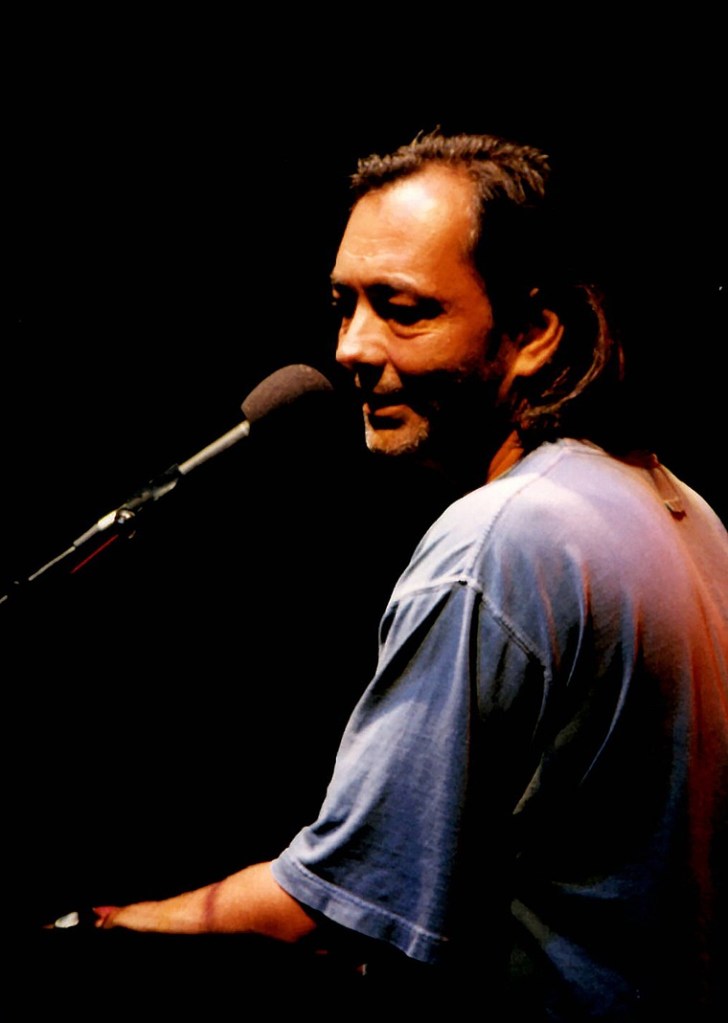
Remembering a Liturgy, a Legacy, and a Ragamuffin Band

I still remember my one and only Rich Mullins concert experience. It must have been around 1995 or so and I think the venue was First Evangelical Church in Memphis. In some ways, that feels like a lifetime ago, but it also seems like yesterday in some ways.

I think Rich Mullins played the concert in bare feet. He was the most unassuming Christian artist I’ve ever known and was the polar opposite of a diva in every possible way. I have a picture in my mind of Rich Mullins just in front of me, getting a drink out of the water fountain during the intermission instead of having premier bottled water backstage. I was too starstruck to say anything but stood there, looking dumbfounded as he drank out of the fountain.

I’ll never forget how beautifully he played the hammered dulcimer and all those amazing songs of his. The very last song he played was the worshipful I See You, and as he walked off stage the audience was still singing “Everywhere I go I see You, everywhere I go I see You.”

I remember about learning how he had tragically died and how it felt like a gut punch. He was only 41. And his death seemed like such a tragic waste from not wearing a seat belt in a car accident. It seemed like he had so many songs left unsung and music left to write.

Yesterday marked 29 years since his passing on September 19, 1997, yet so many churches are still singing his songs, especially “Awesome God” and “Sometimes by Step.” His musical legacy will continue to live on as new generations discover the power of his music.

I’m thankful that out of all the history in the world, I got to live in the time when Rich Mullins was alive. I got to experience his music when it was new and hear it on the radio when it was being played for the first time. For that I am eternally thankful.

Thank you, Rich, for your musical legacy that you left behind. Thank you for your artistic integrity and your honest lyrics that spoke my feelings and fears better than I ever could. You’ll never know how much of a difference for the Kingdom of God you made, especially in me.

Wanted: Prophetic Voices

Thanks to Audible, I’m revisiting No Compromise, the biography of the late Keith Green written by his wife Melody Green. From the beginning, it’s clear that Keith saw the world very much in a black and white kind of way. That means for him there were no grey areas. He could be a bit harsh at times, but he was always zealous for the truth.

It occurred to me that we could use a few prophetic voices like his in this day and age. We need those who will stand up to the culture and proclaim thus says the Lord, no matter the cost. We could definitely use some prophetic voices in Christian music who will guide us back to a biblical view of sacrifice and holiness.

I find it interesting that he had an idea that he wouldn’t live a long time. Toward the end, he mentioned how he was ready to meet Jesus face to face. Little did he know that his wish would come true sooner than anybody realized when he was killed in a plane crash on July 28, 1982 at the age of 28. He accomplished more in that short amount of time than many who live into their 80s and 90s because he made himself available for God to use.

Usually, those who speak prophetically aren’t very popular. Look at practically all the prophets in the Bible, many of whom were despised and rejected by the majority of those they tried to reach for God. It was not a calling that any of them chose willingly.

Lord, raise up those who will speak with a prophet’s voice to this generation. We are no better than those to whom you sent your prophets in days of old with a message of return and repentance. Help us always to be faithful and obedient to You in the midst of a crooked and perverse generation, no matter the cost. Amen.

Are You Saved?

I remember back in my Union days there was a popular evangelist who went around saying that if you couldn’t pinpoint the day and time that you trusted in Jesus, then you weren’t saved. He got a lot of people to come forward at the altar call, but I suspect many of them were repeat customers. Many of them were already saved but possibly insecure about their salvation or maybe less than discerning. That goes to show that numbers don’t always mean everything.

I mention that because I read something by the late Dr. Adrian Rogers about how to know you’re saved. It’s not about what you believed back then or what you prayed as a child, but what you believe now and who you’re trusting in now. I have a hunch that a lot of people in church pews are trusting in a prayer they prayed 40 years ago instead of a living Savior who is their Lord right now. Here’s what he said:

“I’ve heard it said that if you cannot name the time and the place you were saved, you’re not saved. Have you ever heard that? There’s just one thing wrong with that—it’s not in the Bible. The Bible never tells you to look back to past experiences for proof of your salvation. It does not say, ‘He who believed has eternal life.’ It says, ‘He who believes.’

It doesn’t matter what you’ve done in the past. If you’re not believing on Jesus today, you’re not saved. And if you are believing on Jesus today, you did believe on Jesus in the past. It’s impossible to presently believe on Him without having believed on Him in the past. Indeed, there was a time. Indeed, there was a place. But, if you’re not believing on Jesus now, whatever you call the past time and the place, there’s something wrong with it. The big question is: are you believing Jesus now? If you have the time and the place, wonderful. But if you don’t, that doesn’t mean you’re not saved. If you’re trusting Jesus right now, you are saved.”

I couldn’t remember my own salvation experience for a long time. I still can’t recall what year or what day. But I know that I’m saved because I know that Jesus never loses anyone who comes to Him in faith. My security isn’t about how big and strong my faith is but about how big and strong the God I believe in is.

Back to Revelation

All nine campuses of Brentwood Baptist Church recently started a sermon series on the book of Revelation. That’s a book of the Bible that gets a bad rap sometimes because so many of us grew up hearing about how it was all about the United States and the Soviet Union and World War III. There were helicopters and nuclear bombs and microchip implants, even though the book was written nearly 2000 years ago to a group of believers who were centuries away from that kind of technology.

Yes, there is a lot of symbolism and strange imagery in the book of Revelation, but mostly it’s about Jesus. I heard it described as a book of worship centered around the reign and rule of Jesus. Basically, if you wanted to summarize Revelation, it would be Jesus wins and everything’s going to be okay in the end.

It helps to remember that the book was written to a group of churches in the first century who were undergoing horrific persecution under Roman emperors. The believers needed a lifeline because the odds were good that many of them would lose their lives for confessing Jesus rather than Caesar as Lord.

There’s also been some problematic teaching about this book. I remember when Revelation was used as a kind of scare tactic to make sure people were ready to meet Jesus. As a result, many grew up fearing the return of Jesus instead of welcoming it and more have avoided the book of Revelation like the plague (pun intended) ever since.

But if a cliff notes version of Revelation existed, it basically would state that Jesus is in control. Though right now, chaos seems to be in charge, the reality is that Christ is ruling even now and one day we will see a new heaven and earth and all of creation restored.

I read a book once about Revelation called Unveiled Hope. I think that pretty much sums up the theme of the book quite nicely. And as Billy Graham once said, I’ve read the last page of the Bible, and everything’s going to be alright in the end.

Follow Me

“When Jesus Christ says ‘Follow Me,’ He never says to where; the consequences must be left entirely to Him. We come in with our ‘buts,’ and ‘supposings,’ and ‘what will happen if I do?’ (cf. Luke 9:5762). We have nothing to do with what will happen if we obey; we have to abandon to God’s call in unconditional surrender and smilingly wash our hands of the consequences” –Oswald Chambers, Not Knowing Whither).

That’s just it. I want guarantees that if I follow, I’ll get the desires of my own heart. It’s true that God did promise that, but maybe not in the way that I’ve always believed or wanted it to be. I think that as I follow in obedience, God changes my wanter (to borrow a phrase from my pastor). In other words, the desires of my heart as a mature believer probably aren’t the same as they were when I first said Yes to Jesus way back when.

I don’t get to set the terms. I don’t get to tell Jesus what the conditions will be before I follow. The famous verse from Paul says that I am not my own. I have been bought with a price. And who am I to haggle percentages and conditions when Jesus paid for me with His very blood on that cross. As in He paid all of His blood, not most or some, but all.

I’m not leaving it completely to blind chance. I know in whom I have believed. I trust the One I have committed to follow. I know His plans are for good and not harm, for prospering and not for evil. I know that I can read a whole history of saints who have surrendered to Christ and not one has ever been worse for it. Not one.

It all goes back to my own stubbornness and pride to think that I know better than God how my life should go. In fact, I’d go so far as to call it arrogance to think that if God doesn’t give me what I want when I want it, He must not know what He’s doing. I’ve learned enough to know that He gives me what I would have asked for had I known what He knows.

And that’s enough for me.

We Remember 25 Years Later

I can still remember where I was 25 years ago on 9/11/2001. That was the day that everything changed. I recall walking into the church office where I worked at the time and hearing about a plane that had flown into a building. It was so random and no one knew anything yet about who did it or why.

When the second plane hit, I think that’s when just about everyone figured it out. This wasn’t random. This was orchestrated. I spend the rest of the day in shock, feeling numb and disconnected and unable to process the scope of the tragedy that had just unfolded.

Those next few days were horrific as the rescuers combed through the wreckage looking for survivors but finding mostly bodies and debris. I can’t imagine being on the ground seeing what those people were seeing, especially when you consider how many were jumping from the towers because of the intense heat and flames.

Those days were also beautiful. We came together as a nation for the briefest of moments. For one shining moment, we weren’t white or black, male or female, young or old. We were all Americans. There was a spirit of cooperation and compassion that pervaded our way of life. Churches were full the next Sunday as people were seeking answers,

I can’t believe it’s been 25 years. It blows my mind that a significant portion of the population wasn’t even alive in 2001. So many know about the events only from reading about them in textbooks or seeing videos on social media. It’s easy for the next generation to forget and for all the lessons we learned to be forgotten.

That’s why it’s vital that we remember. It’s important that we pass on what we saw and what we learned. Life is precious and fleeting, and only a life that honors God is worth living. So many of those we lost were God-fearing men and women. We may never fully understand the why until heaven, but we can know that God took what was evil and made it into something good.

We can love each other well, never take those people in our lives for granted, and use every opportunity to tell people what’s most important to us — that Jesus still loves and saves sinners like us. We can keep the memories of those lost on 9/11 alive as we continue to remember.

Praying for Your Enemies

“In prayer we go to our enemies, to stand at their side. We are with them, near them, for them before God. Jesus does not promise us that the enemy we love, we bless, to whom we do good, will not abuse and persecute us. They will do so. But even in doing so, they cannot harm and conquer us if we take this last step to them in intercessory prayer. Now we are taking up their neediness and poverty, their being guilty and lost, and interceding for them before God. We are doing for them in vicarious representative action what they cannot do for themselves. Every insult from our enemy will only bind us closer to God and to our enemy. Every persecution can only serve to bring the enemy closer to reconciliation with God, to make love more unconquerable.

How does love become unconquerable? By never asking what the enemy is doing to it, and only asking what Jesus has done. Loving one’s enemies leads disciples to the way of the cross and into communion with the crucified one” (Dietrich Bonhoeffer).

Dietrich knew a thing or two about enemies. He stood up to the Nazis and Adolf Hitler and spend the last few years of his life in prison, dying by execution literally days before the Allies liberated the camp. He felt it was his moral duty to speak out against the evils the government was doing, especially in regard to the millions of Jews who were killed.

Jesus also knows a thing or two about enemies. The religious leaders plotted to kill Him, arrested Him under false charges, put on a mock trial, and then had Him executed as a common criminal in the most tortuous and painful form of death ever devised by humanity. He even prayed forgiveness for those very people while they were in the act of murdering Him.

We are called to love our enemies. We are called to pray for them like we would want others to pray for us. Ultimately, the hope is that they can find forgiveness and redemption through Christ and become family instead of enemies.

If you say that’s unfair, remember that’s what God did for you. While you were still enemies and sinners, God in Jesus died for you. While you were living in complete rebellion against the Almighty, He sent His only Son for you.

Even if your enemies never change, forgiving and loving them frees you from the captivity of toxic bitterness and hatred. They no longer occupy your every waking thought. Plus, forgiveness shows more than anything what God’s love looks like. That’s the best reason of all.

Sneaking Up

As usual, Labor Day weekend snuck up on me. I never remember that it’s an actual holiday until the Friday before. The same goes for Memorial Day. Not in anyway to diminish either of these holidays, but I can be a little thick sometimes.

I am thankful for Labor Day (or should it really be called Labor-Free Day?) and for the extra day off. Even if it’s 145 degrees outside in the shade. And no, I’m not counting down the days until fall starts (15).

Today, the sermon at church was on Luke 10:1-2 where Jesus says that the fields are ready for harvest but the laborers are few. According to multiple studies, 20% of church people do 80% of the work. Most people are content to occupy a space on the pew or the chair and spectate rather than participate.

But God created all of us with unique gifts and passions that bless those within and without the walls of a church gathering. Plus, there’s joy in finding your place of serving and ministry in God’s kingdom. Not all of us are called to preach from a pulpit or lead worship, but we can all worship in our own way, no matter how small it seems to us or to others.

I love my church. I love that I get to sleep in tomorrow, even though it’s a Monday. I love that every day God wakes me up is a gift and I find that I take it for granted less and less as I get older. Too many people I know who are my age or younger have passed away for me ever to think that I’m guaranteed 80 years in this world.

So happy Labor Day! May you enjoy a restful day — and if you’re one of those who don’t get a day off, may you find joy in your labors, knowing that you’re not really working for a human boss or a human organization ultimately, but for God and God alone.

An Excerpt from The Magician’s Nephew

If you want a good read (and you’re okay with reading children’s books), then I suggest The Chronicles of Narnia. It’s best to start with The Magician’s Nephew, a story which tells of the origins of Narnia. I’ve included an excerpt to give you an idea. Also, good books are good books, no matter who the intended target audience is. I’ve learned that much in my life so far:

“Well,” said Aslan, “can you use a spade and a plough and raise food out of the earth?”

“Yes, sir, I could do a bit of that sort of work: being brought up to it, like.”

“Can you rule these creatures kindly and fairly, remembering that they are not slaves like the dumb beasts of the world you were born in, but Talking Beasts and free subjects?”

“I see that, sir,” replied the Cabby. “I’d try to do the square thing by them all.”

“And would you bring up your children and grandchildren to do the same?”

“It’d be up to me to try, sir. I’d do my best: wouldn’t we, Nellie?”

“And you wouldn’t have favorites either among your own children or among the other creatures, or let any hold another under or use it hardly?”

“I never could abide such goings on, sir, and that’s the truth. I’d give ’em what for if I caught ’em at it,” said the Cabby. (All through this conversation his voice was growing slower and richer. More like the country voice he must have had as a boy and less like the sharp, quick voice of a cockney.)

“And if enemies came against the land (for enemies will arise) and there was war, would you be the first in the charge and the last in the retreat?”

“Well, sir,” said the Cabby very slowly, “a chap don’t exactly know till he’s been tried. I dare say I might turn out ever such a soft ’un. Never did no fighting except with my fists. I’d try—that is, I ’ope I’d try—to do my bit.”

“Then,” said Aslan, “you will have done all that a King should do.”

C. S. Lewis, The Magician’s Nephew