One of My First Bibles

  
This will be a short post, because it’s late and I’m officially pooped.

I helped out with looking after the kids of women who were taking a class through Christian Women’s Job Corp tonight. Basically, I’m the one who showed up late with lots of pizza. I suddenly became extremely popular when I walked through the door with those eight boxes full of Little Caeser’s pepperoni and cheese pizza.

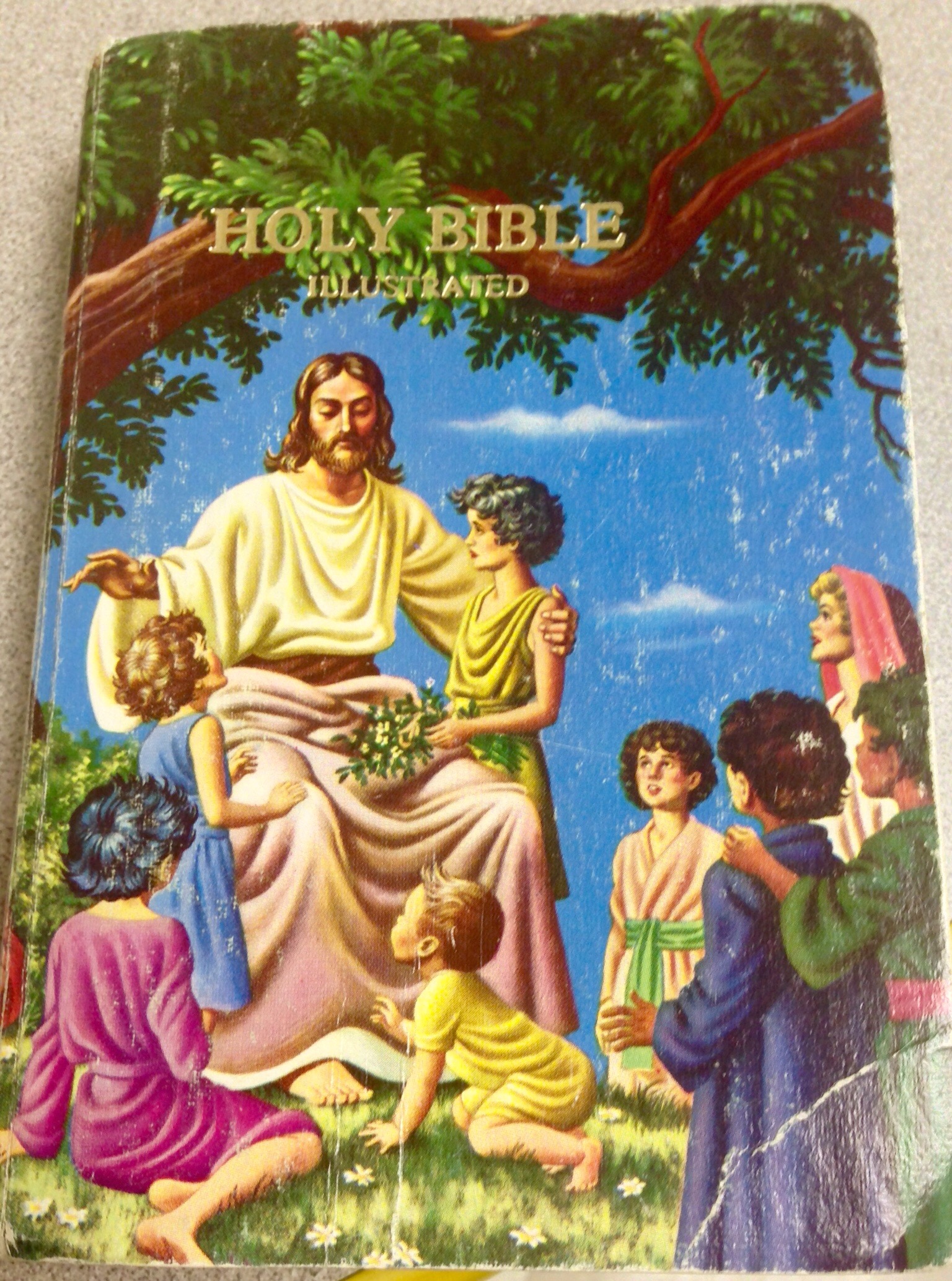
While I was there, I found an old Bible that reminded me of one I used to have when I was a wee little tyke, except mine had a very handy zipper. I remember that in my very first Bible the pastor wrote, “This book will keep you from sin, or sin will keep you from this book.”

I’m pretty sure mine was an old-school KJV. I’m also fairly certain most of the 16th century English went right over my head.

Now they have the Jesus Storybook Bible and yes, I’m a bit jealous. That seems so much more accessible for a kid to understand. Sure, when they get older, you want them to have a full-blown, 66-book Bible, but this seems like a great way to get children into the metanarrative of the Bible story.

By the way, I’ve already decided that I will be reading through the Bible in 2016 in the Holman Christian Standard Bible (the 2004 version, not the most recently updated version).


Quotes I Love Part One

I think this says it all.

“WE CAN SAY THAT the story of the Resurrection means simply that the teachings of Jesus are immortal like the plays of Shakespeare or the music of Beethoven and that their wisdom and truth will live on forever. Or we can say that the Resurrection means that the spirit of Jesus is undying, that he himself lives on among us, the way that Socrates does, for instance, in the good that he left behind him, in the lives of all who follow his great example. Or we can say that the language in which the Gospels describe the Resurrection of Jesus is the language of poetry and that, as such, it is not to be taken literally but as pointing to a truth more profound than the literal.

Very often, I think, this is the way that the Bible is written, and I would point to some of the stories about the birth of Jesus, for instance, as examples; but in the case of the Resurrection, this simply does not apply because there really is no story about the Resurrection in the New Testament. Except in the most fragmentary way, it is not described at all. There is no poetry about it. Instead, it is simply proclaimed as a fact. Christ is risen! In fact, the very existence of the New Testament itself proclaims it. Unless something very real indeed took place on that strange, confused morning, there would be no New Testament, no Church, no Christianity.

Yet we try to reduce it to poetry anyway: the coming of spring with the return of life to the dead earth, the rebirth of hope in the despairing soul. We try to suggest that these are the miracles that the Resurrection is all about, but they are not. In their way they are all miracles, but they are not this miracle, this central one to which the whole Christian faith points.

Unlike the chief priests and the Pharisees, who tried with soldiers and a great stone to make themselves as secure as they could against the terrible possibility of Christ’s really rising again from the dead, we are considerably more subtle. We tend in our age to say, ‘Of course, it was bound to happen. Nothing could stop it.’ But when we are pressed to say what it was that actually did happen, what we are apt to come out with is something pretty meager: this ‘miracle’ of truth that never dies, the ‘miracle’ of a life so beautiful that two thousand years have left the memory of it undimmed, the ‘miracle’ of doubt turning into faith, fear into hope. If I believed that this or something like this was all that the Resurrection meant, then I would turn in my certificate of ordination and take up some other profession. Or at least I hope that I would have the courage to” (Frederick Buechner).

-Originally published in The Alphabet of Grace
Something New I Learned About Passover

Even at my ripe old age, I can still learn a thing or two.

As Jesus and His disciples prepared for Passover in the final week of His life, Jesus must have realized the symbolism of the meal was about to be realized. The bread was His body broken and the wine was His blood shed.

During the Passover meal, the bread is broken and the larger piece of it is hidden away in a linen cloth until the very end of the meal. And as you and I know, Jesus fulfilled the symbolism of the breaking of the bread by His death on the cross, from which He was taken, wrapped in a linen cloth, and “hidden” in a tomb for three days.

It’s amazing how knowing the cultural and historical background to the Bible so often immensely enriches the meaning of the Bible itself. I don’t claim to know even half of what the original hearers and readers of the New Testament would have understood when they read the words of writers like Paul and Mark and Luke and John.

I’m thankful that you don’t have to be a scholar with a Ph.D to read the Bible. Thanks to the doctrine of revelation, anyone can read God’s Word and understand the gist of what God is telling His people through His Holy Scriptures.

I’ve read through the Bible more than once. In fact, I’ve read through several different translations over the past few years. I don’t say that to brag, but to say that even now I will see something in the pages of the Bible that I hadn’t seen before. A passage that I had previously not paid much attention to will hit me in a new way that makes me pause.

That’s what it means when they say the Bible is living and active. It still speaks, no matter how many times or in how many different ways you read it and study it and memorize it and learn it. Even if you’re a slow learner like me.


Two Words

“Blessed be Your name
On the road marked with suffering
Though there’s pain in the offering
Blessed be Your name” (Matt Redman)

Two words: give thanks.

Give thanks even when you don’t feel like it. Give thanks as a defiant cry against desperate circumstances, in spite of the odds and the naysayers and the dark clouds on your horizon.

Give thanks like empty-handed Job, who in the face of his own wife telling him to curse God and die, with painful boils all over his body, made the declaration: The Lord gives and the Lord takes away; blessed be the name of the Lord.

Give thanks when the checks bounce, when the bills are past due, when the rent money is AWOL, when it would be so much easier to throw in the proverbial towel and just give up.

Give thanks when there are no job prospects in sight and when you feel defeated and your life seems to have hit a dead-end. Give thanks even when your dreams and hopes are on life-support.

Give thanks if for no other reason that God is worthy of it. Period. Even if those fig trees are barren and the grapevines have no grapes and the olive trees yield no olives. Give thanks because God is always good and you are always loved.

Just give thanks.

My 2015 Resolutions As of January 1, 2015

Note: these are still a work in progress, so they are subject to change. Most likely, I will think of something I left out and add it at a later date, hopefully before 2016.

Here are my resolutions for the new year (already in progress):

1) Lose 30 pounds. I figure that’s roughly 2.5 pounds per month. That’s doable, I think.

2) Read through the Bible again this year.

3) Wear my 30 X 30 jeans again (this won’t happen unless I accomplish goal #1)

4) Be working in a full-time permanent job by the end of the year.

5) Be better at giving other people the benefit of the doubt and giving grace both to others and to myself.

6) Do something spontaneous every day of 2015.

7) Do 5 things I’ve never done before (I’ll have to figure out what those are first).

8) Continue to be awesome.

9) Get back into jogging/running/fast walking/treadmilling/some other form of regular exercise.

I think that covers it for now. If I think of anything else, I’ll add it and note that I added it so I will remember that I added it. Comprende?


Lessons from Van Gogh

image

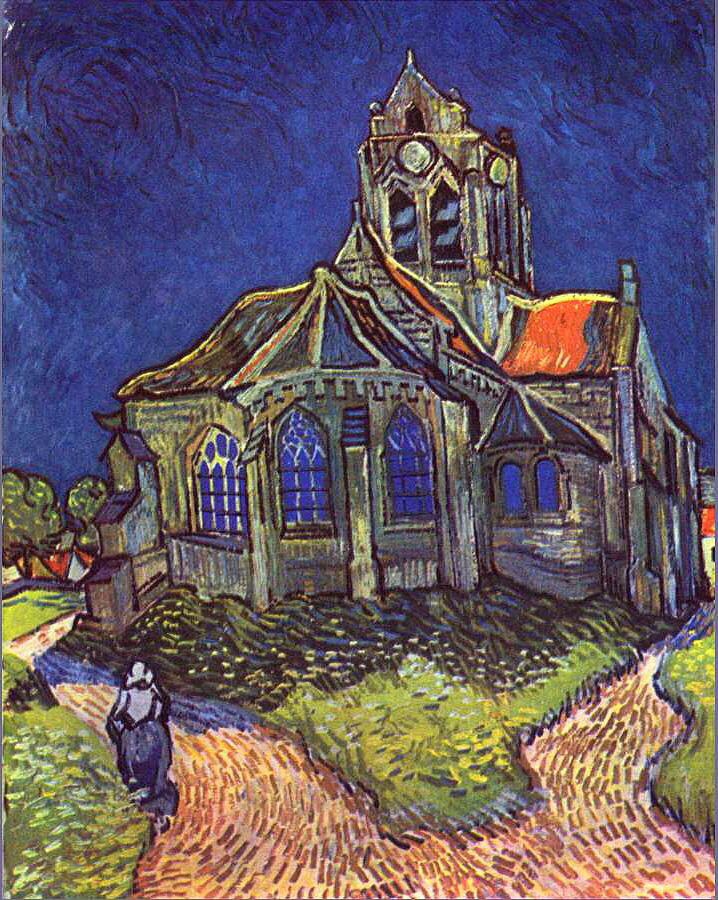
Tonight at Kairos, Michael Boggs did a bit of art history. I have to share what he said because it really does have implications for 21st century American Christianity.

Van Gogh started as a missionary living in a mining community. He totally immersed himself in their world tried to be Jesus to them. The result was that the church who put him there fired him because they felt his behavior wasn’t becoming of their standards.

He painted his famous church painting much later. The painting is beautiful, but also telling in what it leaves out. First, there are no lights coming from within the church. There’s not a path leading to the church. Finally, there are no doors anywhere on this church.

It was as if Van Gogh was communicating how he felt church leaders shut him out and how he couldn’t get back in. He felt like they put up barriers between him and God.

A question my friend posed (and one I’ve been thinking about a lot lately is, ” What would Jesus undo?” He even wrote a book by that title with just that question in mind.

I believe Jesus would undo the walls we put up to keep people out. Not the boundaries we put up to protect ourselves, but walls we use to ostracize those who think and act different than us.

Most of all, I think Jesus would undo the holy huddle mentality that has kept the lost people around it at arm’s length and shut its eyes to the dire need around it.

Jesus would undo the religious hyper-activity that keeps us too busy going to church throughout the week to be able to take Jesus to those around us who really need Him.

Jesus would definitely undo my smug superiority over those who sin differently than I do, reminding me that my sin is just as offensive as theirs. I need Jesus as much as anyone and it took just as much grace to save me as it took for any felon or drug addict.

I plan on buying the book, What Would Jesus Undo by Michael Boggs, and I hope you will, too. Shameless plug.

Patience and Kindness

image

I think I finally figured out what won these dogs over that I’m dog-sitting. It wasn’t my oh-so-charming personality. It wasn’t giving them a little extra food in their bowls. It wasn’t my hypnotic and soothing voice. What was it?

It was patience and kindness.

That’s how God won me over. Probably that’s how God captured your heart, too.

That’s what will win the world, I think. Just plain simple patience and kindness. No one wants to listen to a message of love from someone who’s impatient and rude. No one wants to be yelled at.

It is so true. People don’t care what you know (or even Who you know) until they know you care about them. Not just as souls to be saved but as people who really and truly matter to God. People created in the image of God who have worth and value simply because God made them.

I know I personally need quite a bit of patience and kindness both from God and from other people. That’s why I try to give it out whenever I can.

By the way, this is a milestone. My 1,500th blog post. Yay me.

The Kingdom Of God

image

“If we only had eyes to see and ears to hear and wits to understand, we would know that the Kingdom of God in the sense of holiness, goodness, beauty is as close as breathing and is crying out to be born both with in ourselves and with in the world; we would know that the Kingdom of God is what we all of us hunger for above all other things even when we don’t know its name or realize that it’s what we’re starving to death for. The Kingdom of God is where our best dreams come from and our truest prayers. We glimpse it at those moments when we find ourselves being better than we are and wiser than we know. We catch sight of it when at some moment of crisis a strength seems to come to us that is greater than our own strength. The Kingdom of God is where we belong. It is home, and whether we realize it or not, I think we are all of us homesick for it” (Frederick Buechner).

I think that says it way better than I ever could.

I posted this on Facebook two years ago today and it still has an impact on me. I still long for this Kingdom of God and for all the wrongs of this world to be made right.

I still think heaven will look a lot like Narnia with a little Middle Earth thrown it. Hobbits in heaven? I’d like to think so.

Seasons

image

The writer of Ecclesiastes talked about there being a season for everything in life– a time to be born and a time to die, a time to laugh and a time to mourn, etc.

I’ve found that to be very true. Especially in my social life.

There have been times when I have constantly been around people and there are times when I’ve felt alone. There have been times when I felt very popular and times when it seemed like I was the only one not invited to all the social activities I was seeing plastered all over social media.

I’ve come to terms with that.

I am who I am, regardless of whether that makes me popular or not. I have friends who I still see on a regular basis and some that I don’t see nearly as much as I used to. Again, that’s okay.

It doesn’t matter who else knows me and knows where I am when God does. While it  would be nice to occasionally hang out with celebrities (and who hasn’t daydreamed about that?) and have some of them know your name, the best part of all is that the God of the universe not only knows your name but has it engraved on the palms of His hands.

That’s worth celebrating.

So maybe I spend a night or two alone while people I know are off having a grand time at places I wasn’t invited to. I’ll live. Things like that don’t bother me anymore.

It took a very long time for me to get to this point. I don’t claim to have fully arrived or to be 100% mature about all this, but I am so much further along than I was two years ago.

That’s the key– not so much looking at how far you have to go but seeing how far you’ve already come and the progress, no matter how small it seems, that you’ve made. That’s what really matters.