The Baptist Potluck

If you grew up Baptist back in the day, you knew that whenever there was a potluck, you were about to have your best worst day ever. By that I mean you were going to completely make yourself sick by eating way too much food. But it was going to be some of the best food ever.

There’s an unwritten rule that states in the event of a Baptist gathering where food is present, a chicken must die. In other words, you knew there will be multiple buckets of fried chicken — some store bought, some homemade. You knew you would see a plethora of casseroles. You also knew there would be nothing involving vegan or kale or anything remotely healthy.

It’s an interesting scientific fact that the smaller the size of the Baptist church, there would be an inverse increase in the amount and quality of potluck food available. Especially if said church had any number of “seasoned” ladies in the congregation. I can tell you that whenever I got invited to a small country church as a part of my college puppet ministry team, there was going to be some mighty good eatin’ later.

I miss those days. I miss the people who made those days so great. But I have good memories of good food and good times that have long outlasted any possible upset stomachs from overeating.

On Feelings and Faith

“I think the thrill of the Pagan stories and of romance may be due to the fact that they are mere beginnings—the first, faint whisper of the wind from beyond the world—while Christianity is the thing itself: and no thing, when you have really started on it, can have for you then and there just the same thrill as the first hint. For example, the experience of being married and bringing up a family cannot have the old bittersweet of first falling in love. But it is futile (and, I think, wicked) to go on trying to get the old thrill again: you must go forward and not backward. Any real advance will in its turn be ushered in by a new thrill, different from the old: doomed in its turn to disappear and to become in its turn a temptation to retrogression. Delight is a bell that rings as you set your foot on the first step of a new flight of stairs leading upwards. Once you have started climbing you will notice only the hard work: it is when you have reached the landing and catch sight of the new stair that you may expect the bell again. This is only an idea, and may be all rot: but it seems to fit in pretty well with the general law (thrills also must die to live) of autumn & spring, sleep and waking, death and resurrection, and ‘Whosoever loseth his life, shall save it'” (C. S. Lewis, Words to Live By).

You can’t live your live solely on feelings. It’s like trying to maintain a relationship based on that initial feeling of falling in love. Or trying to recreate that feeling of the first time of experiencing a great meal or a majestic view. You just can’t.

It’s like trying to make yourself feel happy all the time. It’s impossible. Eventually, you will get tired. You will get frustrated. You will feel anything but happy by the time you’re done trying to keep up the feeling of happiness.

In matters of faith, you can’t live on feelings. But you can do acts of love even when you don’t feel loving. You can do acts of obedience even when you don’t feel authentic. If you keep up the discipline of loving and obeying, eventually you will feel loving and truly obedient. But we do these things not to feel a certain way but because God says so. We do them because God did so much for us.

Ultimately, it’s God’s love in us that enables us to love at all. If we know that God’s love is present whether we feel it or not, whether we can sense God or not, then we can love others when we don’t feel like it or when they don’t love us back. God loving us made us lovable, so our loving the unlovable shows them more than just ordinary human love — it shows them God’s kind of love.

Anger, Holiness & Love

“We tend to be taken aback by the thought that God could be angry. How can a deity who is perfect and loving ever be angry?…We take pride in our tolerance of the excesses of others. So what is God’s problem? … But love detests what destroys the beloved. Real love stands against the deception, the lie, the sin that destroys. Nearly a century ago the theologian E.H. Glifford wrote: ‘Human love here offers a true analogy: the more a father loves his son, the more he hates in him the drunkard, the liar, the traitor.’… Anger isn’t the opposite of love. Hate is, and the final form of hate is indifference… How can a good God forgive bad people without compromising himself? Does he just play fast and loose with the facts? ‘Oh, never mind…boys will be boys’. Try telling that to a survivor of the Cambodian ‘killing fields’ or to someone who lost an entire family in the Holocaust. No. To be truly good one has to be outraged by evil and implacably hostile to injustice” (Rebecca Pippert).

In this day and age, a lot of us have come to believe that if you love someone, you must automatically endorse everything they do. If you dislike a behavior or a trait in a person, then you must hate the person. It must be that since you love the sinner, you must love the sin.

But God hates sin and loves the sinner. And His definition of love trumps all others. His love is the love we strive for and can’t hope to emulate without having experienced it first. In other words, we can only love Him (and others) because He loved us first.

We can love people and hate what some of their choices and behaviors do to them. We can hate the fact that sin promises the world but never delivers. Sin only leads to numbness, loss, and death. It may not be physical death. In the believer, it doesn’t mean spiritual death. But it leads to a deadening to the awareness of God and the ability to hear Him speaking.

But thanks be to God who can heal and restore. Thanks be to God whose holy love is greater than any sin or hate or indifference. It is a love that purifies and makes us whole, that makes new and alive, that will remain after sin and death are no more.

Freedom Isn’t Everything

“Freedom is not the last word. Freedom is only part of the story and half of the truth. Freedom is but the negative aspect of the whole phenomenon whose positive aspect is responsibleness. In fact, freedom is in danger of degenerating into mere arbitrariness unless it is lived in terms of responsibleness” (Viktor E. Frankl).

I’ve always heard that true freedom isn’t doing whatever you want whenever you want, but the ability to do what is right.

Freedom without boundaries or consequences or responsibility isn’t really freedom in the end. It’s more like anarchy. And what happens when your freedom conflicts with my freedom, to use this definition of the term?

Freedom ultimately is fully living out God’s purposes for you. It’s becoming everything God made you to be. Freedom isn’t the end, but the means to making God’s name great.

Throwing Stones

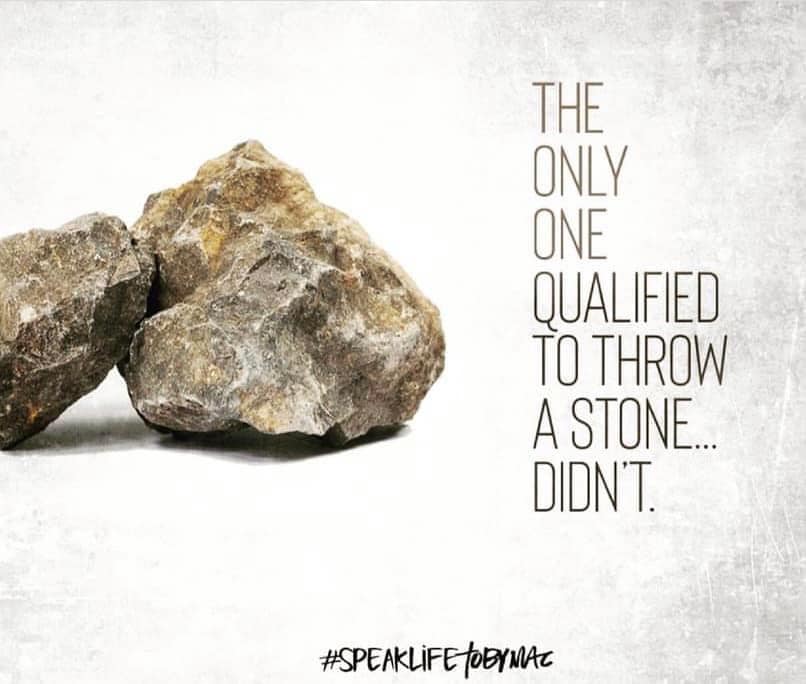
Before you cast stones or accusations or shade, it’s important to remember that there’s something in your life that would justify people throwing stones at you. Every one has a secret, a shameful incident, a moment they wish they could take back. There is no one who is without sin and qualified to case the first stone.

Except one. And He didn’t.

Jesus said to the woman caught in the act of adultery if anyone was left to condemn her. He also said that He didn’t condemn her either. But He also told her to go and sin no more.

Forgiveness is not enabling. It’s not endorsing. It’s erasing the hold that person has over you and the prison doors of bitterness that you have lived inside. It’s not pretending that the hurt didn’t happen but negating its power to continue to control you. When you forgive, you are most like the God who forgave you when you least deserved it.

When Grief Comes Knocking

“When Grief comes knocking, answer the door. Let her in.

Let her tell you all that was lost. Let her remind you how marvelous it was. Let her paint your memories in slow motion, let her sing your story with a cello. Let her teach you gratefulness and how to pay attention.Do not turn her away at the door. If you do, she will come back again knocking.

Let her speak her piece. Let her do her work, cleansing you of your tears. Then send her on her way. Then you can sleep through the night without waking from her tapping” (Jane Marczewski, excerpt from an unreleased poem “When Grief Comes Knocking”).

I think people process grief in different ways. Some internalize while others feel the constant need to express their sorrow in manifold ways, whether through social media or through talking about their lost loved one in conversations. Some visibly show emotions while others choose to grieve privately.

I’ve also learned that because someone processes loss differently than you doesn’t make it wrong. Criticizing another’s way of showing grief only compounds their sorrow and does nothing to alleviate yours.

I’m not an expert in the field of grieving. I do remember the story of Job and how his friends came around in his time of sorrow. Perhaps the best thing they ever did for him was to sit with him in silence and be present to his loss. They messed up when they opened their mouths and tried to explain his suffering, attempting to speak for God and to heal his wounds with words. If they had stayed silent, Job’s pain might have been lessened and the book of Job might be quite a bit shorter. Then again, maybe not.

I know when people are hurting, your presence helps much more than your platitudes. Be the kind of person you would have wanted and do what you would have wanted done for you when you were grieving, and above all trust God to be the healer and comforter.

Falling Back

So apparently daylight savings ends on Sunday, November 6 at 2 am. I’m pretty sure whoever decided on that arbitrary time also decided to put the r in February and also chose Wednesday instead of Winsday.

I get that daylight savings had a purpose way back in ye olden days, but all it does is mess with my sleep schedule. On the day we fall back an hour and are supposed to gain an hour of sleep, I end up messing up and actually losing another hour. Plus, if you look outside at 5 pm, it feels like midnight. Nobody wants that.

At some point, we need to stop messing with our clocks and just let things be. Setting my alarm for 5 am is bad enough without having to spring forward and fall back.

If I’m setting my clocks back, I want to set them back to 1985 when times were simpler and life made more sense.

The Purpose of Life

According to the Westminster Shorter Catechism, “Man’s chief end is to glorify God, and to enjoy him for ever.”

John Piper added that you could just as easily say that our chief end is to glorify God BY enjoying him forever. We glorify God fullest when we engage in all that He is and receive all that He has for us.

I think mark of a life well lived was that people looked at us and saw Jesus. They saw how we lived our lives and chose our words and read the words of God not written down on tablets but engraved on human hearts. They may not have ever picked up a Bible, but they read us and saw and heard the gospel.

I’ve heard it before and I’ve said it before that most of us want to look good and feel good when we should be good and do good. We want to make an impression, but we should make a difference.

To have lived well doesn’t mean that you jumped out of planes or climbed mountains or swam with sharks. It means that God’s purposes became your purposes, God’s heart became your heart, and God’s will became your will. It means that when you first meet God in heaven, you can hear the words, “Well done, good and faithful servant.”

Not Gonna Bow

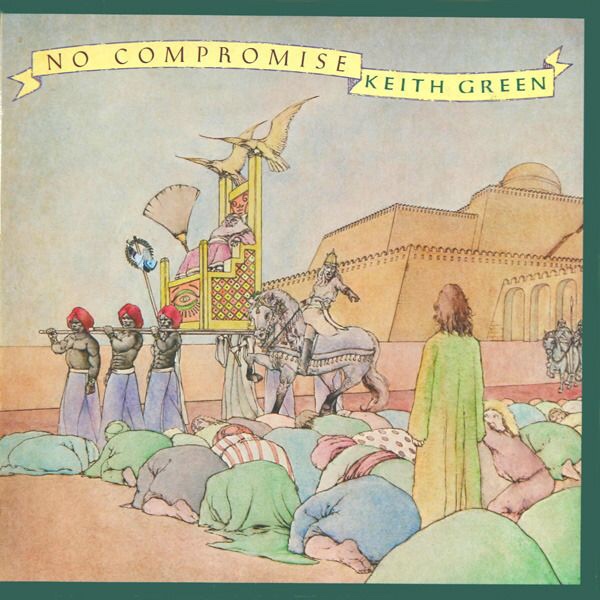
I love this album cover. In case you didn’t grow up listening to Christian music, this is the cover of the album No Compromise by the late great artist Keith Green. The cover is a rendering of the account of Shadrach, Meshach, and Abednego and their refusal to bow down to the golden image of the king, even though the king had ordered anyone who disobeyed to be thrown alive into a fiery furnace.

As the cover indicates, they were the only ones who didn’t comply. All they had was each other and their faith in the true and living God. They said that the God they served was able to deliver them, but even if He didn’t, they would never bow down to any idol or false god.

Those who follow Jesus face a similar dilemma in this current age. So many voices are telling them to compromise their convictions and to endorse what the Bible does not. They are told to bow down to a politically correct god who tolerates any deviant behavior and is more like a benign teddy bear than the Sovereign Lord of the universe.

We will only stand against the tide of popular opinion when we stand together. If I’m isolated, I am more likely to compromise and to give in than if I’m standing within the community of believers who will encourage me, challenge me, and hold me accountable. I will be better able to articulate what I believe and speak against the culture in truth and love.

If you didn’t read the end of the story, God rescued Shadrach, Meshach, and Abednego out of that fiery furnace. In fact, when the king looked into the furnace, he saw not three but four people walking unharmed in the midst of the flames (and one looked like the Son of God).

They met Jesus in the midst of persecution and tribulation and didn’t waver from their confidence in the God of Abraham, Isaaac, and Jacob. When we have Jesus with us, we know we will persevere no matter what we face and no matter what anyone throws at us or does to us because of what we believe.

For Those Who Walked With Us

“For those
who walked with us,
this is a prayer.
For those
who have gone ahead,
this is a blessing.
For those
who touched and tended us,
who lingered with us
while they lived,
this is a thanksgiving.
For those
who journey still with us
in the shadows of awareness,
in the crevices of memory,
in the landscape of our dreams,
this is a benediction” (Jan Richardson)

I guess if I had to add anything it would be this — give thanks for the people in your life who make your life better. Be grateful for those who have shown you Jesus and believed for you when you couldn’t believe for yourself and have been strong for you to carry your burdens when you were weak.

For those who journey with you still, let them know how much they mean to you. Never assume they know you love them. Never assume they know how grateful you are for them. Tell them while you still can. At some point, you will be left with unspoken words of thanks without the person to speak them to.

For those who journey with you no longer, give thanks. As much as they blessed you, pay it forward by blessing someone else. As much as they encouraged and mentored you, encourage and mentor someone else. As present as they were in your life in times of plenty and of want, be present in the lives of others to be the tangible hands and feet of Jesus.