Known by the Scars

I have a few scars. One is on my left hand, a reminder from when I was in a wreck back in the day. I pulled out in front of a full-sized truck, thinking it was a four-way stop. It was not.

Thankfully, I ended up being okay aside from a deep cut on my hand from the dashboard and being generally stiff and sore the next day from the impact. My scar is a reminder of how God saved me from my own foolishness that day.

I remember that Jesus also has scars. His resurrected and glorified body still had the nail piercings on His hands and feet, as well as the wound in His side. Those were the proofs that it was really and truly Jesus raised from the dead.

But also it’s a way of giving value to all those who have scars of their own. Some are more obvious than others. Some are hidden, but some are in places where we can’t hide them. Some of us are ashamed or embarrassed by our scars.

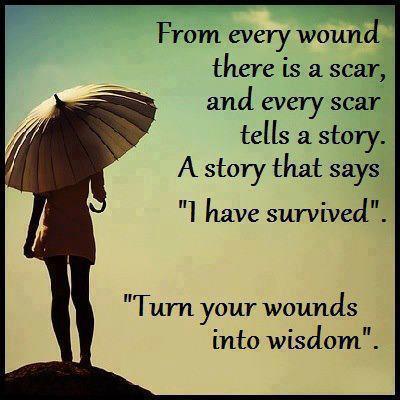
But scars tell a story where you survived. Scars are the reminder of something that could have killed you but didn’t. Scars are proof of a divine intervention. In a way, when you can wear your scars proudly, you identify with Jesus and His own scars.

Most of all, your scars should remind you that Jesus bore the wounds that gave Him the scars for you and for me. He was wounded for our transgressions, as it says in Isaiah 53. By His stripes, we are healed. He bore what we should have born because of our sins, and we get the rewards of a perfect life that should only belong to Jesus. That’s the great exchange. That’s the gospel.

Scars can be something to hide, like those humiliating moments or shameful parts of the past, or they can be part of your testimony. A pastor once said that true healing is evident when that part of your story that you swore you’d never tell anybody becomes the first line of your testimony.

“Do you know what St. Peter says to everyone who tries to get into heaven?” 

“Peter says, ‘Don’t you have any scars?’ And when most would respond proudly, ‘Well, no, no I don’t,’ Peter says, ‘Why not? Was there nothing worth fighting for?” (Matthew Perry, Friends, Lovers, and the Big Terrible Thing).

Stories from Scars

I have a scar on my left hand. It goes back to when I was 18 or 19 years old. I was driving down Poplar Avenue in Memphis, Tennessee to Cat’s Music to do some trading of music. At some point, I passed my destination. Later on, I came to a two-way flashing red light stop.

The problem was that I didn’t know it was a two-way stop. Even if I had known, I probably still wouldn’t have known what to do. The result was me pulling out in front of a full-sized truck and getting hit in the driver’s side door.

In case you’re wondering, I survived. I ended up with a rather garish wound on my left hand. At first, I could see clear to the bone. That’s when I realized that it hurt. A lot.

Thankfully, that was the extent of my injuries. Unfortunately, my car did not survive the encounter. But to this day, I carry the scar as a reminder of the foolishness of my youth and the ever-present and ever-protective grace of God.

Scars tell stories. They speak to wounds that have healed but left visible reminders. As much as the memorial stones set up by the people of God in olden times, scars are a kind of memorial to a time when you survived. They are a testimony to how God met you in the moment of your wounding and carried you through it.

Every time I see my scar, I see God’s goodness. Every time my hand cramps up when I’m writing, I think back to how close I came to not being here. I’m still thankful.

Scars can be shameful if you focus on the wound and the hurt, but they can be sacred if you choose to see how God turned that painful moment into something beautiful and good.

“Darkest water and deepest pain
I wouldn’t trade it for anything
‘Cause my brokenness brought me to you
And these wounds are a story you’ll use

So I’m thankful for the scars
‘Cause without them I wouldn’t know your heart
And I know they’ll always tell of who you are
So forever I am thankful for the scars” (Ethan Hulse, Jon McConnell, Matthew Armstrong, Matthew Hein).

Palm Sunday

“Almighty and everlasting God, who, of thy tender love towards mankind, has sent thy Son, our Savior Jesus Christ, to take upon him our flesh and to suffer death upon the cross, that all mankind should follow the example of his great humility: Mercifully grant that we may both follow the example of his patience, and also be made partakers of his resurrection, through the same Jesus Christ, our Lord. Amen” (from the 1662 Book of Common Prayer).

Today is Palm Sunday, a week out from Easter Sunday. This is traditionally the day that Jesus rode into Jerusalem on a donkey to shouts of “Hosanna!” and “Blessed is He who comes in the name of the Lord.”

The crowd was cheering and laying down palm branches before His path. Apparently, in that day palm trees symbolized victory and triumph. Maybe the crowd was anticipating an imminent overthrow of Roman rule. Maybe they were expecting Jesus to start acting the part of an earthly king.

Were those people the same ones who later shouted for Barrabus to be released and for this Jesus to be crucified? I’ve heard a lot of sermons that hinged on the same people at one moment praising Jesus and at the next condemning Him. But I’ve also heard that it wasn’t necessarily the same people.

Regardless, Jesus looked beyond the praise to the pain. He focused beyond the crowds on the cross and all the torture He would shortly endure. His mission wasn’t to get the approval of the crowds in that moment but to set His face toward Jerusalem and Golgotha. His purpose was to lay down His life for the flock.

I heard in a sermon today that to appreciate the joy of Easter Sunday, you need to walk through Maundy Thursday and Good Friday. Take in all the mocking. Being abandoned by His disciples. The beatings. The whip that tore strips of flesh of His back. The carrying of the cross up the hill to Golgatha. All those hours in agony up on that cross. Giving up His spirit and dying.

It’s important to remember that sin isn’t something that God ever takes lightly or brushes off. The Father doesn’t wink at our transgressions and ignore all the wrong we’ve done. Sin always has a cost, and that cost is always death. In the Old Testament, the price was the sacrifice of an animal that pointed forward to the ultimate sacrifice to come. In the New Testament, that ultimate sacrifice is Jesus willingly laying down His life for us.

Take time in the next week to reflect on the fact that Jesus bore the whip and the nails for you and me. He chose the wounds and scars that we might be healed. He died that we might live. And then you can celebrate Easter Sunday a week from today with joy.

Known by the Scars

I had one of those wow moments when I was flipping channels recently. I came across a discussion group involving Ann Voskamp, Sheila Walsh, and a few others. One of them said that so many of us base our identity on the wounds that others have inflicted on us rather than on the wounds that Jesus bore for us. That was a WOW moment that left me Without Words.

I think it’s telling that in one miracle, Jesus asks a paralytic if he wants to be well. You would think it would be a Captain Obvious question with the inevitable answer of YES, but then so many of us have built so much of our identities around our pain and our hurt that we wouldn’t have anything left if our affliction were suddenly taken away.

A better way is to be identified with the Suffering Servant who was wounded for our transgressions, who bore scars on His hands, feet and side from taking the punishment that we deserved on Himself. This is the Jesus who still bears those scars even in Heaven.

All of us will be called at some point to suffer for the cause of Christ. Some will suffer physically. Some even to the point of death. One of the greatest honors I can think of is to bear wounds and scars from following Jesus faithfully through opposition, trials, suffering, and pain. Maybe too some of us will bear scars in heaven.

I do know for sure that Jesus was willing to lay down His life for each and every one of us. Your and my identity rests in the fact that God so loved us that He gave His only Son, Jesus, so that we should not be lost but have real, abundant, and eternal life in and with God. We are no longer strangers and aliens, outcasts with no hope or future but children of God, the Bride of Christ, and beloved.

The Beauty of Scars

quote-on-the-last-day-jesus-will-look-us-over-not-for-medals-diplomas-or-honors-but-for-scars-brennan-manning-71-55-68

I saw a girl who had scars on her face today outside of Starbucks. What struck me most weren’t the scars themselves but how beautiful she was, not in spite of her scars but because of them. I wonder if she’s ashamed of her scars as most people are or if she sees them in a different way.

Most of us have a scar or two. I have one on my left hand from an automobile accident from several years ago. Some of the most painful scars are the ones no one can see, the ones we bear inside our bodies rather than outside.

Still, from the right perspective, scars are beautiful. Every scar tells a story and reveals a history of God’s ability to rescue and heal. Scars mean that you are still here, that you endured whatever ordeal and came out stronger on the other side. Scars mean that you survived.

Jesus Himself still bears His scars from Calvary. The wounds in His wrists and side are still there, reminding us that scars are not shameful wounds to be kept hidden but tattoo of overcoming.

No one gets through this life unscathed. Well, perhaps if you hide under your bed and play it safe for 80 years you might make it without scars. If you hide your heart away in a lock box and never let it out, you can avoid having it get broken (but you also avoid feeling anything deeply).

Perhaps I should rephrase. No one who really lives goes through life unscathed and unscarred. It’s impossible. People and circumstances will wound you, sometimes deeply, but there is no wound that God cannot heal and no circumstance God cannot work for your good and His glory.

Trust me. Scars are good. Wear them proudly to remind yourself and others that scars mean that you’re still here and not going anywhere anytime soon.

quotefancy-319543-3840x2160


Here’s the Deal

So I found out today that the cost to repair the transmission on my Jeep is $2700. I almost needed the smelling salts as I typed that sentence. I’ll be sans car for up to four weeks. Pass those smelling salts, please.

That’s a lot of money. All for some itty bitty parts that decided on their own without consulting me or anyone else to stop working. All for some unseen mechanical gears that I didn’t even know existed until they decided to break down. Rude.

A lot of life is like that. Things break, people die, situations change. What seemed like a sure thing vanishes like the morning mist and what you thought would last forever ends abruptly without any warning.

It’s easy to let those things make you cynical, believing that only the very worst scenarios will play out and that nothing good can ever happen and that people are only out to get you.

Or it drives you deeper into all the Mystery that is the Abba Father.

As big as my car bill is, God is bigger.

As big as the void that is left by the passing of a loved one is, God is bigger.

As big as the hurt caused by the rejection of a friend or a family member, God is bigger.

As big as the accumulation of scars and wounds from a broken relationship are, God is bigger.

God is bigger than anything you will face today or tomorrow or the next day or any day after that.

God is bigger than any problem that you will ever face.

God is bigger than your fears and your doubts and even your unbelief.

Whatever circumstances, God will prove that He is enough. Everything you could possibly desire or want or hold in your hands without God is less than holding onto nothing but God.

That’s a lesson that all of us learn eventually, whether that means losing everything in a literal sense or in coming to the end of your own schemes and plans.

God is enough. God will be enough.

That is enough.


Throwing Rocks

10-Jenny-throwing-rocks

I’ve been tryin’ to get down
to the Heart of the Matter
But everything changes
And my friends seem to scatter
But I think it’s about forgiveness
Forgiveness
Even if, even if you don’t love me anymore” (Don Henley).

Kairos was fantastic as usual tonight. Amy Jo Girardier spoke on forgiveness, which probably is something that doesn’t come easy to any of us. Especially those who carry the scars of wounds and words from those who were supposed to nourish and protect.

For some reason, I thought about the scene from Forrest Gump where Jenny is throwing rocks at her old house. It’s the place where her own father abused her for years, where all her woundedness came from. After she throws the last rock, she collapses on the ground into weeping. Forrest Gump say a line which I think is the best line in the whole movie: “Sometimes there aren’t enough rocks.”

jenny2

Unforgiveness is like carrying rocks. You visualize confronting the person or persons who cut you with their words, who betrayed your trust, who let you down, who deserted you in your time of need, who feigned friendship while sticking the knife in your back. You imagine what it would be like to use the rocks to wound them like they wounded you.

It seems like the natural thing to do. You have every right to be angry, to hurt, to want justice– even revenge.

But maybe what God is calling you to do is to take those rocks and build an altar. On that altar, you sacrifice your right to be angry. You give up expecting that the person can fix what they did to you. You let go of hatred and of wishing them harm. Instead you learn to pray for them and even eventually love them.

Then you realize you’re not the only one wounded. The person who hurt you was acting out of his own woundedness. He’s continuing the cycle of violence, of cutting words, of lashing out, because it’s all he knows.

Forgiveness breaks the cycle. Forgiveness opens the door of the prison of hate and anger and bitterness and the person who walks out is you. You are the one set free when you choose to forgive.

rocks

One of my favorite quotes from C. S. Lewis deals with forgiveness and the high cost that comes with it:

“To be a Christian means to forgive the inexcusable because God has forgiven the inexcusable in you.

This is hard. It is perhaps not so hard to forgive a single great injury. But to forgive the incessant provocations of daily life – to keep on forgiving the bossy mother-in-law, the bullying husband, the nagging wife, the selfish daughter, the deceitful son – How can we do it? Only, I think, by remembering where we stand, by meaning our words when we say in our prayers each night ‘Forgive our trespasses as we forgive those that trespass against us.’ We are offered forgiveness on no other terms. To refuse it is to refuse God’s mercy for ourselves. There is no hint of exceptions and God means what He says.”

Forgiveness is hard, but in my experience, not forgiving and carrying the weight and burden of all that anger, bitterness, and hurt is harder.

altar

Easter Season Liturgy Part V

ko1

“O God, Creator of heaven and earth:  Grant that, as the crucified body of your dear Son was laid in the tomb and rested on this holy Sabbath, so we may await with him the coming of the third day, and rise with him to newness of life; who now lives and reigns with you and the Holy Spirit, one God, for ever and ever. Amen.”

So I did the whole downtown Franklin thing again. It always does my heart good to be back there, revisiting my favorite haunts and breathing in the perfect spring night air.

I don’t really know what to do with the Saturday between Good Friday and Easter. It seems so low-key compared to the tragic drama of Friday and the joyful triumphant victory of Sunday.

But I know what’s coming. I wonder what those disciples were thinking and feeling. Or the Marys. It must have seemed like the lowest point of their lives. All of their hopes and dreams and been awakened and they had only just begun to hope, then it was dashed and broken to pieces beyond recognition.

The one they thought would save them was dead in a tomb. They had seem the bloodied body, seen the moment when the spear went into Jesus’ side and both blood and water poured out. There was no doubt.

I’m glad I’m on this side of history and I know what’s coming. I know with the next sunrise comes Sunday and the empty tomb and a risen Christ. That’s where my hope lies.

I can’t imagine people whose faith won’t allow for miracles or resurrections. Would that even be faith at all? What if Jesus’ death were only an example and the only way He lived was in the memories of His followers? What kind of hope would that be?

Only a literal resurrection can give true hope. Only a Jesus who’s really and truly alive, with the wounds in His hands, feet, and side, could inspire the joy of Easter. That’s why I can’t wait for tomorrow and the celebration that comes with it.


More Beautiful Words

image

“Some of us tend to do away with things that are slightly damaged. Instead of repairing them we say: “Well, I don’t have time to fix it, I might as well throw it in the garbage can and buy a new one.” Often we also treat people this way. We say: “Well, he has a problem with drinking; well, she is quite depressed; well, they have mismanaged their business…we’d better not take the risk of working with them.” When we dismiss people out of hand because of their apparent woundedness, we stunt their lives by ignoring their gifts, which are often buried in their wounds.

We all are bruised reeds, whether our bruises are visible or not. The compassionate life is the life in which we believe that strength is hidden in weakness and that true community is a fellowship of the weak” (Henri Nouwen).

I’ve done that before– dismissing people because of their apparent woundedness. I’ve also had it done to me a few times.

I can say with all sincerity that these words are true. You and I may have every right to dismiss these people, but we do lose something– those untapped gifts lying hidden in those very wounds.

Maybe next time I can see those people and their wounds with a different set of eyes next time– eyes of grace. Maybe next time I can remember Who saw my wounds and sought me out anyway. I can remember that He gained His own scars for the healing of mine.

Just a thought.

Paying it Forward Again

pay-it-forward

I had an idea. Maybe the next time you see a homeless person, instead of giving them money, maybe you should offer to buy them a meal.

I had that opportunity once and it blessed me as much as it blessed the homeless man who got a free meal. I know for certain it was a divine appointment and I knew in that moment the joy of being obedient.

When you get the chance to buy someone a meal and they ask why you are doing it, just  tell them, “I’m doing this in the name of Christ,” for the Bible says when you give someone a cup of cold water in the name of Christ, it’s Christ you’re serving.

Maybe you’ll get the chance to pay for the person behind you at Wendy’s or McDonald’s or Starbucks.

Maybe it you’ll be able to pay someone’s electric bill. Or water bill. Or phone bill.

Or maybe it will be an act of service like cutting someone’s lawn or cleaning up their gutters. You never know.

But meeting someone’s physical needs is only meeting them halfway. Jesus didn’t just heal people’s bodies; He healed their souls, too.

We’re called not just to bandage wounds, but to offer the ultimate healing found in Jesus Christ. We have the opportunity not just to offer a cup of cold water but to point to the Living Water that never runs dry. We can offer not just a sandwich to someone but the Bread of Life that eternally satisfies.

My prayer for you (and for me) is that we keep our eyes open for such opportunities. If you see someone selling those newspapers, buy at least one and give that person a bottled water or something warm to drink. Be willing to talk to them and listen to their stories. Be sensitive to the Spirit’s leading and be open to sharing your own story.

On Valentine’s Day, remember Who first love you and me.