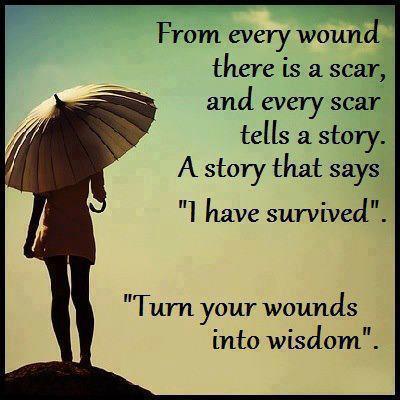
Stories from Scars

I have a scar on my left hand. It goes back to when I was 18 or 19 years old. I was driving down Poplar Avenue in Memphis, Tennessee to Cat’s Music to do some trading of music. At some point, I passed my destination. Later on, I came to a two-way flashing red light stop.

The problem was that I didn’t know it was a two-way stop. Even if I had known, I probably still wouldn’t have known what to do. The result was me pulling out in front of a full-sized truck and getting hit in the driver’s side door.

In case you’re wondering, I survived. I ended up with a rather garish wound on my left hand. At first, I could see clear to the bone. That’s when I realized that it hurt. A lot.

Thankfully, that was the extent of my injuries. Unfortunately, my car did not survive the encounter. But to this day, I carry the scar as a reminder of the foolishness of my youth and the ever-present and ever-protective grace of God.

Scars tell stories. They speak to wounds that have healed but left visible reminders. As much as the memorial stones set up by the people of God in olden times, scars are a kind of memorial to a time when you survived. They are a testimony to how God met you in the moment of your wounding and carried you through it.

Every time I see my scar, I see God’s goodness. Every time my hand cramps up when I’m writing, I think back to how close I came to not being here. I’m still thankful.

Scars can be shameful if you focus on the wound and the hurt, but they can be sacred if you choose to see how God turned that painful moment into something beautiful and good.

“Darkest water and deepest pain
I wouldn’t trade it for anything
‘Cause my brokenness brought me to you
And these wounds are a story you’ll use

So I’m thankful for the scars
‘Cause without them I wouldn’t know your heart
And I know they’ll always tell of who you are
So forever I am thankful for the scars” (Ethan Hulse, Jon McConnell, Matthew Armstrong, Matthew Hein).

Throwing Rocks

10-Jenny-throwing-rocks

I’ve been tryin’ to get down
to the Heart of the Matter
But everything changes
And my friends seem to scatter
But I think it’s about forgiveness
Forgiveness
Even if, even if you don’t love me anymore” (Don Henley).

Kairos was fantastic as usual tonight. Amy Jo Girardier spoke on forgiveness, which probably is something that doesn’t come easy to any of us. Especially those who carry the scars of wounds and words from those who were supposed to nourish and protect.

For some reason, I thought about the scene from Forrest Gump where Jenny is throwing rocks at her old house. It’s the place where her own father abused her for years, where all her woundedness came from. After she throws the last rock, she collapses on the ground into weeping. Forrest Gump say a line which I think is the best line in the whole movie: “Sometimes there aren’t enough rocks.”

jenny2

Unforgiveness is like carrying rocks. You visualize confronting the person or persons who cut you with their words, who betrayed your trust, who let you down, who deserted you in your time of need, who feigned friendship while sticking the knife in your back. You imagine what it would be like to use the rocks to wound them like they wounded you.

It seems like the natural thing to do. You have every right to be angry, to hurt, to want justice– even revenge.

But maybe what God is calling you to do is to take those rocks and build an altar. On that altar, you sacrifice your right to be angry. You give up expecting that the person can fix what they did to you. You let go of hatred and of wishing them harm. Instead you learn to pray for them and even eventually love them.

Then you realize you’re not the only one wounded. The person who hurt you was acting out of his own woundedness. He’s continuing the cycle of violence, of cutting words, of lashing out, because it’s all he knows.

Forgiveness breaks the cycle. Forgiveness opens the door of the prison of hate and anger and bitterness and the person who walks out is you. You are the one set free when you choose to forgive.

rocks

One of my favorite quotes from C. S. Lewis deals with forgiveness and the high cost that comes with it:

“To be a Christian means to forgive the inexcusable because God has forgiven the inexcusable in you.

This is hard. It is perhaps not so hard to forgive a single great injury. But to forgive the incessant provocations of daily life – to keep on forgiving the bossy mother-in-law, the bullying husband, the nagging wife, the selfish daughter, the deceitful son – How can we do it? Only, I think, by remembering where we stand, by meaning our words when we say in our prayers each night ‘Forgive our trespasses as we forgive those that trespass against us.’ We are offered forgiveness on no other terms. To refuse it is to refuse God’s mercy for ourselves. There is no hint of exceptions and God means what He says.”

Forgiveness is hard, but in my experience, not forgiving and carrying the weight and burden of all that anger, bitterness, and hurt is harder.

altar

I Understand Now

I had a conversation with a good friend. I’ll be honest. I didn’t look forward to the meeting; in fact, I went into it with a mixture of anxiety mixed with a little bit of dread.

I got knocked down another rung or two on my self-esteem ladder. I saw some things about myself that I didn’t like and realized yet again how far I still have to go toward mental and spiritual health. The good news is that I can still see how very far I’ve come to even be able to honestly assess my faults without it turning into another self-hating and self-degrading session.

I understand a few things now.

I understand that not everybody wants to be friends with me. And even if they did, it’s not possible to be friends with everyone and it’s not healthy to try. You have to choose the friends who can make time for you and add value to your life. And as a good friend recently reminded me, that means you need to make time for others and be willing to make every effort to add value to the people in your life. It works both ways

I understand now that friendships end. It doesn’t mean the other person was bad or evil or hurtful. It just means their time in your life is over. It’s best not to try to artificially extend a relationship that has run its course. Just let it go and move on.

I understand now that people will hurt me without meaning to. Some people have their own wounds and their innate response is fear and retreat and wounding back. Again, it doesn’t make them bad people. It just means they haven’t found their healing yet. They need my prayer but not my presence.

I understand now that even the best of good intentions will get misrepresented and misunderstood. Sometimes what you mean as an overture of friendship gets taken as something more. The person will think your friendliness is romantic Interest and they will take your words and read into them way more than you ever intended. It’s best to not try to apologize (a lesson learned the very hard way). Just walk away.

Most of all, I understand now that the people God puts in your life will want to be there. They will make time for you. They will reach out to you. You won’t always have to initiate everything and do all the heavy lifting in the relationship.

This culture is one where friendships don’t mean that much. People are casual and cavalier about their relationships and how they treat other people. Very few actually mean what they say or keep their word. Most will lie and say they want to hang out or spend time with you because it’s easier than actually admitting that they don’t want to be your friend or spend time with you.

I have some good friends who are still around. I woke up this morning. I’m still blessed and deeply loved by my God and King of the Universe.

Even in the midst of occasional hurts and disappointments, I’m still finding joy in everything and learning to give thanks in every situation. I am living my miracle!