Life Is a Fairy Tale

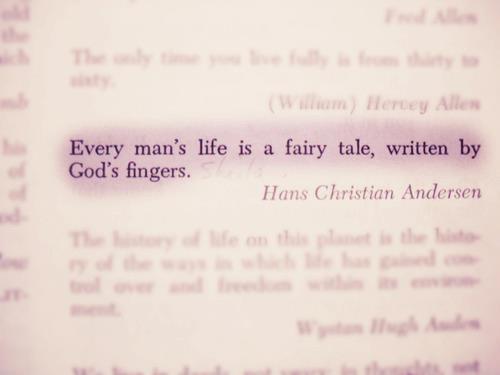
I suppose whether you agree with this or not depends on your definition of what makes a fairy tale. Is it void of any true hardship or suffering? Then that’s not a true fairy tale. Does it need fantastical creatures? That’s debatable, but I think not.

What a fairy tale needs is a happy ending. You know going in that the main character is going to live happily ever after.

If you look at life strictly from this side of heaven, then it’s not a fairy tale. There’s so much suffering and evil that goes unresolved and unpunished. There are so many wrongs that never get put right.

But if you look through the lens of the resurrection, then you see the fairy tale. In fact, you could see the whole Bible story as a sort of true fairy tale where the King comes to rescue His beloved from imminent danger.

It all depends on perspective. If you see your life through the eyes of faith, you know that the happy ending is coming, even if you might not see it this side of eternity. But it is coming.

“It is a world of magic and mystery, of deep darkness and flickering starlight. It is a world where terrible things happen and wonderful things too. It is a world where goodness is pitted against evil, love against hate, order against chaos, in a great struggle where often it is hard to be sure who belongs to which side because appearances are endlessly deceptive. Yet for all its confusion and wildness, it is a world where the battle goes ultimately to the good, who live happily ever after, and where in the long run everybody, good and evil alike, becomes known by his true name….That is the fairy tale of the Gospel with, of course, one crucial difference from all other fairy tales, which is that the claim made for it is that it is true, that it not only happened once upon a time but has kept on happening ever since and is happening still”(Frederick Buechner, Telling the Truth: The Gospel as Tragedy, Comedy, and Fairy Tale).

The Gospel as Fairy Tale: An Excerpt from One of My Favorite Books Ever

This excerpt is from Telling the Truth: The Gospel as Tragedy, Comedy, and Fairy Tale by Frederick Buechner. It remains one of my top ten favorite books of all time.

“LIKE THE FAIRY-TALE world, the world of the Gospel is a world of darkness, and many of the great scenes take place at night. The child is born at night. He had his first meal in the dark at his mother’s breast, and he had his last meal in the dark too, the blinds drawn and everybody straining to catch the first sound of heavy footsteps on the stair, the first glint of steel in the shadowy doorway. In the garden he could hardly see the face that leaned forward to kiss him, and from the sixth hour to the ninth hour the sun went out like a match so he died in the same darkness that he was born in and rose in it, too, or almost dark, the sun just barely up as it was just barely up again when only a few feet offshore, as they were hauling their empty nets in over the gunnels, they saw him once more standing there barefoot in the sand near the flickering garnets of a charcoal fire.

In the world of the fairy tale, the wicked sisters are dressed as if for a Palm Beach wedding, and in the world of the Gospel it is the killjoys, the phonies, the nitpickers, the holier-than-thous, the loveless and cheerless and irrelevant who more often than not wear the fancy clothes and go riding around in sleek little European jobs marked Pharisee, Corps Diplomatique, Legislature, Clergy. It is the ravening wolves who wear sheep’s clothing. And the good ones, the potentially good anyway, the ones who stand a chance of being saved by God because they know they don’t stand a chance of being saved by anybody else? They go around looking like the town whore, the village drunk, the crook from the IRS, because that is who they are. When Jesus is asked who is the greatest in the Kingdom of Heaven, he reaches into the crowd and pulls out a child with a cheek full of bubble gum and eyes full of whatever a child’s eyes are full of and says unless you can become like that, don’t bother to ask” (Frederick Buechner).

The Ultimate Fairy Tale

“It is a world of magic and mystery, of deep darkness and flickering starlight. It is a world where terrible things happen and wonderful things too. It is a world where goodness is pitted against evil, love against hate, order against chaos, in a great struggle where often it is hard to be sure who belongs to which side because appearances are endlessly deceptive. Yet for all its confusion and wildness, it is a world where the battle goes ultimately to the good, who live happily ever after, and where in the long run everybody, good and evil alike, becomes known by his true name….That is the fairy tale of the Gospel with, of course, one crucial difference from all other fairy tales, which is that the claim made for it is that it is true, that it not only happened once upon a time but has kept on happening ever since and is happening still.” (Frederick Buechner, Telling the Truth: The Gospel as Tragedy, Comedy, and Fairy Tale).

Perhaps that’s why so many of us are still drawn to fairy tales after all these years.