Tonight We’re Gonna Study Like It’s 1995

img_5539

I like to use a variety of translations when I read the Bible. For me, it keeps things fresh and keeps me from going into auto-pilot when I get to a familiar passage.

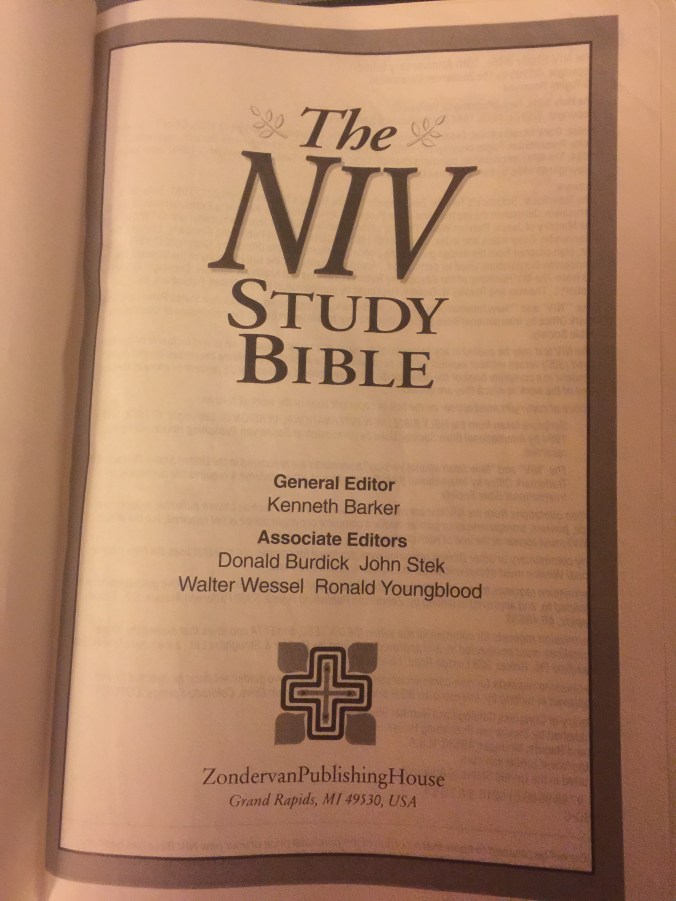
Lately, I’ve been going old-school. I dug out my 10th Anniversary NIV Study Bible, printed in 1995. It was a Christmas present in 1998 from dear ol’ Mom and Dad. I even have a Bible cover for it. Remember those?

I’d forgotten just how good those notes are. They go beyond the superficial, “what does this mean to you” stuff and really provide a lot of historical and cultural background to the Scriptural passages.

There are a LOT of good study Bibles that have maps, charts, and (usually) very helpful notes. I recommend at least one highly if you are interested in going deeper with your Bible reading (and are not a Hebrew or Greek scholar).

The point is to know the Word for yourself and not rely on teachers or preachers or anyone else. You have direct access to God through the Cross and don’t need anyone else to tell you what His Word says.

I also recommend the Holman Christian Study Bible, the ESV Study Bible, and the John MacArthur Study Bible. Those are all worthy additions to any library.


Something New I Learned About Passover

Even at my ripe old age, I can still learn a thing or two.

As Jesus and His disciples prepared for Passover in the final week of His life, Jesus must have realized the symbolism of the meal was about to be realized. The bread was His body broken and the wine was His blood shed.

During the Passover meal, the bread is broken and the larger piece of it is hidden away in a linen cloth until the very end of the meal. And as you and I know, Jesus fulfilled the symbolism of the breaking of the bread by His death on the cross, from which He was taken, wrapped in a linen cloth, and “hidden” in a tomb for three days.

It’s amazing how knowing the cultural and historical background to the Bible so often immensely enriches the meaning of the Bible itself. I don’t claim to know even half of what the original hearers and readers of the New Testament would have understood when they read the words of writers like Paul and Mark and Luke and John.

I’m thankful that you don’t have to be a scholar with a Ph.D to read the Bible. Thanks to the doctrine of revelation, anyone can read God’s Word and understand the gist of what God is telling His people through His Holy Scriptures.

I’ve read through the Bible more than once. In fact, I’ve read through several different translations over the past few years. I don’t say that to brag, but to say that even now I will see something in the pages of the Bible that I hadn’t seen before. A passage that I had previously not paid much attention to will hit me in a new way that makes me pause.

That’s what it means when they say the Bible is living and active. It still speaks, no matter how many times or in how many different ways you read it and study it and memorize it and learn it. Even if you’re a slow learner like me.