Sneaking Up

As usual, Labor Day weekend snuck up on me. I never remember that it’s an actual holiday until the Friday before. The same goes for Memorial Day. Not in anyway to diminish either of these holidays, but I can be a little thick sometimes.

I am thankful for Labor Day (or should it really be called Labor-Free Day?) and for the extra day off. Even if it’s 145 degrees outside in the shade. And no, I’m not counting down the days until fall starts (15).

Today, the sermon at church was on Luke 10:1-2 where Jesus says that the fields are ready for harvest but the laborers are few. According to multiple studies, 20% of church people do 80% of the work. Most people are content to occupy a space on the pew or the chair and spectate rather than participate.

But God created all of us with unique gifts and passions that bless those within and without the walls of a church gathering. Plus, there’s joy in finding your place of serving and ministry in God’s kingdom. Not all of us are called to preach from a pulpit or lead worship, but we can all worship in our own way, no matter how small it seems to us or to others.

I love my church. I love that I get to sleep in tomorrow, even though it’s a Monday. I love that every day God wakes me up is a gift and I find that I take it for granted less and less as I get older. Too many people I know who are my age or younger have passed away for me ever to think that I’m guaranteed 80 years in this world.

So happy Labor Day! May you enjoy a restful day — and if you’re one of those who don’t get a day off, may you find joy in your labors, knowing that you’re not really working for a human boss or a human organization ultimately, but for God and God alone.
An Excerpt from The Magician’s Nephew

If you want a good read (and you’re okay with reading children’s books), then I suggest The Chronicles of Narnia. It’s best to start with The Magician’s Nephew, a story which tells of the origins of Narnia. I’ve included an excerpt to give you an idea. Also, good books are good books, no matter who the intended target audience is. I’ve learned that much in my life so far:

“Well,” said Aslan, “can you use a spade and a plough and raise food out of the earth?”

“Yes, sir, I could do a bit of that sort of work: being brought up to it, like.”

“Can you rule these creatures kindly and fairly, remembering that they are not slaves like the dumb beasts of the world you were born in, but Talking Beasts and free subjects?”

“I see that, sir,” replied the Cabby. “I’d try to do the square thing by them all.”

“And would you bring up your children and grandchildren to do the same?”

“It’d be up to me to try, sir. I’d do my best: wouldn’t we, Nellie?”

“And you wouldn’t have favorites either among your own children or among the other creatures, or let any hold another under or use it hardly?”

“I never could abide such goings on, sir, and that’s the truth. I’d give ’em what for if I caught ’em at it,” said the Cabby. (All through this conversation his voice was growing slower and richer. More like the country voice he must have had as a boy and less like the sharp, quick voice of a cockney.)

“And if enemies came against the land (for enemies will arise) and there was war, would you be the first in the charge and the last in the retreat?”

“Well, sir,” said the Cabby very slowly, “a chap don’t exactly know till he’s been tried. I dare say I might turn out ever such a soft ’un. Never did no fighting except with my fists. I’d try—that is, I ’ope I’d try—to do my bit.”

“Then,” said Aslan, “you will have done all that a King should do.”

C. S. Lewis, The Magician’s Nephew

Taking it Back to 1850

I ran across another hymn that I wish we could bring back. I’m a fan of modern worship, but sometimes I think we miss out by eliminating the old hymns completely. This is one that could possibly use a newer arrangement but the words are still powerful:

“Abide with me: fast falls the eventide;
the darkness deepens; Lord, with me abide.
When other helpers fail and comforts flee,
Help of the helpless, O abide with me.

Swift to its close ebbs out life’s little day;
earth’s joys grow dim, its glories pass away.
Change and decay in all around I see.
O thou who changest not, abide with me.

I need thy presence every passing hour.
What but thy grace can foil the tempter’s power?
Who like thyself my guide and strength can be?
Through cloud and sunshine, O abide with me.

I fear no foe with thee at hand to bless,
ills have no weight, and tears no bitterness.
Where is death’s sting? Where, grave, thy victory?
I triumph still, if thou abide with me.

Hold thou thy cross before my closing eyes.
Shine through the gloom and point me to the skies.
Heaven’s morning breaks and earth’s vain shadows flee;
in life, in death, O Lord, abide with me” 1 Abide with me: fast falls the eventide;
the darkness deepens; Lord, with me abide.
When other helpers fail and comforts flee,
Help of the helpless, O abide with me.

2 Swift to its close ebbs out life’s little day;
earth’s joys grow dim, its glories pass away.
Change and decay in all around I see.
O thou who changest not, abide with me.

3 I need thy presence every passing hour.
What but thy grace can foil the tempter’s power?
Who like thyself my guide and strength can be?
Through cloud and sunshine, O abide with me.

4 I fear no foe with thee at hand to bless,
ills have no weight, and tears no bitterness.
Where is death’s sting? Where, grave, thy victory?
I triumph still, if thou abide with me.

5 Hold thou thy cross before my closing eyes.
Shine through the gloom and point me to the skies.
Heaven’s morning breaks and earth’s vain shadows flee;
in life, in death, O Lord, abide with me” (Henry Francis Lyte).

A Different Mindset

“The prayer of a Christian brother who was in prison for years in Romania during the difficult years of the cold war. He prayed:

‘Lord, I look forward to the great day I see you and your family in heaven. I look forward to seeing the great evangelists standing before you. I look forward to the day I see all the missionaries coming home rejoicing with their sheaves. I look forward to hearing all the great singers of the world praising you. I look forward to seeing the great preachers of the ages standing before you.

“But Lord, I have one special request. When that day comes, allow me to be there in the clothing of a prisoner. I want to praise you throughout eternity in my prisoner’s clothes to always remind me that I was a prisoner for you.'”

Sometimes, it feels like the faith of persecuted people is different than our comfortable brand of Christianity. We tend to deconstruct or quit when our lives get difficult, but these people endured prison and sometimes even death and would not waver. They were committed to the cause, no matter what.

I don’t want to paint with too broad a brush, but I think our comfort may be our biggest culprit. We’ve associated our faith too long with material prosperity and favor. We’ve forgotten what Jesus meant when He said that following Him meant taking up your cross daily.

The people in Jesus’ day knew exactly what that meant. Taking up your cross meant that you were heading toward your death. Crosses weren’t gold-plated symbols of fashion. They were instruments of torture. Jesus was essentially saying what Dietrich Bonhoeffer would later say, “When Christ calls a man [or woman], He bids him [or her] come and die.”

I don’t want to be morbid. I don’t want to come across as looking forward to pain and suffering. I know Jesus said that in this life, we all will have tribulation and trials and trouble. But the good news is that He has overcome, and to the ones who endure, He will grant a crown of victory.

Lord, help us to be followers who will seek obedience over convenience and faithfulness over comfort. Help us to live out your words and be ready to take up our own crosses and follow You, no matter what the cost. Because You died for us, we will live for You. Amen.

The Word

“Christians are persons who no longer seek their salvation, their deliverance, their justification in themselves, but in Jesus Christ alone. They know that God’s Word in Jesus Christ pronounces them guilty, even when they feel nothing of their own guilt, and that God’s Word in Jesus Christ pronounces them free and righteous even when they feel nothing of their own righteousness…

Because they daily hunger and thirst for righteousness, they long for the redeeming Word again and again. It can only come from the outside. In themselves they are destitute and dead. Help must come from the outside; and it has come and comes daily and anew in the Word of Jesus Christ, bringing us redemption, righteousness, innocence, and blessedness. But God put this Word into the mouth of human beings so that it may be passed on to others. When people are deeply affected by the Word, they tell it to other people. God has willed that we should seek and find God’s living Word in the testimony of other Christians, in the mouths of human beings. Therefore, Christians need other Christians who speak God’s Word to them. They need them again and again when they become uncertain and disheartened” (Dietrich Bonhoeffer).

The quote attributed to St. Francis of Assisi says to preach the gospel at all times, and if necessary to use words.

I think if we want to communicate the gospel clearly, it’s always necessary to use words. Otherwise, we are teaching and preaching a gospel of good works and good actions. What we do flows from who we are, and if we are truly born again and made alive, then our actions will match.

Also, the Bible states that part of the salvation experience is to confess with your mouth that Jesus is Lord. That part isn’t what saves you. It’s grace through faith that saves you. But the confession shows that you are truly a child of God and are trusting in Christ alone.

That said, we need to preach the gospel to ourselves and to others over and over again. I’ve heard it said that we never outgrow our need for the gospel. We may learn deeper meanings and uncover more truths and applications to our lives, but we always circle back to John 3:16 in the end.

Having a Bible is great. Carrying one around is even better. But what makes a difference in your life is when you spend time reading it, studying it, meditating on it, memorizing it. That’s when the gospel really takes root and real change happens. That’s where you learn to discern truth from half-truths and falsehoods. You recognize when someone is teaching error or heresy.

Lord, help us never to get past your gospel. Help us to preach it to ourselves and each other regularly. Help us to love and treasure Your Word above anything else, so we can grow in maturity and become more like You every day. Amen.

Not My Will

“And shall I pray Thee change Thy will, my Father,
Until it be according unto mine?
But, no, Lord, no, that never shall be, rather
I pray Thee blend my human will with Thine.

I pray Thee hush the hurrying, eager longing,
I pray Thee soothe the pangs of keen desire—
See in my quiet places, wishes thronging—
Forbid them, Lord, purge, though it be with fire” (Amy Carmichael).

I’m revisiting Shadow of the Almighty, the story of Jim Elliot. This time it’s the audiobook read by Elisabeth. My first impression is that sometimes I think Christianity in the early part of the 20th century seems quite a bit different than today’s version of it. For one thing, people talked a whole lot more about taking up crosses and laying doen lives for the sake of the gospel.

I wonder if all the prosperity and freedom of our present culture hasn’t made for a soft Church. You can go back and read that the Church grew the most when it was persecuted the most. A famous early Christian leader said that the blood of the martyrs watered the seed of the Church, and that’s why it grew the way it did.

But also, there’s something to be said for surrender. It’s one thing to pray “Thy will be done” glibly as part of the Lord’s prayer and not really mean it or think through what you’re praying. But as Elisabeth Elliot famously said, when you pray God’s will be done, you’re also praying that your own will be undone if necessary.

If you want to go beyond comfortable cultural Christianity, you’d do well to read the biographies of the faithful of old, especially missionaries like Jim Elliot, Amy Carmichael, Hudson Taylor, and Darlene Deibler Rose. They did more than talk of sacrifice. They did it. They gave up everything that was comfortable and familiar and took the gospel into places it had not been before.

The scary part of praying God’s will is that you don’t know where God will lead you, but the best part is that God will go with you, whether it’s to the other end of the world or across the street. It’s the prayer that never ever fails.

Refined

“One day we took the children to see a goldsmith refine gold after the ancient manner of the East. He was sitting beside his little charcoal fire. (‘He shall sit as a refiner’; the gold- or silversmith never leaves his crucible once it is on the fire.) In the red glow lay a common curved roof tile; another tile covered it like a lid. This was the crucible. In it was the medicine made of salt, tamarind fruit and burnt brick dust, and imbedded in it was the gold. The medicine does its appointed work on the gold, ‘then the fire eats it,’ and the goldsmith lifts the gold out with a pair of tongs, lets it cool, rubs it between his fingers, and if not satisfied puts it back again in fresh medicine. This time he blows the fire hotter than it was before, and each time he puts the gold into the crucible, the heat of the fire is increased; ‘it could not bear it so hot at first, but it can bear it now; what would have destroyed it then helps it now.’ ‘How do you know when the gold is purified?’ we asked him, and he answered, ‘When I can see my face in it [the liquid gold in the crucible] then it is pure’ (Amy Carmichael, Gold Cord).

I love the idea that gold is considered pure when the refiner can see his reflection in it. The same goes for me. When my Maker can see His reflection in me, that’s when I know that I have been refined and made pure.

Lord, refine us so that we will faithfully reflect Your image wherever we go. No matter how long it takes or how hot it gets, keep us in the fire until we are purified from anything that hinders Your image in us. Amen.

We Need to be Needy

“The disciples are needy in every way. They are simply ‘poor’ (Luke 6:20). They have no security, no property to call their own, no piece of earth they could call their home, no earthly community to which they might fully belong. But they also have neither spiritual power of their own, nor experience or knowledge they can refer to and which could comfort them. For his sake they have lost all that. When they followed him, they lost themselves and everything else which could have made them rich. Now they are so poor, so inexperienced, so foolish that they cannot hope for anything except him who called them” (Dietrich Bonhoeffer).

We need to be needy. I think American Christianity has made it to where the idea of a life of faith is one where you gradually become more and more self-sufficient, where God is great in theory but you get to where you can handle just about anything on your own.

Then I look at those ragtag disciples of Jesus. I remember how the religious leaders who tried to shut them up recognized two things right away about these men: 1) they were unlearned and ignorant about a lot of things, probably uncouth and uncivilized, and 2) they had been with Jesus.

That was what being a disciple meant back then. Your whole life revolved around your rabbi. You ate when he ate, slept when he slept, moved when he moved. You learned to quote the rabbi in all matters of conversation. You eventually got to where you spoke and acted just like your rabbi.

We’ve made discipleship into head knowledge where having a head full of Bible facts means that you’re mature. But then why are so many older believers still acting like spiritual infants and still ignorant when it comes to what they believe and how to live it out? Why do so many Christians not look very much like their Christ?

The key is obedience. We don’t need new information as much as we need to live what we’ve already learned and obey what we already know. We need to get back to being children when it comes to faith (as opposed to being childish) and be willing to look foolish and needy in the sight of others so they can see how much we rely on Jesus for everything.

Lord, help us to be wise and childlike, willing to appear ignorant in the eyes of the world but identified as those who have been around Jesus a whole lot. Amen.

We Wrestle Not

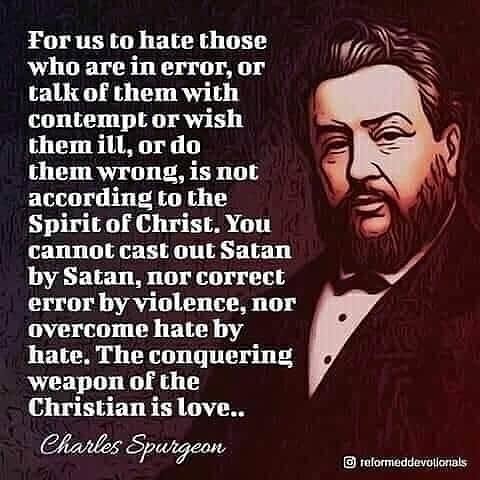
I’ve been thinking a lot about what the late John MacArthur said. When it comes to those who are holding views that don’t align with the Bible, we must not view them as enemies but as our mission field.

Ephesians 6:12 says, “For we are not fighting against flesh-and-blood enemies, but against evil rulers and authorities of the unseen world, against mighty powers in this dark world, and against evil spirits in the heavenly places (Eph, 6:12. NLT).

In other words, people are not the enemy. The real enemy is the spiritual deception behind the lies. The prince of the power of the air is the enemy. And he is a defeated foe.

The best way to deal with those who wish to undermine biblical principles is to pray for their salvation. Pray that God leads them to the truth — not my truth or their truth or anyone else’s truth but THE truth that is personified in Jesus Christ.

Perhaps the best example of someone being loved into truth is the Apostle Paul. He was an enemy of the Church. He persecuted and hated everything that the early believers stood for. Yet it was their prayers and an encounter with Jesus that led him to the light — in this case a literal blinding light on the road to Damascus. From there, this Paul became the most stout defender and proponent of the faith.

How cool would it be if some of the people who currently malign or twist Scripture eventually became the biggest apologists for the Bible? How amazing would it be if they were the ones pointing people to Jesus instead of to false doctrine or false worldviews?

Obviously, we should defend gospel truth. We should never stand by when people are being lied to and deceived. But we should also remember that those on the other side are just as much people that Christ died for as we were. They’re not the enemy. They’re the mission field, as we once were.

Getting Hold of God

“Whenever the insistence is on the point that God answers prayer, we are off the track. The meaning of prayer is that we get hold of God, not of the answer” (Oswald Chambers, My Utmost for His Highest).

If I’m not careful, prayer can become like my childhood letterd to Santa. Those typically started off with me stating how I’d been good all year and thus was worthy of all the loot I had coming to me. The specifics of those letters escapes me, but I’m sure that I was like every other kid back in the day who mailed actual letters in envelopes to an address somewhere at the North Pole.

We do the same with God. It’s like, “God, thanks for being God. Here’s what I want from You” and then the list of wants and needs begins. Sometimes, we even have a list of people we’re praying for (which is by no means a bad thing to do).

But prayer isn’t as much getting things from God as it is getting to know God. The more you know God, the more your wants and needs change. By the end, I suspect we’re praying God’s prayers back to Him. That means we’re asking God for what God wants for us and in us. We want the same things He does.

In the mean time, it is perfectly acceptable to come to God in prayer without asking for anything but simply to adore Him and thank Him for who He is. I think the less we’re concerned about getting answers, the more we’ll see God at work because our focus won’t be so narrowly limited to His hand.

The good news is that even if you feel you’ve been doing it all wrong in prayer and treating Him as Cosmic Santa, you can always start over in a sense. You can spend at least part of your prayer time in adoration and thanksgiving before processing to petitions. You can look for opportunities throughout the day to thank God for what He’s doing, even if you can’t always see what that is.

Again, the point as always is to pray. The best way to get better at praying isn’t listening to more sermons or reading more books about prayer but praying — and being around people who pray often and pray well. That has helped me a lot. I still think reading books of prayers is good, like the Book of Common Prayer or The Valley of Vision. But mostly just pray.