You Can’t Go Back

“The work of salvation means that in your real life things are dramatically changed. You no longer look at things in the same way. Your desires are new and the old things have lost their power to attract you. If you are born again, the Spirit of God makes the change very evident in your real life and thought. It is this complete and amazing change that is the very evidence that you are saved.” (Oswald Chambers, My Utmost for His Highest).

That’s salvation. It’s way more than a mental assent to a set of beliefs. It’s even more than making a few behavioral changes. It’s as dramatic as going from death to life. You become a completely new creation with a new set of desires and actions.

The verse says that the old has gone and the new has come. You couldn’t go back to the old even if you wanted to. You might fall back into sin occasionally but you can’t stay there. It would be like a resurrected man climbing back into the grave and pretending to be dead again. You could try it for a bit, but the natural impulse will be for oxygen.

You could live in sin for a season but you’d be miserable. It’s not natural anymore. The new nature doesn’t thrive in the old ways. The evidence that someone is truly born again is a different way of living. If you say you’ve been saved but keep living like you did, then maybe your salvation isn’t real. If there’s no change, maybe there’s been no transformation.

But the beauty of the gospel is that Jesus is in the business of changing lives and making dead hearts beat again. He takes the old and makes it new. He takes the outcast and makes them wanted. He takes the lost and makes them found. He takes the enemies of God and turns them into sons and daughters of the risen King with all the blessings that come to the King Himself.

If you’re not sure, maybe it’s time to make sure. You can pray a prayer that comes from a heart of faith that goes like this: “Lord Jesus, I want to have a personal relationship with You. I know I am a sinner and I believe You died on the cross for my sins. I turn from those sins and put my faith in You right now to be my Lord and Savior” (Harvest.org).

Maybe today’s the day.

An Essay I Wrote

image

I may or may not have mentioned that I’m currently involved in an intensive discipleship training class at my church. Part of the class involved writing an essay.

I chose to write on the unique contributions that each of the four Gospels make to our overall understanding of Jesus and Christianity. It almost felt like a part of my brain got turned on that hadn’t seen much action since my seminary days of yore. Here is the result (with the reminder that it is an essay and reads like one):

“Each gospel has made its own unique contributions to the overall biblical canon and to our understanding of who Jesus is and what His purpose and mission were while He was here on earth. Although each of these is technically anonymous, there are enough clues and evidence, both biblical and extra-biblical, to safely say that these were written by Matthew, Mark, Luke, and John.

Matthew writes primarily for a Hebrew audience, emphasizing how Jesus is truly the prophesied Messiah. He brings in the genealogy of Jesus and parallels him to Moses on several occasions. Matthew brings out Jesus’ teaching on the Kingdom of God and how it is both now and not yet. Many see Matthew as represented by a man, because he emphasized the humanity of Jesus.

Mark, the first of the Gospels to be written, focuses on Jesus as the Son of God, the true Messiah sent from God into the world. His Gospel is fast-paced, accentuated by his frequent use of the word “immediately.” He is represented by a lion, because he brought out the kingly nature of Jesus.

Luke writes to Theophilus, but likely his intended audience is both Jews and Gentiles. He gives a convincing defense of Jesus and the gospel for both evangelistic and discipling purposes. He is represented by an ox, the lowliest of animals, for his attention to the lowly and outcasts, such as the shepherds, and the Gentiles. His theme is the universality of salvation, how it’s not only for a specific race or region, but for all peoples everywhere.

All three of these Gospels are called the Synoptic Gospels because they share many similarities, such as miracles, parables, and teachings. Matthew and Luke probably borrow from Mark, who in turn uses a source of collected sayings and teachings, commonly referred to as “Q”, to build his own writings upon.

John writes to a primarily Gentile audience in Ephesus and is by far the most intentionally evangelical of the Gospels. He writes that His purpose is to show that Jesus is indeed the Christ that those who read may believe and have eternal life in His name. He is often represented by an eagle for his high Christology and his lyrical and poetic imagery, as well as his epic style of writing, as evidenced by the opening 18 verses of chapter one.

Each Gospel reflects the personality and background of the writers and brings out different aspects to the character, life, and teachings of Christ. Some emphasize his teachings, while others focus on His ministry. Yet all four together present a compelling portrait of Jesus as both God and man, Savior and Lord.”

Storms Revisited

image
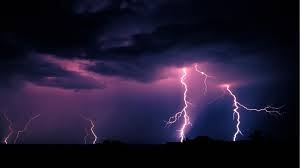
“Never dread any consequence resulting from absolute obedience to His command. Never fear the rough waters ahead, which through their proud contempt impede your progress. God is greater than the roar of raging water and the mighty waves of the sea. ‘The Lord sits enthroned as King forever’ (Psalm 29:10). A storm is simply the hem of His robe, the sign of His coming, and the evidence of His presence.” (F. B. Meyer)

Wow. I never thought of storms that way. Either literally or figuratively.

I always thought of God going before the storm, being with me during the storm, and waiting for me after the storm. I never thought of the storm itself being a sign of His presence.

I’m wondering something else. Whenever I picture a storm, I see grieving parents hovering over the coffin of their dead child or a father holding foreclosure papers in his trembling hands. But maybe storms come in less noticeable ways.

Could a storm be that dull dread day after day that never seems to depart? Could a storm be the rut you’ve been stuck in for years that never seems to alter or change?

Some storms come and wipe off the land. Some come and go with no evidence they were ever there. But they are felt just the same.

Storms end. Dark clouds give way to sunshine. The waters eventually subside. Yet God remains.

I had some grand way I was going to tie all this together so that you would think me ever so wise, but it never materialized. All I know is that for every storm that comes, God is just as present. And He’ll still be there after the storm leaves.

These are not the most profound words I’ve ever written, but maybe someone out there who is holding on for dear life or merely dreading the monotony of the next day, these words will be something to cling to. I don’t know.

I know God is bigger than any storm. He still speaks and the winds and waves still have to obey. That’s all I know for now.