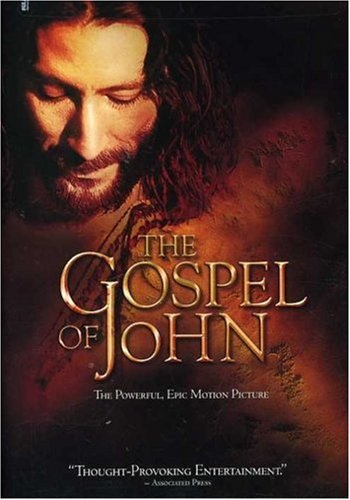
As part of a Wednesday night class I’m taking at my church, I read through each of the four gospels, ending up with the Gospel of John this past week.
As I’ve mentioned before, my favorite is the Gospel of Luke because of his attention to detail and his inclusion of those on the fringes of society. But I really, really like John.
To me, the Gospel of John is like an epic movie in the style of a Cecil B. DeMille or a David Lean. Think grand along the lines of a Lawrence of Arabia or Doctor Zhivago.
Of all the gospel writers, John is the most unapologetically apologetic (not in the sense of saying “I’m sorry,” but in the sense of defining and defending the faith). He practically puts his purpose in bold red letters: so that you may believe that Jesus is the promised Messiah and believing, find eternal life in His name.
I like to think of John 1:1-18 as a kind of overture with themes expanded upon in the rest of the book. It’s got Jesus as the incarnate Word coming to pitch His tent among us, rejected by His own, but granting life to those who recognize Who He is and believe.
It has light versus dark, life versus death, righteousness versus sin, ultimate good versus ultimate evil. And in case you’re wondering, good wins.
I love how John’s Gospel is the most love-centered gospel. John even refers to himself as “the beloved disciple” and “the one Jesus loves” because he can’t get over the fact that Jesus could love a hot-headed mess like him.
Ultimately, I love how each gospel writer injects his own personality into the stories and helps draw out different facets about the life and ministry of Jesus. The end result is a very three- (or four-) dimensional portrait of the Messiah.
On a totally random note, I wonder if John read the other Gospels and said something like “Oh, you have the ascension of Jesus in yours? That’s cute. I have the freakin’ vision of Heaven in my book.”
Probably not. But that’s just the way my warped mind works.
I still highly recommend reading through all four Gospels as often as humanly possible. Those books never get old.
 Ragamuffingospelfan's Blog