Praying for Your Enemies

“In prayer we go to our enemies, to stand at their side. We are with them, near them, for them before God. Jesus does not promise us that the enemy we love, we bless, to whom we do good, will not abuse and persecute us. They will do so. But even in doing so, they cannot harm and conquer us if we take this last step to them in intercessory prayer. Now we are taking up their neediness and poverty, their being guilty and lost, and interceding for them before God. We are doing for them in vicarious representative action what they cannot do for themselves. Every insult from our enemy will only bind us closer to God and to our enemy. Every persecution can only serve to bring the enemy closer to reconciliation with God, to make love more unconquerable.

How does love become unconquerable? By never asking what the enemy is doing to it, and only asking what Jesus has done. Loving one’s enemies leads disciples to the way of the cross and into communion with the crucified one” (Dietrich Bonhoeffer).

Dietrich knew a thing or two about enemies. He stood up to the Nazis and Adolf Hitler and spend the last few years of his life in prison, dying by execution literally days before the Allies liberated the camp. He felt it was his moral duty to speak out against the evils the government was doing, especially in regard to the millions of Jews who were killed.

Jesus also knows a thing or two about enemies. The religious leaders plotted to kill Him, arrested Him under false charges, put on a mock trial, and then had Him executed as a common criminal in the most tortuous and painful form of death ever devised by humanity. He even prayed forgiveness for those very people while they were in the act of murdering Him.

We are called to love our enemies. We are called to pray for them like we would want others to pray for us. Ultimately, the hope is that they can find forgiveness and redemption through Christ and become family instead of enemies.

If you say that’s unfair, remember that’s what God did for you. While you were still enemies and sinners, God in Jesus died for you. While you were living in complete rebellion against the Almighty, He sent His only Son for you.

Even if your enemies never change, forgiving and loving them frees you from the captivity of toxic bitterness and hatred. They no longer occupy your every waking thought. Plus, forgiveness shows more than anything what God’s love looks like. That’s the best reason of all.
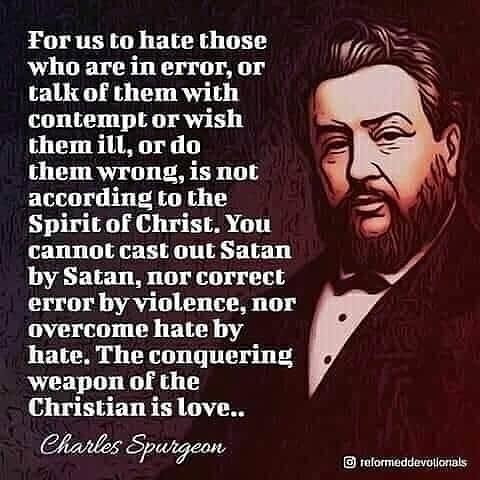
A Good Reminder

If you need a little encouragement, just go to Romans 8, particularly verses 31-39. They’re some of my favorite promises from God in all the Bible. Nothing can or ever will separate me from the love of God in Christ. Nothing can remove me from being His child or from being eternally saved and eternally secure.

The worst that the world can do to me is to hasten my homeward trip to heaven. They can’t destroy me. They can’t defeat me because my God is undefeated and undefeatable (which probably isn’t a word but should be in my opinion).

Let these words soak into your very marrow and read them over and over again to yourself. Say them out loud if that helps. Remember that God’s love is forever for those who are in Christ Jesus:

“So, what do you think? With God on our side like this, how can we lose? If God didn’t hesitate to put everything on the line for us, embracing our condition and exposing himself to the worst by sending his own Son, is there anything else he wouldn’t gladly and freely do for us? And who would dare tangle with God by messing with one of God’s chosen? Who would dare even to point a finger? The One who died for us—who was raised to life for us!—is in the presence of God at this very moment sticking up for us. Do you think anyone is going to be able to drive a wedge between us and Christ’s love for us? There is no way! Not trouble, not hard times, not hatred, not hunger, not homelessness, not bullying threats, not backstabbing, not even the worst sins listed in Scripture:

They kill us in cold blood because they hate you.

We’re sitting ducks; they pick us off one by one.

None of this fazes us because Jesus loves us. I’m absolutely convinced that nothing—nothing living or dead, angelic or demonic, today or tomorrow, high or low, thinkable or unthinkable—absolutely nothing can get between us and God’s love because of the way that Jesus our Master has embraced us” (Romans 8:31-39).

We Wrestle Not

I’ve been thinking a lot about what the late John MacArthur said. When it comes to those who are holding views that don’t align with the Bible, we must not view them as enemies but as our mission field.

Ephesians 6:12 says, “For we are not fighting against flesh-and-blood enemies, but against evil rulers and authorities of the unseen world, against mighty powers in this dark world, and against evil spirits in the heavenly places (Eph, 6:12. NLT).

In other words, people are not the enemy. The real enemy is the spiritual deception behind the lies. The prince of the power of the air is the enemy. And he is a defeated foe.

The best way to deal with those who wish to undermine biblical principles is to pray for their salvation. Pray that God leads them to the truth — not my truth or their truth or anyone else’s truth but THE truth that is personified in Jesus Christ.

Perhaps the best example of someone being loved into truth is the Apostle Paul. He was an enemy of the Church. He persecuted and hated everything that the early believers stood for. Yet it was their prayers and an encounter with Jesus that led him to the light — in this case a literal blinding light on the road to Damascus. From there, this Paul became the most stout defender and proponent of the faith.

How cool would it be if some of the people who currently malign or twist Scripture eventually became the biggest apologists for the Bible? How amazing would it be if they were the ones pointing people to Jesus instead of to false doctrine or false worldviews?

Obviously, we should defend gospel truth. We should never stand by when people are being lied to and deceived. But we should also remember that those on the other side are just as much people that Christ died for as we were. They’re not the enemy. They’re the mission field, as we once were.

Resist?

Here I am, thinking out loud again. That may get me into trouble, but I think I need to air out some of my thoughts on the whole idea of resisting for a committed follower of Jesus. These views do not reflect the views of my church or my city, yada yada yada. You know the drill.

Somehow, I think the whole mentality of resisting is similar to what people have said about Christians, especially here in America. Mostly, they’re known more for what they’re against rather than what they’re for. And that’s what strikes me about resisting.

People will say that the disciples were resisting when they were arrested and went back out and went right back to preaching in the synagogue again. I think it was more a matter of an allegiance to a higher power that overrode any civil or human authority. They didn’t have the mentality of “Well, since they tried to shut us down, we’re going to go at it twice as hard to shame them.” It was more like “Even though we submit to all human authority as commanded by God, in this matter we must obey God rather than man.”

I do think that we should never submit to anything that violates our faith or commands us to engage in sin. I do think we still proclaim that Christ is Lord even when the higher powers want us to bow the knee to Caesar (or to the modern equivalent).

It’s not a prideful resisting but a humble acknowledgment that our allegiance is to God rather than man. We’re not being contrarian. We simply believe that when it comes to a choice between man-made laws and the laws of God, God’s law wins every time.

I also think that we’re still commanded to love our enemies and pray for those in authority over us, whether we like them or agree with them or not. I prayed for Biden and now I pray for Trump that both would seek God’s wisdom in governing this nation of ours.

Jesus’ mission wasn’t primarily to oppose Rome or the religious leaders of the day. His main goal was obedience to the Father rather than civil disobedience. I’m sure to the Pharisees and Scribes, what he did looked like breaking their laws just to break them, but in reality, Jesus never once broke one of the laws that God set in place through the Torah.

I believe that as the end times draw nearer, our allegiance to God will come more and more into conflict with the laws of the state. Then we will have to choose to follow God or follow man. We may have to choose between persecution up to and including death or denying our faith to save our own skin. It will look like resisting. Maybe that’s what it really is. But ultimately, it will still be obedience to the highest authority and the ultimate allegiance to the only true King.

A Love that Conquers the World

“The love for equals is a human thing–of friend for friend, brother for brother. It is to love what is loving and lovely. The world smiles.

The love for the less fortunate is a beautiful thing–the love for those who suffer, for those who are poor, the sick, the failures, the unlovely. This is compassion, and it touches the heart of the world.

The love for the more fortunate is a rare thing–to love those who succeed where we fail, to rejoice without envy with those who rejoice, the love of the poor for the rich, of the black man for the white man. The world is always bewildered by its saints.

And then there is the love for the enemy–love for the one who does not love you but mocks, threatens, and inflicts pain. The tortured’s love for the torturer. This is God’s love. It conquers the world” (Frederick Buechner, The Magnificent Defeat).

I think I know what kind of love I want. It’s the same kind of love that I need every single day. It’s the kind of love that infuriates the world, but also the kind of love that can save the world. Give me that kind of love.

Living on this Side of the Election

  • “It’s not about how the worship music makes us feel on Sunday morning, but how we live poured-out lives of worship from Monday to Saturday.
  • It’s not about how many verses we can quote to defend our political viewpoints, but how well we embody the Word made flesh to our politically opposite next-door neighbors.
  • It’s not about how pious our prayers sound during Sunday School, but how our hearts hear the whisper of God both in our hidden rooms and in our lived-out interactions with others” (Asheritah Ciuciu).

Now that we’re past the dreaded elections (or at least they were for me), we can hopefully return to normal. We can hopefully reach out across party lines to embrace and love those who voted differently than we did. We can understand that there is room in the Kingdom of God for blue and red (as well as many other colors).

The point is that we’re called to love our enemies, period. It doesn’t say to love them if they show remorse for their bad behavior. It doesn’t say to love them if they promise to reform. It says to love them the way Jesus loved those who crucified Him. And how did He do that? He forgave them. He died for them.

We’re also called to honor our leaders, according to Romans 13. That doesn’t mean only those who share my political ideology. It doesn’t mean those we like and admire and can respect. Remember when Paul wrote those words, the ruler was Nero, who was just about as bad and corrupt as they come. Nero was responsible for the martyring of many followers of Jesus. But Paul said to honor him because God in His infinite purposes sets up rulers, good and bad, to accomplish His will.

Ultimately, it helps to remember that we’re all broken. The problem isn’t just out there. We all have sinned and fallen short of the glory of God and can share the blame for the problems of this country. We would be wise to drop those stones we want to throw at the Trumps and Harrises of the world and their followers unless we can prove that we’re sinless.

If we live out of love as citizens of a Kingdom more than of a country, we do well. Our ultimate allegiance isn’t to any president or to any flag or any political party or ideology. It’s to a King and a Kingdom. It’s to Jesus who will still be on His throne long after all the presidents and kings and emperors are long gone.

That Love Your Enemy Thing Again

“Do not rejoice when your enemy falls, and let not your heart be glad when he stumbles” (Proverbs 24:17).

I don’t like it when people post about Donald Trump and how they wish the assassination attempt had been successful. I’m equally not a fan of people making fun of Joe Biden for his apparent dementia. Neither one suits a child of God or a disciple of Jesus.

The current political climate has created an us versus them mentality. We can be tolerant toward the views of our people, but not theirs. We will try to be civil and humane with our people, but when it comes to their people, all bets are off and all sorts of name-calling of them and their families are fair game.

We’ve even decided that the whole made in the image of God thing doesn’t apply to them. They’re evil and not human because they are them, not us. Typically, the view we have of them is the most distorted and exaggerated caricature of the person and not the actual person.

When Jesus said to love your enemies, He didn’t stutter. He said to love them whether you like them or not, whether you agree with them or not, whether they deserve love or not. As I’ve said repeatedly, Jesus chose to love and forgive those who were in the very act of murdering Him.

I don’t think it’s good to celebrate when a political opponent suffers. In fact, if your theology allows you to hate “them,” then it’s not of God and not of the Bible. And disagreeing with choices or lifestyle doesn’t equal hate. In fact, the more you love people, the more concerned you will be when they make unwise choices or behaviors and the more you will want the best, i.e. God’s best, for them.

Perhaps the best way to learn to love your enemy is to pray for them. And not in pray for their destruction or comeuppance. But pray for them as you would for yourself or a loved one. Pray that God can change their heart and give them wisdom — not Democratic or Republican wisdom but Godly wisdom. You can pray for their salvation. You can pray that they will find the same joy and peace that you have found.

Who’s Trash?

I recently ran across a Facebook post where someone was calling Elon Musk a piece of trash. I’m not about to defend Mr. Musk since I don’t really know much about him or what he stands for. I do know that it’s easier to point fingers at other people than look in the mirror (and I’m probably the first one to be guilty of that).

I’ve read my Bible, and I’m pretty sure that Elon Musk and Donald Trump and Kamala Harris are all made in the image of God. All bear the imago dei and Jesus died for every single one of them. If that’s trash, then Jesus died for trash. If that’s trash, then God made trash and I suppose that would make God trash (which He is obviously not).

That’s the worst part about elections. People can get very self-righteous and feel it’s okay to speak contemptibly about anyone who is on the “other” side of the political spectrum. Aldus Huxley said, “To be able to destroy with good conscience, to be able to behave badly and call your bad behavior ‘righteous indignation’ — this is the height of psychological luxury, the most delicious of moral treats.”

But that is not the way of Jesus. Remember He loved His enemies. He died for His enemies. He forgave His enemies while they were in the very act of murdering Him. And that’s the standard if you call yourself a follower of Jesus.

I’ve been around long enough to know that there are no political solutions to spiritual problems. No elected official can right what’s wrong with this country? No bill or amendment or vote can legislate spiritually dead people into life. Only Jesus can do that.

I have to guard against becoming pharisaical in seeing other peoples’ flaws and overlooking my own. I can very easily become judgmental and forget that the very foundation of my faith is the grace by which I’m saved.

So who’s trash? In the eyes of God, no one. No one is beyond redemption. No one is too far gone to save. Ask the Apostle Paul, once a terrorist against Christians and later the biggest advocate for the gospel. The gospel is for everyone.

Interceding for Our Enemies

“In prayer we go to our enemies, to stand at their side. We are with them, near them, for them before God. Jesus does not promise us that the enemy we love, we bless, to whom we do good, will not abuse and persecute us. They will do so. But even in doing so, they cannot harm and conquer us if we take this last step to them in intercessory prayer. Now we are taking up their neediness and poverty, their being guilty and lost, and interceding for them before God. We are doing for them in vicarious representative action what they cannot do for themselves. Every insult from our enemy will only bind us closer to God and to our enemy. Every persecution can only serve to bring the enemy closer to reconciliation with God, to make love more unconquerable.

How does love become unconquerable? By never asking what the enemy is doing to it, and only asking what Jesus has done. Loving one’s enemies leads disciples to the way of the cross and into communion with the crucified one” (Dietrich Bonhoeffer).

It’s gotten so bad in this current cultural climate that we can’t abide dissenting views. We’ve gone past the point where we used to be able to debate and listen rationally to opposing viewpoints. Now anyone who disagrees with me must not only be wrong and ignorant but evil. We have turned our social media into echo chambers where we only allow voices that say the same things we say and agree with.

But that’s not the way of Jesus at all. His way is interceding for enemies. Remember that Jesus forgave His own enemies while they were in the very act of murdering Him. He prayed for the very ones who drove the nails into His wrists and feet (and the ones who shouted the loudest for Him to be crucified).

In this election season, it’s easy to turn it into us versus them and to turn “them” off so that we can have peace. But again, that’s not the way of Jesus. We are to pray for our very enemies the way Jesus prayed (and still prays) for us. We are to love them the same way Jesus loved (and still loves) us.

Is it easy? No. Is it possible? Humanly speaking, no, but only through the resurrection power of Jesus in us. Only through daily dependence and renewal by Jesus. Only by the grace that saved us in the first place.

You could pray for your enemies like you would want someone to whom you were an enemy to pray for you. And believe me, everyone has enemies. No matter how nice or accommodating you might be, you still have enemies.

Above all, remember that we all were once God’s enemies. And what did He do? He sent Jesus who loved us first before we ever loved Him, loved us best by dying for us, and loved us everlastingly from the foundation of the world until forever.

Praying for Your Enemies

“The practical problem about charity (in our prayers) is very hard work, isn’t it? When you pray for Hitler & Stalin, how do you actually teach yourself to make the prayer real? The two things that help me are (a) A continual grasp of the idea that one is only joining one’s feeble little voice to the perpetual intercession of Christ, who died for those very men (b) A recollection, as firm as one can make it, of all one’s own cruelty wh. might have blossomed, under different conditions, into something terrible. You and I are not, at bottom, so different from these ghastly creatures” (C. S. Lewis, Letters of C. S. Lewis).

It’s one thing to pray for people who are diametrically opposed to you in their beliefs and lifestyle. It’s quite another to pray for those who are actively seeking to do you harm. I think the latter is what Jesus meant when He said to pray for your enemies.

I don’t think I could do that. At least, I know that in my own strength, I couldn’t. Only the power of the risen Christ dwelling in me could possibly love and pray for my enemies as they attack me. I believe that kind of supernatural power only comes in time of need, like it did for the disciple Stephen while he was being stoned to death with the approval of Saul. And later, it came to Saul, who now went by Paul, as he faced multiple attacks over proclaiming the death and resurrection of Jesus.

Ultimately, Jesus demonstrated praying for and loving your enemies best when He cried out to God, “Father, forgive them for they don’t know what they’re doing” as they were in the very act of murdering Him on the cross.

When I see that I am fundamentally no different than my enemies, it helps me to love them better. It helps me to see how much grace it took to save me when I’m not nearly as nice and good on my own as I had thought. It makes me that much more grateful to Jesus for saving me from me, and makes me less capable of hating anyone else.