To Those Who Grieve

“Look upon each of us now. There are so many families that have been bereaved, that we pray for all. You take away a mother here; you take away a husband there; you remove a child there; you are smiting on the right hand and on the left. We would kiss the rod and the hand that wields it, but we pray that the richest consolation may be given, especially to those who suffer much.
We pray that richer consolation than usual may be given where it is most required. Sanctify their bereavements. May the whole of the flock feel that when the Shepherd is taking away one after another, it is time for us to be ready for his coming.
Amen” (Charles Spurgeon).

Right now, I’m thinking about Erika Kirk, the widow of recently assassinated Charlie Kirk, who spoke the words “I forgive him” about the person who pulled the trigger and prematurely ended Charlie’s life. That’s not a natural response to loss. That can only happen under the power of the Holy Spirit and in someone whose heart is ruled by the peace of Christ.

There’s something so unnatural about death. It wasn’t in the original design, but sin entered the world and brought death and decay with it. So now we live in a world where life is temporary and fleeting. But we have the hope and promise of the resurrection.

Because Jesus was dead and is alive forevermore, so can we. We can face death with the knowledge that it is a defeated foe and won’t have the final say. We can grieve the ones we love with hope because we know that they currently more alive than ever but have merely changed their address (as the late Billy Graham once said).

I love the illustration about a man told a famous doctor that he was afraid of dying. The doctor responded by pointing to the office door where they both could hear a scratching sound and a whining voice behind it. Once the doctor opened the door, his dog came joyfully rushing in to embrace his master. The doctor said that the dog knew nothing about the office before he entered — only that his master was there.

And so it is with heaven. We know snippets. We don’t know a lot of details. We may not know much about what happens when we die. We just know that our Master is there. And that is enough to give us joy in the midst of our fear. We can rest in the assurance that to be absent from the body is to be present with the Lord. What we know see dimly through eyes of mustard seed faith we will see clearly by sight one day. And Jesus will be there. That’s enough.
Work Is Love Made Visible

“Work is love made visible” (Kahlil Gibran).

That one little sentence jumped off the page at me while I was sitting in my car in the parking lot of Radnor Lake State Park.

There’s so much profound depth in those five words that both comfort and convict.

How can my work be love made visible if I come to it with a bitter attitude and an ungrateful heart? How can I be loving in my actions and yet hateful toward others at the same time?

The truth of the matter is that all work can and should be sacred. All work is an act of worship. The question is whether it will be like Abel’s acceptable offering or Cain’s rejected offering.

Work is part of my witness. If I see my vocation as a way to serve others either directly or indirectly, then even the menial parts of my job take on a whole new meaning. There is no wasted effort, nothing meaningless. All of it means something if I do it out of love for God and for others.

The Bible says that whatever you do– whether you’re a lawyer, doctor, plumber, or a janitor– do it all to the glory of God. Do everything as an act of worship to show forth the goodness of God to those you work with and those you work for.

I love what Kahlil Gibran says next:

“And if you cannot work with love but only with distaste, it is better that you should leave your work and sit at the gate of the temple and take alms of those who work with joy.
For if you bake bread with indifference, you bake a bitter bread that feeds but half man’s hunger.
And if you grudge the crushing of the grapes, your grudge distils a poison in the wine.
And if you sing though as angels, and love not the singing, you muffle man’s ears to the voices of the day and the voices of the night”

Hymns in the Dark

“Along about midnight, Paul and Silas were at prayer and singing a robust hymn to God. The other prisoners couldn’t believe their ears. Then, without warning, a huge earthquake! The jailhouse tottered, every door flew open, all the prisoners were loose.

 Startled from sleep, the jailer saw all the doors swinging loose on their hinges. Assuming that all the prisoners had escaped, he pulled out his sword and was about to do himself in, figuring he was as good as dead anyway, when Paul stopped him: “Don’t do that! We’re all still here! Nobody’s run away!”

The jailer got a torch and ran inside. Badly shaken, he collapsed in front of Paul and Silas. He led them out of the jail and asked, ‘Sirs, what do I have to do to be saved, to really live?’ They said, ‘Put your entire trust in the Master Jesus. Then you’ll live as you were meant to live—and everyone in your house included!'” (Acts 16:25-35).

Today at The Church at Avenue South, Matthew Page preached on the passage where Paul and Silas sang hymns in prison. I wonder if I could do that, especially if I were behind bars for something I didn’t do.

Matthew spoke about how they lived a questionable life, as in a life that led people to ask questions about what kind of men they were and why they lived the way they did.

The most powerful part of their witness was being able to sing praise songs in a prison cell. That more than anything captured the attention of not only the fellow prisoners but of the prison guard as well.

I wonder if the earthquake would have happened if Paul and Silas has remained silent. Or if they had chosen instead to make a laundry list of all the wrongs and injustices inflicted upon them. Maybe. Maybe not.

The result was that a prison guard and his entire family came to faith in the Jesus that Paul and Silas sang about. Some scholars think that the other prisoners converted to Christianity as well.

Matthew went on to talk about being in the ER with a family whose daughter was near death. The prognosis was grim but some of those there with the family broke out singing hymns.

Do you sing as loud during the dark as well as during daylight? Do you praise God during the hard times when life doesn’t make sense? Does your speech reflect gratitude and thanksgiving in the midst of extreme trials and tribulations?

There was a doctor in that ER that eventually chose to follow Jesus because he saw what he couldn’t understand. He had probably seen people rage and curse at God but he had most likely never seen people worshipping through tears in the midst of tragedy.

By the way, the girl miraculously survived.

I won’t say that every time you praise Jesus, everything will automatically turn out the way you want it to, but I will say worship will change the way you see your circumstances.

It was convicting. Maybe I need a little more praise and a little less anxious analysing.

As always, I believe. Help my unbelief.


A Lenten Prayer by Brennan Manning

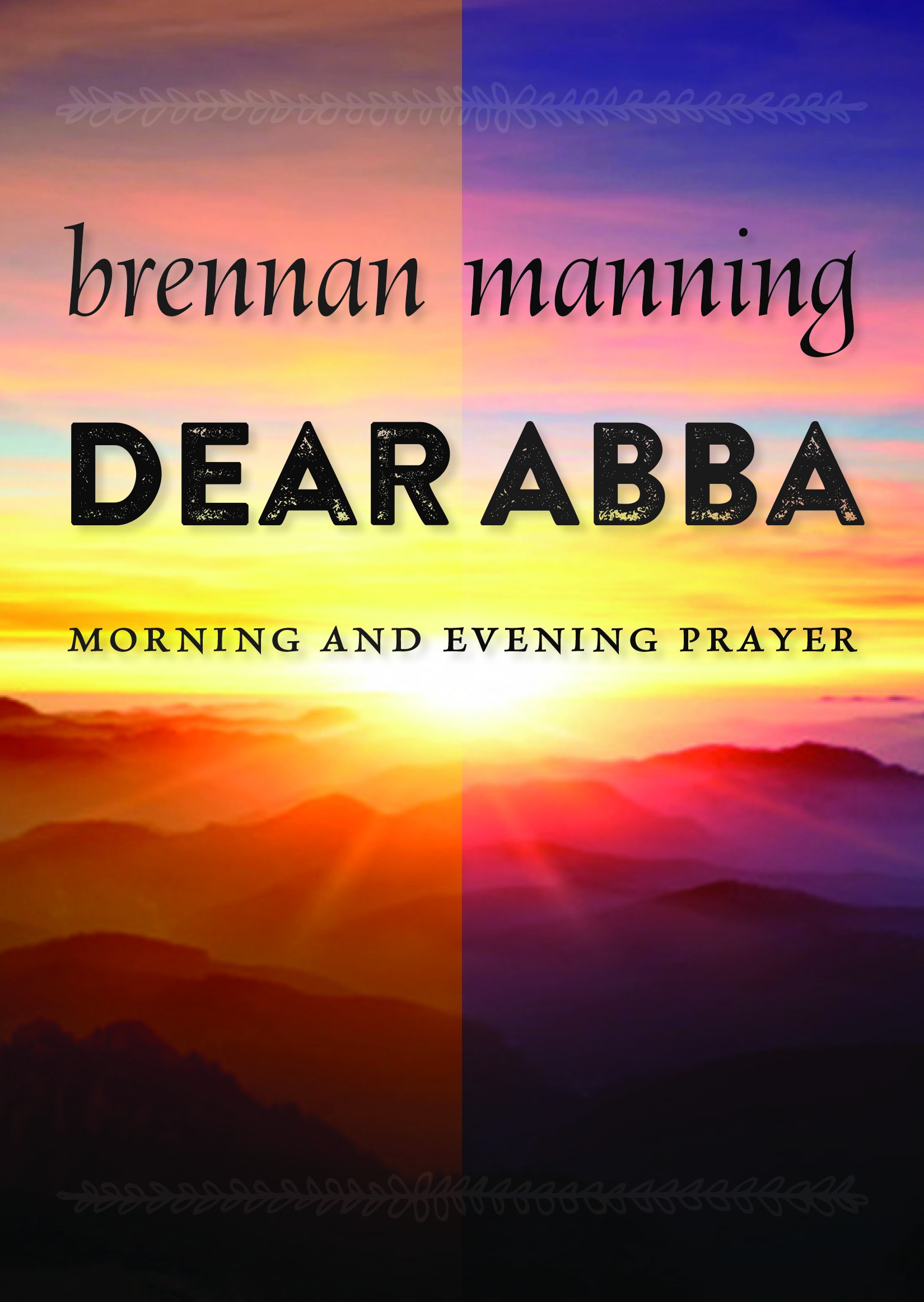
dearabba

I just found this and it reminded me why Brennan Manning is one of my favorite writers of faith.

“In my first-ever experience of being loved for nothing I had done or could do, I moved back and forth between mild ecstasy, silent wonder, and hushed trembling. The aura might be best described as ‘bright darkness.’ The moment lingered on in a timeless now, until without warning I felt a hand grip my heart. It was abrupt and startling.

The awareness of being loved was no longer tender and comforting. The love of Christ, the crucified Son of God, took on the wild fury of a sudden spring storm. Like a dam bursting, a spasm of convulsive crying erupted from the depths of my soul. Jesus died on the cross for me.

Dear Abba,

Ten thousand things are already vying for my attention. Wait, actually make that ten thousand and one. Some of them are shallow — like what shoes I will wear today — but some of them are legitimate: lunch with a friend, a doctor’s appointment, responding to a letter. Still, they are all earthly things. So startle me, I pray. Burst into the compound of my senses and steal me away from the urgent tyrannies already seeking to keep my eyes fixed on things below. You died for me. For me. That is the one thing; nothing else compares.”

Two thoughts: 1) I must find out where  I can get this book and 2) I hope Easter Sunday doesn’t arrive to find me comfortable or complacent, taking God’s love for me for granted. I want it to shake me to my very core and radically disrupt my life. I want to be stirred out of comfortable ruts and compelled into a deeper, wilder, more passionate love for Jesus who didn’t not negotiate percentages on the cross, but gave absolutely 100% of Himself for me.