More of My Mind Blown at Kairos

Tonight, Uncle Mike (or Mike Glenn, as he is known to those outside of Kairos) spoke on the passage in Matthew where Pilate offers up a choice to the people.

“Whom do you want me to release today? Jesus or Barabbas?”

He does this hoping the crowd will want to release Jesus, but to his dismay, they ask for Barabbas instead.

“Don’t you know what kind of man this is? Are you sure you want this man over your Messiah?”

I’m sure Pilate thought but never spoke these words. Instead, he washed his hands of the whole business. Literally.

I wonder if you could have been close enough, would you have heard Jesus saying, “Release Barabbas”?

The truth of the matter is that Jesus chose Barabbas. Jesus chose to go to His death so that Barabbas could go free.

I would not have picked Barabbas. He was not a nice guy in the most extreme sense. But Jesus did.

Don’t forget that Jesus also chose you and me. He chose to die for you and me so that we could go free.

You might say that you’re not as bad as a Barabbas, but the Bible says you have sinned. I have sinned. We have all fallen short of who God made us to be. We had the choice and chose the other side over God.

But when God had a choice, He chose us. Jesus chose us over His own life.

My mind is once again officially blown.

Hangin’ with The Magician’s Nephew

SONY DSC

Some people like to spend their annual vacation in Panama City or Savannah or Gatlinburg. I myself like to visit Narnia on a yearly basis. So it’s that time again when I pick up The Magician’s Nephew and commence on re-reading The Chronicles of Narnia.

Back in the day, the series started with The Lion, The Witch, and The Wardrobe and went in the order in which C. S. Lewis wrote them. Now, the series starts with The Magician’s Nephew, which involves the creation of Narnia, and progresses chronologically in terms of the story line rather than in the order in which the books were published. Is that clear as mud?

Either way, they’re great books. They always encourage me and reaffirm my faith without being overly preachy. Even those who don’t care much for Christianity can read these books and find much to like. Or so I would imagine.

I highly recommend these books to anyone who likes allegorical fiction (even though these books aren’t really allegories in the strictest sense) or just good literature. They were written for children but anyone who is young at heart will love them.

I will keep you updated as I move through the seven books in the series.


Quotes I Love Part One

I think this says it all.

“WE CAN SAY THAT the story of the Resurrection means simply that the teachings of Jesus are immortal like the plays of Shakespeare or the music of Beethoven and that their wisdom and truth will live on forever. Or we can say that the Resurrection means that the spirit of Jesus is undying, that he himself lives on among us, the way that Socrates does, for instance, in the good that he left behind him, in the lives of all who follow his great example. Or we can say that the language in which the Gospels describe the Resurrection of Jesus is the language of poetry and that, as such, it is not to be taken literally but as pointing to a truth more profound than the literal.

Very often, I think, this is the way that the Bible is written, and I would point to some of the stories about the birth of Jesus, for instance, as examples; but in the case of the Resurrection, this simply does not apply because there really is no story about the Resurrection in the New Testament. Except in the most fragmentary way, it is not described at all. There is no poetry about it. Instead, it is simply proclaimed as a fact. Christ is risen! In fact, the very existence of the New Testament itself proclaims it. Unless something very real indeed took place on that strange, confused morning, there would be no New Testament, no Church, no Christianity.

Yet we try to reduce it to poetry anyway: the coming of spring with the return of life to the dead earth, the rebirth of hope in the despairing soul. We try to suggest that these are the miracles that the Resurrection is all about, but they are not. In their way they are all miracles, but they are not this miracle, this central one to which the whole Christian faith points.

Unlike the chief priests and the Pharisees, who tried with soldiers and a great stone to make themselves as secure as they could against the terrible possibility of Christ’s really rising again from the dead, we are considerably more subtle. We tend in our age to say, ‘Of course, it was bound to happen. Nothing could stop it.’ But when we are pressed to say what it was that actually did happen, what we are apt to come out with is something pretty meager: this ‘miracle’ of truth that never dies, the ‘miracle’ of a life so beautiful that two thousand years have left the memory of it undimmed, the ‘miracle’ of doubt turning into faith, fear into hope. If I believed that this or something like this was all that the Resurrection meant, then I would turn in my certificate of ordination and take up some other profession. Or at least I hope that I would have the courage to” (Frederick Buechner).

-Originally published in The Alphabet of Grace

When You Can’t Think of Any Good Blog Ideas . . . .

Since I am fresh out of original material, I thought I’d pick the brain of one C. S. Lewis and see if he has anything worthwhile to say. I found this in an email and thought it worthy enough to share with you. Plus, it uses words like solecism, which I’m going to have to look up now because I have no idea what it means. Here goes:

“If the world exists not chiefly that we may love God but that God may love us, yet that very fact, on a deeper level, is so for our sakes. If He who in Himself can lack nothing chooses to need us, it is because we need to be needed. Before and behind all the relations of God to man, as we now learn them from Christianity, yawns the abyss of a Divine act of pure giving—the election of man, from nonentity, to be the beloved of God, and therefore (in some sense) the needed and desired of God, who but for that act needs and desires nothing, since He eternally has, and is, all goodness. And that act is for our sakes. It is good for us to know love; and best for us to know the love of the best object, God. But to know it as a love in which we were primarily the wooers and God the wooed, in which we sought and He was found, in which His conformity to our needs, not ours to His, came first, would be to know it in a form false to the very nature of things. For we are only creatures: our role must always be that of patient to agent, female to male, mirror to light, echo to voice. Our highest activity must be response, not initiative. To experience the love of God in a true, and not an illusory form, is therefore to experience it as our surrender to His demand, our conformity to His desire: to experience it in the opposite way is, as it were, a solecism against the grammar of being.”

I looked up solecism. According to my handy-dandy Merriam-Webster dictionary, it means “an ungrammatical combination of words in a sentence.” In other words, to experience the love of God in an illusory form is basically to go against the very fabric of our existence. Or something like that.

The fact that God created us and redeemed us and loves us for no other reason than He chooses to do so blows my mind. God didn’t– and still doesn’t– need me but He still wants me. He still wants you, even when it seems nobody else does.

That’s a good thought to take with you as you drift into dreamland tonight.


My Occasional Soapbox Post Strikes Again

I have to admit something. I’m a little concerned about evangelical Christianity in America.

I hope I’m wrong about this, but it seems we’ve sold out. In order to get along with everybody and to be at peace, we have compromised our convictions and doctrines in order not to be offensive. We’ve come to the point where we believe that all lifestyles and beliefs are valid and true and where no one can ever say that anything anybody else says or does is wrong. At least not if we don’t want to be labeled as “judgmental” or “bigots” or “hate-mongers.”

From what I know about Christianity, the gospel itself is offensive. It’s scandalous. If we’re faithful to proclaim it and to strive to be conformed to the likeness of Christ, we will be rejected. And ridiculed. And persecuted. How do I know that? Because He Himself promised it would happen.

The Bible says that we apart from God love darkness and hate the light. We hate the truth and anything or anyone associated with it. It takes more than just convincing of our logic. It takes the love of God invading our hearts for us to be transformed.

I think part of the problem is that we interpret what the Bible says through the lenses of emotion or sexuality or politics. It should be the other way around. The truth is not politically correct and it isn’t always the popular opinion. In fact, many times, the truth will be in the minority.

I do believe in the Bible the same way orthodox believers have believed in it for centuries. My faith is the faith of the apostles and saints through the ages. That is Christianity. Anything else is not. You are free to believe and practice your belief however you choose, but if your faith has stepped outside of the boundaries of orthodox faith, you are believing in something other than the Christ of Christianity. I don’t say any of this out of pride or arrogance. In fact, I’m a fairly lousy Christian at times, saying one thing and living another. Or in my case, not really saying anything at all.

I still believe that Christians are called to love those who think and act differently, regardless of whether they ever change. Jesus loved those who opposed Him most vehemently, yet still proclaimed the truth boldly, calling a spade a spade. Jesus died for the ones who murdered Him.

Love is still the way to go, but not love that has no standards. That’s not love. That’s just permissiveness. God’s love says in effect, “I love you just the way you are right now, but I refuse to leave you that way. My love will make you everything I created you to be.”

As always, I’m just a ragamuffin out there telling other ragamuffins where to find the Bread of Life.

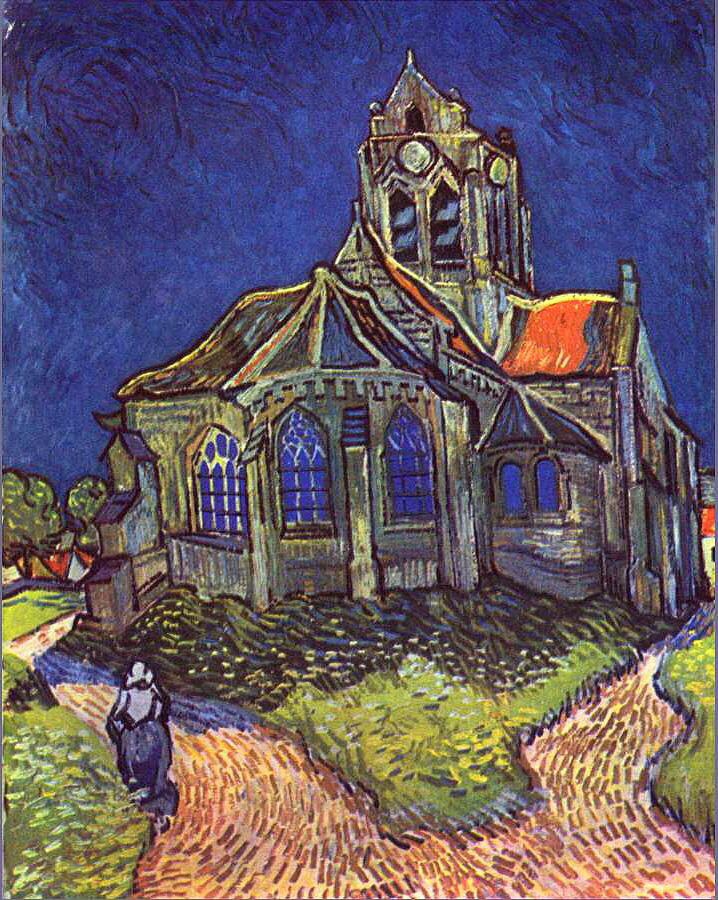


Lessons from Van Gogh

image

Tonight at Kairos, Michael Boggs did a bit of art history. I have to share what he said because it really does have implications for 21st century American Christianity.

Van Gogh started as a missionary living in a mining community. He totally immersed himself in their world tried to be Jesus to them. The result was that the church who put him there fired him because they felt his behavior wasn’t becoming of their standards.

He painted his famous church painting much later. The painting is beautiful, but also telling in what it leaves out. First, there are no lights coming from within the church. There’s not a path leading to the church. Finally, there are no doors anywhere on this church.

It was as if Van Gogh was communicating how he felt church leaders shut him out and how he couldn’t get back in. He felt like they put up barriers between him and God.

A question my friend posed (and one I’ve been thinking about a lot lately is, ” What would Jesus undo?” He even wrote a book by that title with just that question in mind.

I believe Jesus would undo the walls we put up to keep people out. Not the boundaries we put up to protect ourselves, but walls we use to ostracize those who think and act different than us.

Most of all, I think Jesus would undo the holy huddle mentality that has kept the lost people around it at arm’s length and shut its eyes to the dire need around it.

Jesus would undo the religious hyper-activity that keeps us too busy going to church throughout the week to be able to take Jesus to those around us who really need Him.

Jesus would definitely undo my smug superiority over those who sin differently than I do, reminding me that my sin is just as offensive as theirs. I need Jesus as much as anyone and it took just as much grace to save me as it took for any felon or drug addict.

I plan on buying the book, What Would Jesus Undo by Michael Boggs, and I hope you will, too. Shameless plug.

Patience and Kindness

image

I think I finally figured out what won these dogs over that I’m dog-sitting. It wasn’t my oh-so-charming personality. It wasn’t giving them a little extra food in their bowls. It wasn’t my hypnotic and soothing voice. What was it?

It was patience and kindness.

That’s how God won me over. Probably that’s how God captured your heart, too.

That’s what will win the world, I think. Just plain simple patience and kindness. No one wants to listen to a message of love from someone who’s impatient and rude. No one wants to be yelled at.

It is so true. People don’t care what you know (or even Who you know) until they know you care about them. Not just as souls to be saved but as people who really and truly matter to God. People created in the image of God who have worth and value simply because God made them.

I know I personally need quite a bit of patience and kindness both from God and from other people. That’s why I try to give it out whenever I can.

By the way, this is a milestone. My 1,500th blog post. Yay me.

The Odd Blog

image

I had an idea or two about what I was going to write about this evening, but at the moment, neither of them seem as compelling. Plus, I’m very tired.

I’m thankful for people. I know it’s an odd thing to say. Besides, people can be disappointing and rude and unkind at times. Even the best of people have their off days every now and then, not to mention periods of grumpiness and bad moods.

But life without people isn’t nearly as fulfilling as life with people. As much as I love my cat, she’s not the most stimulating conversationalist I’ve ever met. She tends to be a little short on words.

The right people in your life can inspire and encourage you to do more than you thought you could. They can keep you going when you by yourself would have given up.

That’s what I want. I want someone to say, “Because of you, I kept going. I didn’t give up.”

I’ve had those people come into my life at just the right moments. Some were only meant for a short season and some are still around. I thank God for all of them.

My assignment for you is this: find someone who needs encouragement and be that encouragement. Find someone who won’t believe that God loves them until they see it from you. Find people who doesn’t see much in themselves and help them to see that they too bear the Imago Dei, the image of God, and are intrinsically valuable.

In short, love people the way you want to be loved. Treat people like you want to be treated. And remember that God loved you at that moment when you were at your very worst, so you can love anybody.

God’s Yes: Tonight’s Takeaway from Kairos

image

“For no matter how many promises God has made, they are ‘Yes’ in Christ. And so through him the ‘Amen’ is spoken by us to the glory of God” (2 Cor. 1:20).

Most people see Christians as people who are against stuff. Kinda like the old saying: “I don’t smoke and I don’t chew and I don’t go with girls that do.”

Pastor Mike talked about how the church he attended growing up would get together and celebrate not having done anything bad. They didn’t drink or smoke or cuss or gamble. In fact, they celebrated having not done anything at all.

I believe God speaks a far louder YES than most people realize. When He says No, it’s only because He has a far greater Yes in mind for you. Or maybe it’s something you’re not quite ready for.

My mom wouldn’t let me stuff myself with candy before dinner. Why? Because she wanted to be a killjoy? More likely it was because a) I’d make myself sick from all the candy, b) I’d be a fat kid with cavities, and most importantly, c) I’d be missing out on something far more satisfying and beneficial.

I think even the No’s of God are a way of directing us to His Yes. To borrow from a C. S. Lewis metaphor, he takes us out of the slum where we’re making mud pies to offer us a holiday at sea.

God doesn’t want to repress you or depersonalize you. He wants you to become everything He created you to be. For you to be most fully alive and most fully you. And Who would know better how to do that than the One who made you?

I want God’s YES for me even if that means I have to say NO occasionally to my appetites and desires. Even if that means I chose the delayed reward over immediate gratification. Well, at least I do most of the time.

Revisiting the Shire

image

I’m re-reading The Lord of the Rings. I’ve actually lost count of how many times I’ve read this book (side note: there are not three books, but one book in three parts).

It’s like going back to a familiar vacation spot. I get to revisit places like Bag End, where Bilbo Baggins lives, and The Shire. I can go back to the Prancing Pony or even climb Weathertop again. I wish there really was a Rivendell or Lothlorien to visit for an extended period of time.

If you don’t know what any of these places are, I recommend reading Lord of the Rings. Start with The Hobbit. If you’re feeling really brave, pick up The Silmarillion.

I have so many books on my to-read list that I’ll have to live to be 200 to get them all read. And I keep adding more books to that list. I read one and buy three, which even according to my own math skills doesn’t add up. So why do I keep reading the same books over and over?

Because some are just that good. I get my Narnia fix and go back to Middle Earth to check out those wacky hobbits because those books stir up feelings and desires in me that make me want to be a better person.

Plus, every time I read them, I pick up something new that I’ve missed before. Plus, I get the thrill of anticipating what I know is about to happen next.

They do make pills for this.

If you re-read certain books every year, I’d like to know. It would be nice knowing I’m not the only one who does this.

Plus, I can add even MORE books to my to-read list. Yay.

PS I’ve seen the movies and it helps me visualize the characters and places in the book. Just thought I’d thrown that one in for free.

I like the movies, but I much prefer the books. You can’t really do justice to this book unless you make ridiculously long movies that almost no one would go see. Plus, who would they get to play the part of Tom Bombadil?