Being Present to the Present

sunrise_earth

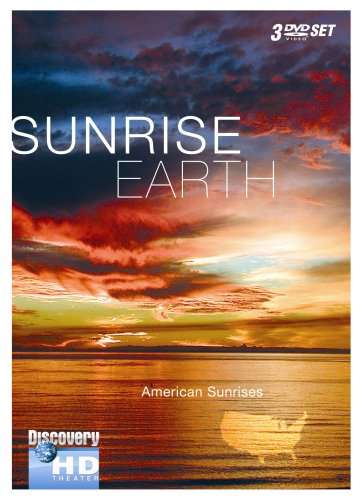
A few years ago, I bought a set of DVDs called Sunrise Earth. They are exactly what you think they are. Each program is 50 minutes of spectacular sunrises in some of the most beautiful places in the U.S., captured without any additional music or commentary. In short, the filmmakers let nature speak for itself.

I confess that I haven’t really watched any of these until very recently. I even forgot I had them.

But I rediscovered them and found myself watching the beauty of nature unfold. Instantly, I was in North Maine at Kidney Pond, watching a mother moose with her calf cavorting in the water. I could literally feel my blood pressure falling and a feeling of calm and serenity coming over me.

I confess. Too often, I don’t see the nature in front of me because I’m too focused on where I have to be on Wednesday or something coming up on Sunday. I fret and I worry about what may or may not happen in the future or what could or should have happened in the past.

I can’t change either one of those. I can choose to live in this present moment and be alive to all that God is unveiling before me. I can choose to look out my window and see the sunset (or God forbid, actually forklift myself out of bed at the ungodly crack of dawn to witness a sunrise).

I can also choose to be thankful for the moment I’m living in. I can decide that I don’t want to be so obsessed over the future and the past that I miss this present. Jesus said that tomorrow will take care of itself. And that God will take care of you when that tomorrow comes. It won’t make one bit of difference if you worry or not, because fretting over the future won’t change one iota of it.

So I’m going to continue to be a broken record and say that I want to be fully present to where God has me right now, whether it’s everything I hoped it would be or not. I can look down at empty hands and see all that I am missing out on or I can see those hands as ready to receive all that God is preparing for me in a future that is so much bigger and wilder than anything I could ever dream of on my own. It’s all about my perspective.

It’s my choice. It’s your choice, too.


An Essay I Wrote

image

I may or may not have mentioned that I’m currently involved in an intensive discipleship training class at my church. Part of the class involved writing an essay.

I chose to write on the unique contributions that each of the four Gospels make to our overall understanding of Jesus and Christianity. It almost felt like a part of my brain got turned on that hadn’t seen much action since my seminary days of yore. Here is the result (with the reminder that it is an essay and reads like one):

“Each gospel has made its own unique contributions to the overall biblical canon and to our understanding of who Jesus is and what His purpose and mission were while He was here on earth. Although each of these is technically anonymous, there are enough clues and evidence, both biblical and extra-biblical, to safely say that these were written by Matthew, Mark, Luke, and John.

Matthew writes primarily for a Hebrew audience, emphasizing how Jesus is truly the prophesied Messiah. He brings in the genealogy of Jesus and parallels him to Moses on several occasions. Matthew brings out Jesus’ teaching on the Kingdom of God and how it is both now and not yet. Many see Matthew as represented by a man, because he emphasized the humanity of Jesus.

Mark, the first of the Gospels to be written, focuses on Jesus as the Son of God, the true Messiah sent from God into the world. His Gospel is fast-paced, accentuated by his frequent use of the word “immediately.” He is represented by a lion, because he brought out the kingly nature of Jesus.

Luke writes to Theophilus, but likely his intended audience is both Jews and Gentiles. He gives a convincing defense of Jesus and the gospel for both evangelistic and discipling purposes. He is represented by an ox, the lowliest of animals, for his attention to the lowly and outcasts, such as the shepherds, and the Gentiles. His theme is the universality of salvation, how it’s not only for a specific race or region, but for all peoples everywhere.

All three of these Gospels are called the Synoptic Gospels because they share many similarities, such as miracles, parables, and teachings. Matthew and Luke probably borrow from Mark, who in turn uses a source of collected sayings and teachings, commonly referred to as “Q”, to build his own writings upon.

John writes to a primarily Gentile audience in Ephesus and is by far the most intentionally evangelical of the Gospels. He writes that His purpose is to show that Jesus is indeed the Christ that those who read may believe and have eternal life in His name. He is often represented by an eagle for his high Christology and his lyrical and poetic imagery, as well as his epic style of writing, as evidenced by the opening 18 verses of chapter one.

Each Gospel reflects the personality and background of the writers and brings out different aspects to the character, life, and teachings of Christ. Some emphasize his teachings, while others focus on His ministry. Yet all four together present a compelling portrait of Jesus as both God and man, Savior and Lord.”