Broken and Shared

image

A friend of mine wrote these words: “Unless grapes and grain are broken there will be no bread and wine. Unless the broken are shared there will be no communion.”

Elisabeth Elliot wrote, “If my life is broken when given to Jesus, it may be because pieces will feed a multitude when a loaf would satisfy only a little boy.”

Sometimes, in order for God to use me, I have to be broken before I can be shared.

No, I take that back. EVERY time God gets ready to use me He starts first by breaking me. Every single time.

I don’t mean every time I completely fall apart and lose every possession and wind up destitute. I mean usually a dream of mine dies. Or a friend lets me down. Or I find myself overwhelmed by life.

It’s the day to day stuff that I stumble over most often. The big crises find me more calm and trusting in God’s strength and provision. But the small details get to me.

Dying to self isn’t always as grand and dramatic as taking a bullet for someone you love. It means dying a thousand times in a thousand small ways every day. It means dying to self-rights, to pride, to vanity, to my own way of seeing and doing things. Those are the hard deaths.

If you are going through brokenness, take comfort in this. God will bless so many more with your broken life than He could with your perfect life. Everything you’ve lost, God will restore a thousand fold, in the lives of a thousand people who find the hope of God’s provision in your story of ruin and redemption.

I still don’t like pain. I don’t like discomfort or inconvenience. I get impatient in front of the microwave, for crying out loud.

But I trust God’s leading. I trust His heart more than my own feelings, my own perceived need for comfort and safety and calm. Trusting that the bridge built with planks of thanksgiving and joy will hold up until I get all the way Home.

A Letter from Jesus to His Church

Disclaimer: If you’re looking for something warm and fuzzy and feel-good, this is not it. You can skip to the next blog, which will be about fuzzy bunnies and cute kittens.

I was wondering if Jesus wrote a letter to one of his churches, particularly the post-modern trendy churches popping up all over the place, I’d bet it would go something like this:

“I came to one of your services and sat in the back row. I felt unwelcome and unwanted. Nobody turned around and greeted me. Nobody even so much as acknowledged my presence there.

They sang songs about me with great enthusiasm, about how great I am to save and how mighty God is. The preacher spoke at great length about how important it is to know me. But I walked in and out of the building and no one even saw me.

You have an amazing facility with some of the latest technology. You have some of the best singers and musicians leading the worship and one of the best speakers to motivate my people. But if there’s no real love behind it, it’s all just noise. And I didn’t see much love.

I came as one of the least of these. The outcast, the loser, the nobody. The ones you say you love, but your actions prove otherwise.

Get back to loving the unlovely. Don’t just associate with the popular and the trendy and those who have it all together. Take time for the ones who are sitting by themselves, who are  socially awkward, who can’t do anything for you and probably can’t even say “Thank you.”

When you serve one of the least of these, you serve me. When you ignore them you ignore me.

Remember that I loved you when you were one of these. I loved you when you hated me, when your life was a wreck and you were hopelessly lost. Remember how that love felt and how it made you come alive. Then go and share it with someone who needs it most.


Hugo: Finding the Key to Life

“Maybe that’s why a broken machine always makes me a little sad, because it isn’t able to do what it was meant to do… Maybe it’s the same with people. If you lose your purpose… it’s like you’re broken” (A quote from the movie Hugo).

I really liked the movie Hugo. It’s about a boy who lives in a train station and who is extremely adept at fixing things, trying to figure out how to fix one particular machine and retrieve his father’s last message to him. It spoke to me on a deep spiritual level, which is rare for anything that comes out of Hollywood.

If you believe the Bible (and I do), then you’ve read the part where we’re called sinners. All of us. It means we’ve missed the mark. We’ve set aside God’s agenda for our own. We’ve lost our purpose and we’re broken.

We each have a hole we’re trying to fill. Almost like the machine man in the movie Hugo that required a heart-shaped key. We need something (or someone) who can fill the hole and turn our hearts right-side up again.

Only the Creator knows His own creation and how best to fix it. Better yet, the Creator became one of His own creation to be the Key that fills the empty space inside all of us. Only the One who made us can truly name our future and call our purpose out of us.

I know I’m still broken and on some days, it shows. I also know my Creator is fixing me and restoring my identity and my purpose. I love that I get to be a part of Him fixing and restoring the broken lives of other people and helping them find purpose and meaning.

I still believe that no one is too broken for God to fix and there is no one that God can’t redeem and use to do amazing things. Look at me. Look at you. Look at any of the works in progress the Bible calls saints.

It’s not too good to be true. It’s too good not to be true. Believe it.

Taken, Blessed, Broken, Given

lifeofthebeloved

“During the meal, Jesus took and blessed the bread, broke it, and gave it to his disciples: Take, eat. This is my body” (Matthew 26:26).

I’m in the middle of another Henri Nouwen book and I am loving it. He more than any other writer (except for maybe Brennan Manning) always seems to speak to where I am right here and now.

He says, “To identify the movements of the Spirit in our lives, I have found it helpful to use four words: ‘taken,’ ‘blessed,’ broken,’ and ‘given.'”

I had never thought about it that way before. I never looked at Jesus breaking the bread at Passover and made an analogy to my own life.

We are taken (or chosen) by God who loved us from the start. We are blessed by Him with every spiritual blessing in the heavenly realms. We are broken by our own sin and the broken and marred world we live in with so much poverty, injustice, and inhumanity. We are given to be God’s hands and feet to bring healing and justice and compassion into the world.

I read somewhere that my life is loaves and fishes. Remember the ones that Jesus used to feed the 5,000? In and of myself, I can’t do much. But if I am blessed and broken and poured out, God can bless so many more through me.

News flash: God takes and uses broken lives, scarred hearts, screwed-up pasts, and promises left unfulfilled. He can use anybody. In fact, He more often than not prefers the outcasts and nobodies and failures to be the ones to turn the world upside down (see the 12 disciples for examples).

Lord, may I be taken by You, Who chose me before I was born and gave me the name Beloved, and blessed with as much of You as I can stand. Break my heart for the things that break Yours and then give me out to those in need.

PS The book I’m reading is Life of the Beloved. Expect more blogs to come out of this. I’m not even halfway through. And, to throw in yet another shameless plug, go buy or download or pilfer or ingest this book as soon as humanly possible. It’s that good.

Whatever you did to the least of these, you did it to Me.

“The King will reply, ‘I tell you the truth, whatever you did for one of the least of these brothers of mine, you did for me” (Matthew 25:40).

I have been thinking about that verse quite a bit today. Not so much in the sense of the poor and downtrodden, which is obviously the main ones Jesus is talking about here. But what if at one point I am the least of these. Or what if you are the least of these. How would you treat me? How would I treat you?

I’d like to think I would treat you with respect and dignity and be Jesus to you. The truth is that whatever I do or don’t do to you at that moment of your utmost weakness, I do to Jesus. It’s interesting that Jesus always identifies with the broken and downcast and outcasts rather than identifying with those who are socially acceptable (like I tend to do nearly all the time).

Am I ignoring Jesus in someone else because He doesn’t look or act like me? Am I brushing past Him when I walk past someone who is less polished and more socially awkward? If I am harsh and critical with myself when I am at my lowest ebb, what am I saying to Jesus? Whatever you and I did or didn’t do to the least of these, my brothers and sisters, you and I did or didn’t do to Jesus.

So treat everyone you meet like you would treat Jesus, all of us go through times in our lives when we can identify with the least of these through our brokenness and weakness. In the end, what will matter most will be what we did or didn’t do for the least of these, whether they were living in a cardboard box in the slums or in a mansion.

Brokenness and Community

We are all broken. Some are just better at hiding it than others, but deep down inside we know we don’t work right. I believe when God reveals our brokenness within the context of community, we have two choices. I can see your brokenness and choose to walk away and shut you out or I can choose to walk with you and share your burdens, “and thereby fulfill the law of Christ” (Ephesians 6:2). I’m not saying it’s wrong to walk away; some are not ready to handle brokenness in others. But to stay and walk with a brother or sister through brokenness is the better way.

I also think about the image of Jesus breaking bread and blessing it. If we want God to bless us, or better yet to bless others through us, we must first be broken. Only in the context of community where we love each other and share joys and sorrows and bear each other’s burdens can this happen. We shouldn’t just pray for blessings on each other. We should be able to pray for brokenness for each other. We should be authentic and transparent enough to be broken and honest with each other.

I am reminded of Henri Nouwen’s term “wounded healer.” If we aren’t broken, we can never reach beyond the surface in our relationships and serving and ministry, but if we are broken, we can empathize with the weaknesses of others. The more we own our brokenness, the more loving and Christlike we will be toward the brokenness in others.

I want to buck the trend that says that weakness is something you don’t talk about. I want to be like Paul who boasted in his weakness, because that’s where Christ’s strength is perfected. Let people see that you are not a perfect saint, but a weak and broken and transparent vessel through which God’s love can pour unhindered to the world around you.

As always, I believe. Help my unbelief.

Some things I have learned what it means to care

out-of-solitude

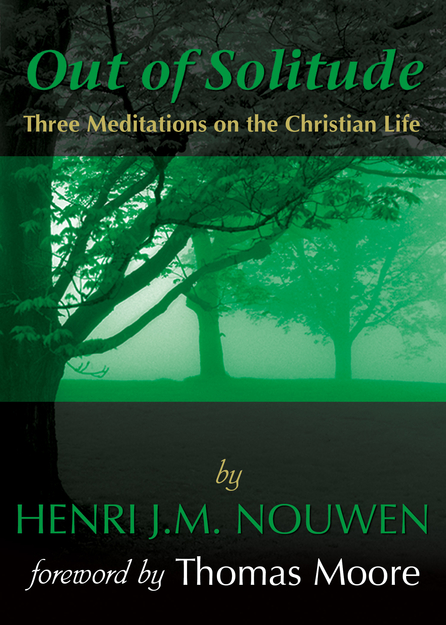
First of all, everyone should read the little book, Out of Solitude by Henri Nouwen, which is the basis for this blog. It’s only 63 pages and you can read it in an hour or two and be radically changed.

Care at its core means “to grieve, to experience sorrow, to cry out with.” It means weeping with those who weep. It means sharing joy and laughter. It means that I come out of my protective shell, become vulnerable and step into your world. It means that I realize that there is no one anywhere that I can not identify with if I am honest with myself. I have it in me to be kind or cruel, honest or a liar, warm-hearted or cold-blooded, etc. It means that I don’t have to give the right answers or even give answers at all. I can sit with someone who is hurting and cry with them and let that be enough.

One old saying that I like goes like “People don’t care how much you know until they know how much you care.” Jesus is the best at this.

“For we do not have a high priest who is unable to sympathize with our weaknesses, but one who in every respect has been tempted as we are, yet without sin” (Hebrews 4:15).

Henri Nouwen writes, “By the honest recognition and confession of our human sameness we can participate in the care of God who came, not to the powerful but to the powerless, not to be different but to be the same, not to take our pain away but to share it. Through this participation, we can open our hearts to each other and form a new community.” A “fellowship of the broken,” as he calls it.

I am broken and empty of anything God can use. I am full of myself and until I learn to empty myself of all that I think is so good about me and let God fill me with Himself, I can never truly care and serve. Until I give up the desire to do good make a name for myself and simply be available to people in need, I miss the blessing of seeing God really work through me. That’s what I want. That’s what I need. That is community.

As always, I believe. Help my unbelief.