Blessed are the merciful

“Blessed are the merciful, for they will be shown mercy” (Matthew 5:7)

In the Bible, grace and mercy are many times used together. I’ve heard it put this way that grace is getting what you don’t deserve, and mercy is not getting what you do deserve. Mercy is withholding the right to revenge and giving grace instead. One of God’s characteristics is that He is merciful. If anyone had the right to exact judgment on what we’ve done wrong and how we’ve screwed up and when we’ve outright rebelled against Him, it’s God. But He in HIs grace gives us what we don’t deserve– forgiveness– and in His mercy withholds from us what we do deserve– everlasting punishment in hell.

To be merciful is to be like God. To forgive, even when forgiveness is not sought, is to be like God. Mercy is loving the unloveable. It’s easy to love someone who loves you back, but God calls us to love those who are so caught up in and trapped by fear and addictions that they are unable to love us back.

I like the Message version. It says, “You’re blessed when you care. At the moment of being ‘care-full,’ you find yourselves cared for.”

If you show mercy, you get mercy. I also like to think that one of the characteristics of those who have experienced God’s grace and mercy is that they live out that grace and mercy toward others. You forgive much because you have been forgiven much. You don’t worry about the $100 worth of wrong someone did to you when God just forgave the $1 million worth of wrong you did against Him.

Brennan Manning says it best: “Our encounter with Mercy profoundly affects our interaction with others . . . . We look beyond appearances, beneath surfaces, to recognize others as companions in woundedness. Human flesh is heir to the assaults, within and without, of negative, judgmental thoughts, but we will not consent to them because God is merciful to us. We will not allow these attacks to lead us into the sins of self-preoccupation and self-defense. Swimming in the merciful love of Christ, we are free to laugh at the tendency to assume spiritual superiority– in ourselves. We are free to extend to others the mercy we have received.”

As always, I believe. Help my unbelief.

Blessed are those who hunger and thirst for righteousness

“Blessed are those who hunger and thirst for righteousness, for they will be filled” (Matthew 5:6)

When I think of hungering and thirsting for righteousness, I don’t think of when I would like dessert after a good meal. I don’t even think about when I am late for a meal and how “hungry” I feel. I think of someone who is starving to death and the lengths they will go to get food. To hunger and thirst for righteousness means more than simply wanting to in right standing with God and to please Him; it means that everything in me longs and yearns to see God glorified by my life.

The Message puts it this way: “You’re blessed when you’ve worked up a good appetite for God. He’s food and drink in the best meal you’ll ever eat.”

The question is: How badly do you want God? Not how badly do you want your prayers answered or how badly do you want gifts and blessings from God, but how badly do you long for God Himself? Honestly, I seek after many other things more than I seek after God, including but not limited to approval, attention, a dating life, and spiritual experiences. Is it any wonder that these things, whether I obtain them or not, will leave me empty and hollow? Only God can fill a God-shaped hole in my heart.

The hard part is that if you love and long for God, you will love and long for fellowship and community with His people. If you don’t love and long for His people, you don’t really long for God. Jesus says, If you love me, you will love my church (and that doesn’t mean you will love a building or a campus, it means you will love God’s people). If you are pulling away from God’s people, how can you say you are drawing near to God? I know there are seasons of solitude that God calls us to, but if we have no desire to pray for and support and encourage our brothers and sisters, we really are saying we have no desire for God.

Sometimes, when someone isn’t in a place where they can seek God and God’s people, we can rally around that person and pray God’s healing and restoration for him or her. A friend of mine said sometimes when you can only give 40%, I must be the one to give the 160% to make up the difference.

What does it mean to be filled? It means overflowing beyond your capacity to receive. It means God gives you so much that it runs over in you and spills into the lives of those around you. To be filled means to have life abundantly, or life to the full, that God will give beyond anything we could ever ask or expect or hope. As John Piper says, “God will not give up the glory of being the Giver.”

As always, I believe. Help my unbelief.
Blessed are the meek

“Blessed are the meek, for they will inherit the earth” (Matthew 5:5).

To be meek is not to be a pushover. To be meek is to be strong, but under control. It’s strength with a purpose, focus and goal. Think of a bridled horse whose strength is harnessed for a race. John MacArthur states, “True meekness is power under control. We can see that in light of the different ways the Greek praos was used. Medicine taken in the proper dosage can be helpful, but an overdose may kill; a domesticated horse is useful but an undomesticated one is destructive; and a gentle breeze cools and soothes, but a hurricane kills.”

Again, I like the way The Message puts it: “You’re blessed when you’re content with just who you are—no more, no less. That’s the moment you find yourselves proud owners of everything that can’t be bought.” To have power under control is to be content. To not fight against God’s will, but instead fight against the things in your life that oppose God’s will. If you are not content with who you are, you will expend useless energy in striving to be someone you’re not and to meet the expectations you’ve projected onto others about yourself (which can’t be done. I know. I’ve tried)

The best example of meekness is Jesus in Philippians 2:5-11. He who was God and equal with God made himself nothing, becoming a slave. His strength was geared toward laying down His life for us on the cross. He had no other focus but doing the will of God.

John MacArthur writes that some of the ways that you know can know if you are meek are obedience to God’s word, becoming angry only when God is dishonored, making peace, gentle in how you teach others and– most importantly–receiving criticism in a loving spirit and loving those who are giving the criticism.

What is the result of meekness? We inheirit the earth. That means that we belong to the God who owns it all and has given us everything we need. It means that one day we will reign with Him (2 Timothy 2:12). The best part is still that we have God with us, for us, and in us. How could it possibly get any better than that?

As always, I believe. Help my unbelief.

Blessed are the mourners

“Blessed are those who mourn, for they will be comforted” (Matthew 5:4).

It seems like we as a society don’t really do well with mourning. We would rather be entertained and amused. Sadness and grief are things that we move past as quickly as possible, and those that don’t are looked upon unfavorably, like “Why can’t they just get over it?”

The Message puts it this way: “You’re blessed when you feel you’ve lost what is most dear to you. Only then can you be embraced by the One most dear to you.”

How are we to mourn and what are we to mourn for?

I think we mourn not as those who have no hope, but as those who do. Our sadness is a sadness that is based in the hope of a better day yet to come. Our grief is a grief that has joy at its core– joy that whatever we’ve lost will be restored to us a thousand-fold. We mourn knowing that one day we will rejoice and sing– and laugh– over the momentary afflictions that have been far outweighed by an eternal hope of glory.

What do we mourn for? We mourn over the loss of loved ones, because death is certain for every single one of us. We mourn over the wasted lives around us. We mourn over so many hopes we had that were unfulfilled and dreams we had that were dashed against the rocks of reality. We mourn over sin in the world, and what how it mars and wrecks and leaves a ruin in so many lives. We weep for what God in Jesus wept for– that so many will live and die and pass into eternity separated from Him and never knowing what real hope, faith and love look like. They will never know that God had a better, more abundant life in store for them if they would only say yes to Him.

It’s good to mourn for these things, but also to rejoice that all these things will one day end. Jesus has already overcome all the things that cause sadness and grief.

I would like to close this with words from Rich Mullins that may not quite fit, but I loved them so much that I had to add them here:

“It is the living who mourn at a funeral– not the dead. We mourn because the lives of the dead who made our own more lively, and since we are (or had been) so knit together, the loss of another’s strand will eventually cause our own unravelling. Fellowship is the mingling of threads that make up a fabric, and only in a fabric do we have some kind of meaningfulness.”

As always, I believe. Help my unbelief.

Blessed are the poor in spirit

“Blessed are the poor in spirit, for theirs is the kingdom of heaven” (Matthew 5:3)

To be poor in spirit is to acknowledge before God and others that you are spiritually bankrupt, that you have nothing of worth that you can bring to God or give to others. All you have is filthy rags, as Paul described human righteousness. You are admitting helplessness and insufficiency, which are very un-American concepts, but very biblical ones.

I like the way The Message puts this verse. “You’re blessed when you’re at the end of your rope. With less of you there is more of God and his rule.”

To be at the end of your rope is to admit you have gotten yourself in a fix that you can’t get yourself out of. That you are hopelessly and gloriously confused and lost. That you need Someone to rescue you.

It also means that you aren’t in the Who’s Who of Christianity or in the Most Likely to Succeed in Spirituality. From a worldy perspective, you don’t count. But in God’s eyes, you are a treasure and a masterpiece. I like what Brennan Manning says about this verse:

“You poor, you nobodies, you of little account by the world’s standards, you are blessed. It is my Father’s good pleasure to give you a privileged place in the kingdom– not because you worked so hard, and not because you are saying all the right things or doing all the right things or becoming all the right things, but because my Father wants you.”

So if you feel like giving up or quitting, don’t. Remember that God loves you. He’s very fond of you and He will never give up on you. He has placed people in your life who are cheering you on and who will also never give up on you. Remember that the Kingdom of Heaven belongs to people like you. It is God’s good pleasure to give it to you.

And the best part about the Kingdom is that God comes with it. Better yet, the Kingdom of God is God Himself. It is Christ in you, the hope of glory. It is the Holy Spirit power that raised Christ from the dead. And it’s yours.

As always, I believe. Help my unbelief.

Something to think about

When Jesus rose from the grave, one of the first things He did was to find His disciples and comfort them. Think about that! These are the same disciples who ran away and deserted Him in His greatest hour of need. Jesus would have been totally justified in giving up on the lot of them and starting over with 12 fresh new disciples. I probably would have. But He didn’t. He called them brothers and dined with them and gave them His mission to make disciples of all nations.

And there’s Peter. The one who betrayed Him. The one who denied that he knew Him. He singled Peter out and got Peter to affirm his love for Jesus for every time he had denied him. These 12 men went on to radically transform the entire world. No, wait. Jesus sent His Holy Spirit, who radically transformed the entire known world through the availability of 12 former traitors.

Can God use me after I have failed Him? Can God use you after you have royally messed up? The answer to the question is a resounding YES! God can take brokenness and make something beautiful out of it. God can take a disastrous mistake and turn into the start of something dynamic and revolutionary.

So what do I do with people who have failed me? What hopefully should people whom I have failed (God willing!) do? We should be like Jesus in this and forgive them. Forgiveness is a beautiful word to me because I see daily just how much I need it and how much I need to give it. While giving up on someone is sometimes the proper thing to do, giving second chances is the better thing to do (unless they are intentionally trying to do you harm, in which case you forgive but don’t give them the chance to hurt you again).

Jesus, give me the strength to live this out and by forgiving enable people to come out of shame and into Your glorious light. Help me to remember that as I forgive them, You will forgive me. I can’t do this on my own. I will need You every step of the way. Have Your way in me.

As always, I believe. Help my unbelief.

Brokenness and Community

We are all broken. Some are just better at hiding it than others, but deep down inside we know we don’t work right. I believe when God reveals our brokenness within the context of community, we have two choices. I can see your brokenness and choose to walk away and shut you out or I can choose to walk with you and share your burdens, “and thereby fulfill the law of Christ” (Ephesians 6:2). I’m not saying it’s wrong to walk away; some are not ready to handle brokenness in others. But to stay and walk with a brother or sister through brokenness is the better way.

I also think about the image of Jesus breaking bread and blessing it. If we want God to bless us, or better yet to bless others through us, we must first be broken. Only in the context of community where we love each other and share joys and sorrows and bear each other’s burdens can this happen. We shouldn’t just pray for blessings on each other. We should be able to pray for brokenness for each other. We should be authentic and transparent enough to be broken and honest with each other.

I am reminded of Henri Nouwen’s term “wounded healer.” If we aren’t broken, we can never reach beyond the surface in our relationships and serving and ministry, but if we are broken, we can empathize with the weaknesses of others. The more we own our brokenness, the more loving and Christlike we will be toward the brokenness in others.

I want to buck the trend that says that weakness is something you don’t talk about. I want to be like Paul who boasted in his weakness, because that’s where Christ’s strength is perfected. Let people see that you are not a perfect saint, but a weak and broken and transparent vessel through which God’s love can pour unhindered to the world around you.

As always, I believe. Help my unbelief.

A Church Without Walls (Part 2)

I see a church where we will not be afraid to stand up and declare that Jesus is Lord, that there is no other God but Yahweh, and that there is no other way to heaven but through Jesus Christ. I see a church who instead of condemning sinners, will cry out to God and repent of our lack of love and take the blame for what is wrong with our culture. I see a church who will not just give out of her excess, but will sacrifice to meet the needs of those hurting and needy. I see a church where our worship costs us something and we like David proclaim, “I will not sacrifice to the Lord that which cost me nothing.”

I see a church where it is not about being right, but about giving up your rights. Where we will turn the other cheek, walk the extra mile and keep our word even when it hurts. I see a church who tries to match their lifestyle with what they profess with their lips. I see a church where we stop pretending to be perfect people who have it all together and are so much better than everyone else. Where we admit to being broken and helpless without Jesus and to admitting that the only difference between us and the worst sinner is the grace of God at work in us.

I see a church who is not selling out to a political party or a form of government or a way of life, but who are citizens of a kingdom where the King is Jesus. Where not political might, but the power of prayer and fasting will bring about lasting change.

I see that church and as much as I want that, I have to be the first one to change. Better yet, I need to seek after a transformed heart, God’s own heart, inside me.

As always, I believe. Help my unbelief.

A Church Without Walls (part 1)

Here’s my vision (not in the apostle John way, but just something I am hungering for lately). I see a church without walls. I see a church not bound by bricks and mortar, but made up of living stones, of people whose broken lives are being made whole. Something Henri Nouwen calls “wounded healers.” I see a church unified in purpose and dedicated to sharing everything, from joys to griefs, blessings and sorrows. I see a church where worship breaks out in front of Chick-fil-A or Starbucks. Where worship is not an event, but a lifestyle.

I see a church with real people who are authentic in their brokenness and who can be genuinely themselves. I see a church earmarked by grace and acceptance, not condemnation and judgment. I see a church with no walls between believers, because a wall between two believers is a wall that keeps a non-believer from seeing Jesus in us. I see a church where I will lay down my offering or stop my worship and go to my brother or sister in Christ and be reconciled before I write one tithe check or sing one note of praise.

I see a church who meets wherever there is a need and whenever someone is hurting. I see a church who would rather draw in the lonely, the outcast and the sinner than the perfect saints, career churchgoers and religious-types. I see a church who follows Christ, not American Christianity. The church I see is becoming my passion. I want to see Acts 2 in action. I am sick and tired of the same old routine and traditions and forms without power. I want the kind of anointing that caused thousands to come to Christ daily. I want the building to shake from the power of God inside. I want signs and wonders. I want people on the outside to see how much we love each other and be in awe of the power that God’s love in us unleashes.

The Bible says that we are living epistles, not written with ink but by the Spirit of the living God (2 Corinthians 3:2-3). We are God’s letters to the whosoevers.

As always, I believe. Help my unbelief.

Some things I have learned what it means to care

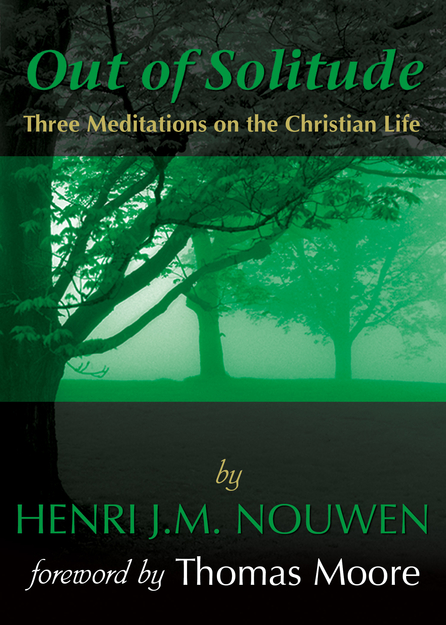
out-of-solitude

First of all, everyone should read the little book, Out of Solitude by Henri Nouwen, which is the basis for this blog. It’s only 63 pages and you can read it in an hour or two and be radically changed.

Care at its core means “to grieve, to experience sorrow, to cry out with.” It means weeping with those who weep. It means sharing joy and laughter. It means that I come out of my protective shell, become vulnerable and step into your world. It means that I realize that there is no one anywhere that I can not identify with if I am honest with myself. I have it in me to be kind or cruel, honest or a liar, warm-hearted or cold-blooded, etc. It means that I don’t have to give the right answers or even give answers at all. I can sit with someone who is hurting and cry with them and let that be enough.

One old saying that I like goes like “People don’t care how much you know until they know how much you care.” Jesus is the best at this.

“For we do not have a high priest who is unable to sympathize with our weaknesses, but one who in every respect has been tempted as we are, yet without sin” (Hebrews 4:15).

Henri Nouwen writes, “By the honest recognition and confession of our human sameness we can participate in the care of God who came, not to the powerful but to the powerless, not to be different but to be the same, not to take our pain away but to share it. Through this participation, we can open our hearts to each other and form a new community.” A “fellowship of the broken,” as he calls it.

I am broken and empty of anything God can use. I am full of myself and until I learn to empty myself of all that I think is so good about me and let God fill me with Himself, I can never truly care and serve. Until I give up the desire to do good make a name for myself and simply be available to people in need, I miss the blessing of seeing God really work through me. That’s what I want. That’s what I need. That is community.

As always, I believe. Help my unbelief.