
Thank you.
I’ll see myself out.
Thank you.
I’ll see myself out.
I saw a post recently that bothered me. It was an article about an allegation of misconduct brought up against someone I used to know way back when. I don’t want to name names or go into the gory details, but I’m praying for two things: repentance and restoration.
I honestly don’t know if these allegations are true. I don’t know (and don’t want to know) any of the sordid details of the story. I just know the person accused had a good influence on me and helped me along the road to better understanding the grace of God.
I do know that God loves sinners. I know that Jesus expressly stated that He came not for the well but for the sick. I know that forgiveness is available to even the worst of the worst. Just ask the Apostle Paul and the thief on the cross next to Jesus.
Above all, I know what I am apart from the grace of God. I know that there’s nothing too evil or too depraved or too dark that I could not do apart from the love and saving grace of God. If the tables were turned and I were the one being accused, I hope he would show me the same mercy as I hope to show him.
People, even those who call themselves Christians, talk all the time about Karma and how certain people will certainly get what they deserve. I for one am hoping with every ounce of my being for grace and holding out that I don’t get what I deserve, because I know what that is apart from God’s lovingkindness.
I’m praying for the truth to win out. But more than that, I’m praying that mercy triumphs over judgment and that grace will have the last word.
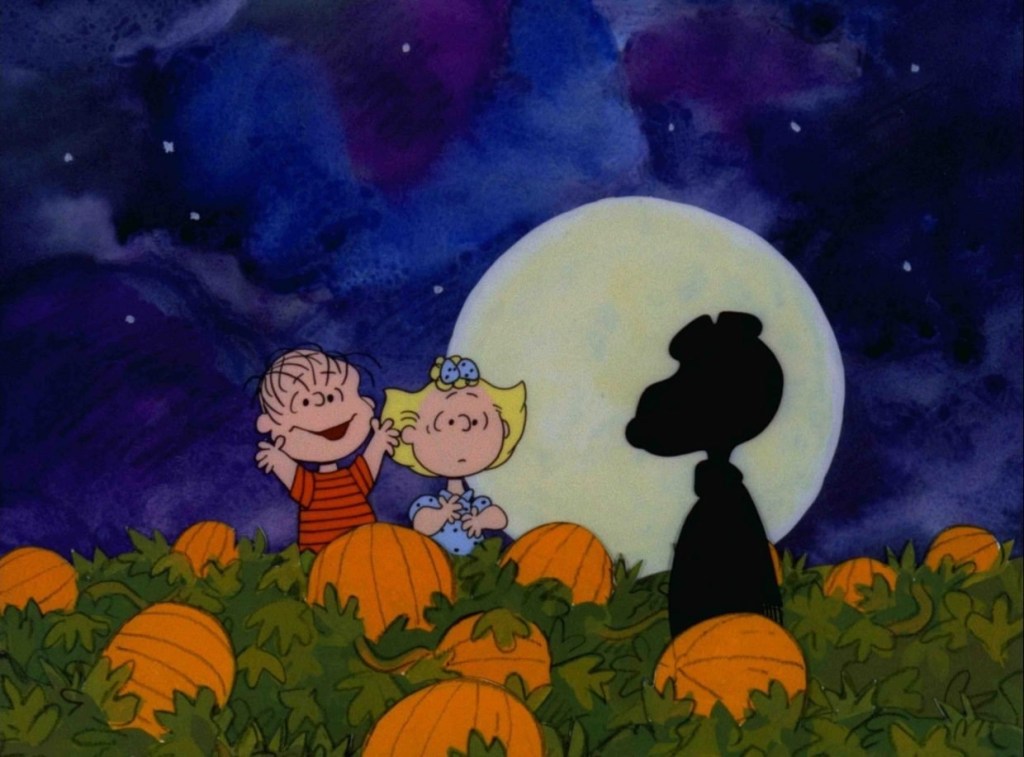
What a long, strange year it’s been. I think I saw where today marked the 5th year that we’ve been stuck in 2020. And think of this– Halloween is two weeks away.
Now we’re getting to my favorite time of the year. That time when Halloween rolls into Thanksgiving, then into Christmas. Or in the retail world, it’s known as Hallowthanksmas.
I love that the weather is finally reflecting the season for once. It won’t be like years past where people were handing out candy and sweating in shorts and sandals. Of course, there will probably be no handing out of candy this year, but at least people can comfortably wear flannel if they want.
I plan to watch a scary movie or two. I also hope to catch the iconic Charlie Brown Halloween special. I may or may not eat my weight in candy (preferably chocolate) this time around.
I’m just glad that it’s fall.
“In Luke 11, we have his version of the Lord’s Prayer. To introduce the prayer, Luke tells us the disciples came to Jesus and asked Him to teach them how to pray.
I’ve always been fascinated with their request.
For one thing, I’m not sure it’s what I would’ve asked Jesus.
Knowing me, I would’ve asked Him to teach me to walk on water (we know how that worked for Peter) or to raise the dead. I would’ve gone for something impressive, something flashy.
But this isn’t what the disciples wanted.
Why?I think they could tell there was something powerful yet intimate in the way Jesus prayed. Things happened when Jesus prayed. People changed when Jesus prayed.
And the disciples knew if they could learn to pray like this, they would be able to do more than they had ever imagined.
Too many times we treat prayer casually. It’s something we do before we go to sleep or before we eat, but we rarely pray knowing there’s potential in our prayer to change the world, to change someone’s life.
This is what the disciples wanted to learn how to do.It’s what we in the postmodern church need to learn as well.
– See more at: http://mikeglennonline.com/learning-pray/“
Prayer is one of those things I’ve been doing for quite a while, but I’m still not very good at it. My thoughts tend to wander, my attention span goes away, and I forget what I’m doing.
I guess it’s a good thing that the Apostle Paul doesn’t tell us to pray perfectly. He doesn’t say, “Pray well.”
What he does say is “Pray without ceasing.”
Pray all the time, even if you feel like you can’t concentrate for more than a minute at a time. Pray, even when your brain feels like an internet browser with 50,000 tabs all open at the same time.
Pray when you feel the need. Pray when you don’t. Pray when God is near, and pray when He seems nonexistent.
Just pray.
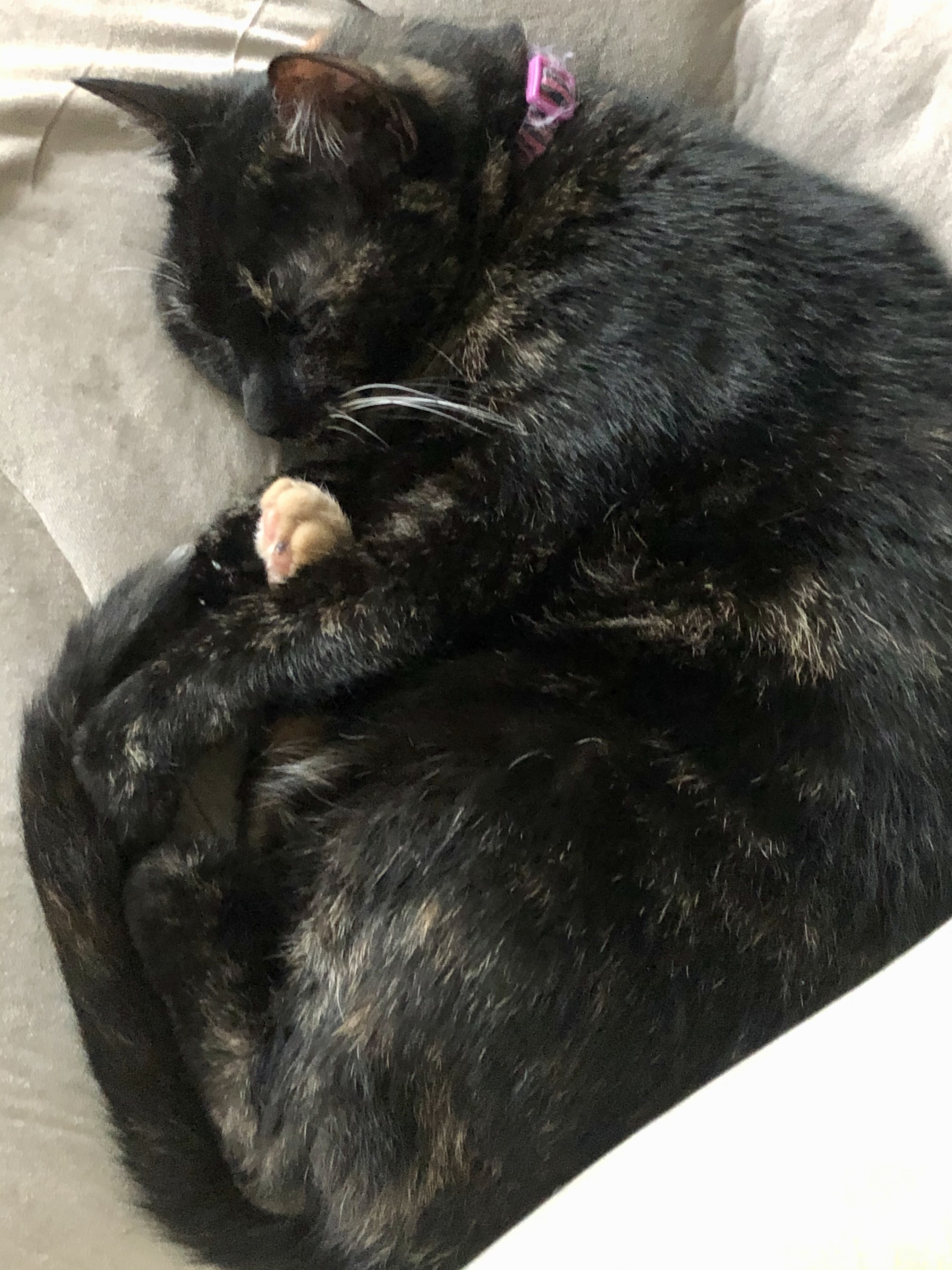
Peanut’s claim to fame is that she has one foot that’s different from all the rest. She has one tan foot (or if you like, one peanut butter foot).
I had already named her when I discovered this little eccentricity. It took until she had already come home with me and been hanging out with me for a bit that I noticed.
But as you’ll probably notice from the picture, she’s quite proud of her little mismatched foot. Often, she’ll have it on prominent display where anyone can see it.
Sometimes, it’s good to celebrate those little quirks and foibles that make us different. Normal is boring, but unique is special. Don’t let anyone look down on you or treat you differently because you look or act or speak or think different.
Peanut also likes her naps. Any place where she and her peanut butter foot can sleep in comfort is a good spot. The feline life is a good life.
I like going back through my Facebook memories to see what I posted a year ago, two years ago, five years ago, etc. It’s interesting to find out what made me laugh or made me think. Sometimes, I run across words that affected me deeply then and still affect me now:
“I think most of us begin our Christian journey with this simple truth.
I’m broken. I need Jesus. The end.
However as we launch out on this new journey it doesn’t take long before we begin to hear this growing and incessant whisper that says, ‘Try harder, do more.’
Sing more.
Memorize more.
Journal more.
Preach more.
Pray more.
Evangelize more.
Serve more.
This approach can look quite spiritual to those around us; however, it’s often rooted in a inner conviction that our worth as a Christian is dependent upon our ability to outperform those around us. Behind this spiritual facade is a fragile and insecure heart desperately attempting to get God to love us more. We know God loves us but we’re afraid He may still be disappointed in us.
The cross isn’t something we start with and then move on from.
The cross isn’t just the starting line of our faith, it’s the centerpiece. Grace isn’t something we need just for salvation, it’s like air for the believer.
So today when you hear that whisper in your head that says ‘Try harder, do more,’ go back to this:
I’m broken. I need Jesus. The end” (Pete Wilson).
You’ll never outgrow your need for the Gospel. The End.
“Everything about which we are tempted to complain may be the very instrument whereby the Potter intends to shape His clay into the image of His Son–a headache, an insult, a long line at the check-out, someone’s rudeness or failure to say thank you, misunderstanding, disappointment, interruption. As Amy Carmichael said, ‘See in it a chance to die,’ meaning a chance to leave self behind…” (Elisabeth Elliot)
Or maybe how bout the entirety of 2020 up to this point? It has been one long disappointment for many, with so much delayed or denied. But to the one who knows and trusts Jesus, it could very well be a chance to die to self and find transformation and new hope again.
Instead of complaining, which is the normal human default, learn how to give thanks– even in the most difficult circumstances when the words are hardest to speak– because gratitude is God’s will for you, and because God still works ALL things together for good. Even 2020.
“O God of Abraham, Isaac and Jacob, we hope in thy Word. There we see thee, not on a fearful throne of judgment, but on a throne of grace, waiting to be gracious, and exalted in mercy. There we hear thee saying, not ‘Depart ye cursed,’ but “Look unto me and be ye saved, for I am God and there is none else'” (Not by Me).
Here’s something you didn’t know you needed . . . until now. You’re welcome.
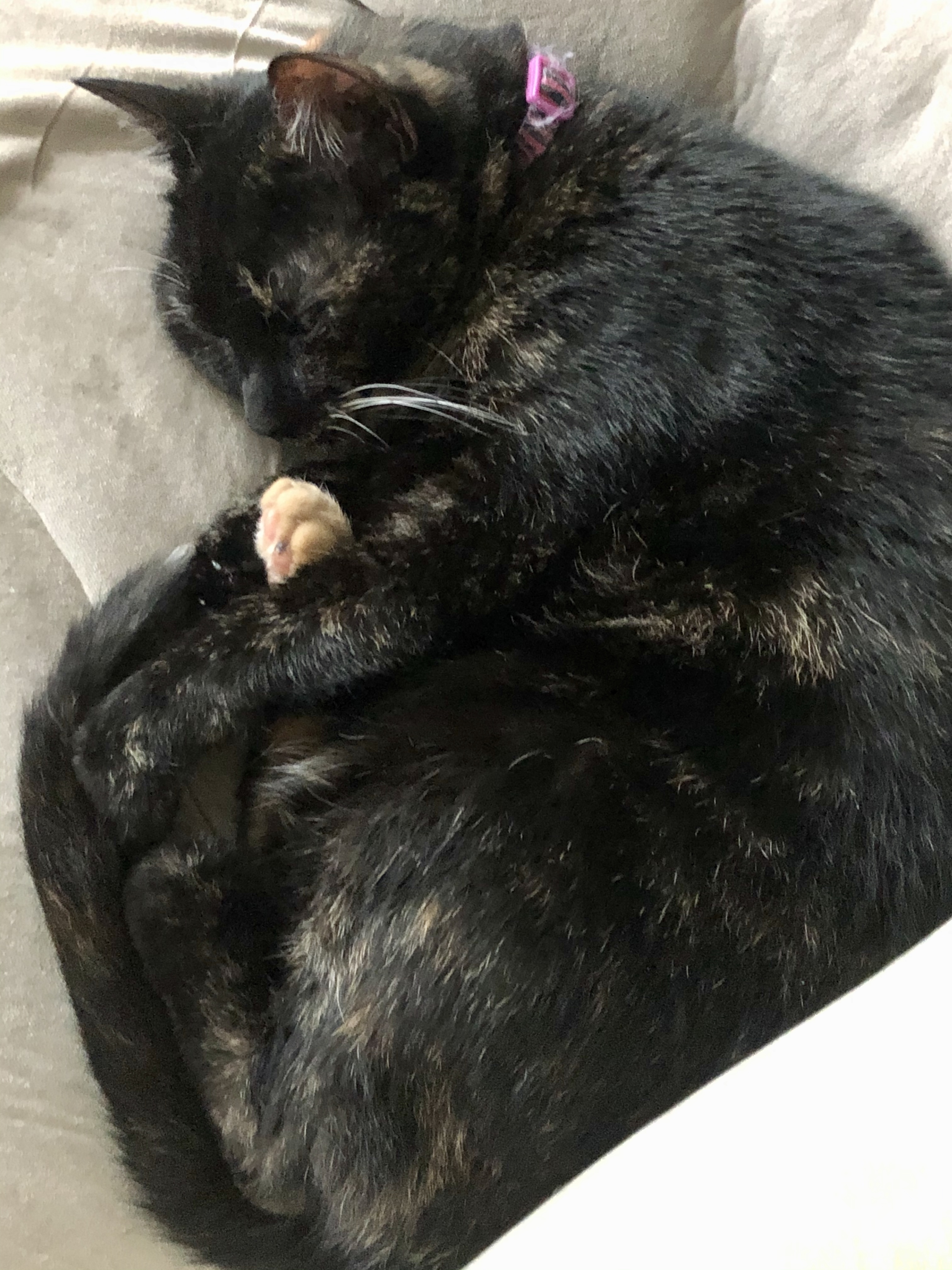
Peanut chose to spend her latest Caturday doing what she loves best — napping.
I know people always talk about cat naps, those short siestas that are supposed to be rejuvenating and invigorating. Peanut has very different ideas about cat naps.
Her idea is to nap as much as possible and to be awake for as little as possible. If cat naps are 15 minutes long, then she people naps. Her naps go on for hours and hours.
I love watching her sleep. She looks so serene and peaceful, like she doesn’t have a care in the world. And truly she doesn’t. Her only concerns are the next meal and the next nap. Oh, to lead the life of a feline.
Naps are good, especially on gloomy rainy Saturdays like today. I think Peanut has taken the nap to the level of an art form. I hope this little gal gets many more years to perfect her art form.

