Two Thoughts on a Tuesday

I’m at my laptop, typing away. For the record, I’m still using my old Sony Vaio, so this blog is only 85% as cool as it could have been were I typing on a Mac Book Pro. But seeing as that is neither here nor there, I digress.

Sitting in Kairos tonight, I had a couple of thoughts unrelated to the sermon Mike Glenn was preaching. I do that often. But that’s also another blog for another day.

I had two distinct thoughts:

1) It really is never too late to start over and become who God created and designed you to be. Even if you’re a Grandma Moses at age 70, you can still start over. And there’s no shame in admitting that what you’ve been doing all this time isn’t what God has called you to. It may have been at some point, but now God is calling you to start again.

2) You don’t have to wait until you get where God is calling you to use your job as a mission field. You can start right now with where you are, even if that’s bagging groceries at Publix or sweeping floors in an office. After all, the Bible DOES tell us to do EVERYTHING to the glory of God, even mopping floors and cleaning public toilets.

The more you see your life not as something you’re entitled to but as an adventure you choose each day to participate in, a journey that God leads you through, the more you see that life truly is a gift and a blessing.

Yes, I’m thankful even for this old, slow laptop, even as it hinders my cool factor. I remember older desktops that were much slower (and even had dial-up internet connections!) So it’s all about perspective and being grateful for what you DO have (my Sony Vaio) as opposed to wishing and pining after what you don’t (a Mac Book Pro).
 

What’s In Your Hands, Kairos-Style

Mike Glenn spoke about a boy with some bread and fish. Actually, he spoke about the parable of the feeding of the 5,000 from Mark 6, but that story wouldn’t have been possible without that boy who had the five loaves of bread and two fishes. Ok, Jesus probably could have conjured up a feast out of nothing, but he chose to use the obedience of this one little boy to bless a hungry multitude.

In the end, the too few with the too little had fed the too many with too much left at the end (as Dr. Glenn put it). What started out as as the dollar menu special from Captain D’s ended up with twelve baskets of leftovers, one for each disciple.

That said, I have to ask myself one question. Maybe this question is for you: what do you have in your hands?

Maybe to us it doesn’t seem like much. Maybe it seems like practically nothing. When you’re dealing with anywhere from 17,000-20,000 people (including the 5,000 men that Mark mentions in the story), two fish and five loaves of bread aren’t going to go very far.

Maybe what you have in terms of talents, gifts, passions, and desires seems very inadequate for God to use. But then, God’s not interested in your abilities and talents and much as your availabilities and willingness to serve.

Jesus took those twelve uneducated disciples and poured His life into them. In the end, they were twelve who went out and turned the world upside down (or more accurately, turned an already upside down world right-side up again).

Who knows what God can do with that paltry offering you hold in your two hands? Who knows the far-reaching impact of your small sacrifices, far beyond anything you can imagine or will probably ever know, to reach people you never dreamed of reaching and touch far more lives than you ever thought possible.

So when God comes calling, and He will, open up your hands and give Him what you have. Then be prepared to be amazed at what He does with it.


Being Present to the Present

sunrise_earth

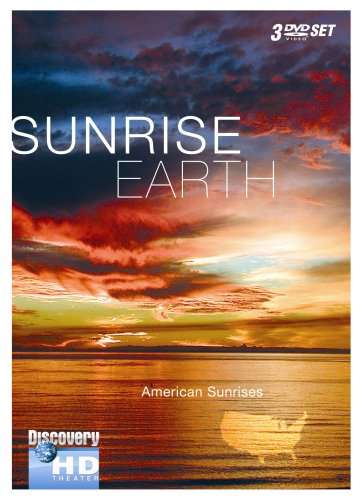
A few years ago, I bought a set of DVDs called Sunrise Earth. They are exactly what you think they are. Each program is 50 minutes of spectacular sunrises in some of the most beautiful places in the U.S., captured without any additional music or commentary. In short, the filmmakers let nature speak for itself.

I confess that I haven’t really watched any of these until very recently. I even forgot I had them.

But I rediscovered them and found myself watching the beauty of nature unfold. Instantly, I was in North Maine at Kidney Pond, watching a mother moose with her calf cavorting in the water. I could literally feel my blood pressure falling and a feeling of calm and serenity coming over me.

I confess. Too often, I don’t see the nature in front of me because I’m too focused on where I have to be on Wednesday or something coming up on Sunday. I fret and I worry about what may or may not happen in the future or what could or should have happened in the past.

I can’t change either one of those. I can choose to live in this present moment and be alive to all that God is unveiling before me. I can choose to look out my window and see the sunset (or God forbid, actually forklift myself out of bed at the ungodly crack of dawn to witness a sunrise).

I can also choose to be thankful for the moment I’m living in. I can decide that I don’t want to be so obsessed over the future and the past that I miss this present. Jesus said that tomorrow will take care of itself. And that God will take care of you when that tomorrow comes. It won’t make one bit of difference if you worry or not, because fretting over the future won’t change one iota of it.

So I’m going to continue to be a broken record and say that I want to be fully present to where God has me right now, whether it’s everything I hoped it would be or not. I can look down at empty hands and see all that I am missing out on or I can see those hands as ready to receive all that God is preparing for me in a future that is so much bigger and wilder than anything I could ever dream of on my own. It’s all about my perspective.

It’s my choice. It’s your choice, too.


Words of Wisdom

Today, I learned something new. That applies to just about every day that I’ve been alive, since there is so much out there yet to learn (or in my case, to learn and to forget and to re-learn).

Matthew Page preached today instead of Aaron Bryant at The Church at Avenue South and that’s where I picked up this new knowledge. Although, I’d like it not to be just something else that I know intellectually, but something that profoundly affects how I live toward others from here on out.

Mr. Page said that not all of us will be accomplished preachers or evangelists. Not all of us will draw crowds Billy Graham-style or present a compelling defense of the faith a la C. S. Lewis or Josh McDowell.

But all of us can learn to love well. All of us can show the same love for those around us that Jesus showed us. In fact, that’s the most compelling argument for the faith.

People can argue all day long over the finer points of theology and politics, but no one can ever argue over the evidence of a changed life. No one can ever refute a testimony that’s not only spoken out loud but lived out loud as well.

Most of all, people can never deny those who love the unlovable, who go against human nature to forgive and release instead of harboring resentment and seeking revenge.

Those who were drawn into the early Church pointed to that kind of love as the reason. “See how they love one another,” they said of the early believers. They might have added, “See how they love those around them,” to the Christians who risked their own lives to care for lepers, who left the familiarity and comforts of home to take this new gospel around the world.

That’s my prayer both for me and for you: to love others as well as Jesus has loved us. I know it’s not possible unless it’s Jesus doing the loving both in us and through us. Even then, we will still get in the way most of the time. But I’m convinced that if the world saw a fraction of that agape love lived out and not just talked about, it would make a big difference.


The Best I Can Do

“I don’t want to live my life in such a way that the best I can do is the best I can do” (Mark Batterson, Wild Goose Chase).

I had to read that sentence three times before it registered. For those of you still scratching your head, here’s what it means:

I don’t want to live my life limited by my finite human potential.

I don’t want to live a life that can be explained in ordinary terms.

I want to live a life that can only be explained by the presence of the living Christ in me.

I want to be in a place way beyond my abilities so that no one can look at my deliverance and say that I had any part of it.

I want to be in situations where if God doesn’t come through I fail miserably.

I want to see what happens when I come to the end of me, because that is where miracles happen.

“But when I pray, the best I can do is no longer the best I can do. The best I can do is the best God can do. And He is able to do immeasurably more than all I can ask or imagine” (Mark Batterson).

When Helping Hurts: What’s In Your Hand?

“The Lord said to [Moses], “What is that in your hand?” He said, “A staff” (Exodus 4:2).

So far, this book is not light reading for when you can’t sleep at night. It’s deep and challenging and (on occasion) causes my head to hurt.

I have a couple of takeaways.

One is that when dealing with impoverished communities, the best way to look at the poor is not from a needs-based analysis, i.e. what do you lack in terms of material resources, finances, education, mindset, etc., but from an assets-based one which asks, “What is that in your hand?” In other words, what skills and talents do you bring to the table? What knowledge of your own community could you give us to help better serve you?

Another is instead of implementing a one size fits all blueprint approach to every crises or problem involving poor communities, the better way is a learning process, where instead of “doing to” and “doing for” the people we serve, we are “doing with,” involving these people in the process and actually empowering them to be a part of the solution to their problems.

Above all, the goal is to see the innate image of God in the people we serve, distorted as it may be from the effects of sin and the fall. It’s not us coming down from on high to serve those who aren’t as good as us, but broken people serving other broken people with the ideal scenario being that both parties learn and grow and change and find healing in the process.

Doing ministry in this way takes longer and goes against our microwave, fast-food, quick-fix mentality, but is by far the better way in the long run.

There will be more of these updates as I continue to make my way through this book. Seriously, it’s a very good book, but it’s like one of those books that I read in seminary. It makes me have to use muscles in my brain that I haven’t used in a while, so I may have to read parts more than once to really grasp it.

But that’s a good thing. Exercise is good, even if it gives me a sore brain in the morning, right?

PS I’ve included a link to the amazon webpage for this book if you’re interested in learning more about it or purchasing it. I recommend it for anyone who is even remotely interested in pursuing either short-term or long-term missions.

http://www.amazon.com/When-Helping-Hurts-Alleviate-Yourself/dp/0802409989/ref=sr_1_1?s=books&ie=UTF8&qid=1424978877&sr=1-1&keywords=when+helping+hurts

A Lenten Prayer That Pretty Much Works Year Round

“The Jewish people have a beautiful prayer form, a kind of litany to which the response is always “Dayenu!” (It would have been enough!).

They list, one by one, the mirabilia Dei, the wonderful works of God for their people and themselves, and after each one, shout out DAYENU! As if to say, ‘How much is it going to take for us to know that God is with us?!’ It builds satisfaction instead of feeding dissatisfaction.

If we begin our day with any notion of scarcity, not-enoughness, victimhood, or ‘I deserve,’ I promise you the day will not be good—for you or for those around you. Nor will God be glorified.

Maybe we all should begin our days with a litany of satisfaction, abundance, and enoughness. God, you have given me another day of totally gratuitous life: my health, my eyes, my ears, my mind, my taste, my family, my freedom, my education, clean water, more than enough food, a roof over my head, a warm bed and blanket, friends, sunshine, a beating heart, and your eternal love and guidance.

To any one of these we must say, ‘And this is more than enough!'” (Father Richard Rohr).

I think I need to print this out or at least have it handy on one of my mobile devices so I can pull it out as a reminder when I fall prey to the entitlement/victim mindset and start feeling sorry for myself (which is far more often than I’d like!)

The prayer that my friend me comes to mind: “Abba Father, I come to you with empty hands. If all I have is you and the next breath, that will be enough.”

If you pray that prayer, anything extra at the end of the day will be like icing on the cake. Or to put it another way, it’s all grace.


A Hump Day Psalm

“Here’s the story I’ll tell my friends when they come to worship,
    and punctuate it with Hallelujahs:
Shout Hallelujah, you God-worshipers;
    give glory, you sons of Jacob;
    adore him, you daughters of Israel.
He has never let you down,
    never looked the other way
    when you were being kicked around.
He has never wandered off to do his own thing;
    he has been right there, listening.

Here in this great gathering for worship
    I have discovered this praise-life.
And I’ll do what I promised right here
    in front of the God-worshipers.
Down-and-outers sit at God’s table
    and eat their fill.
Everyone on the hunt for God
    is here, praising him.
“Live it up, from head to toe.
    Don’t ever quit!”

From the four corners of the earth
    people are coming to their senses,
    are running back to God.
Long-lost families
    are falling on their faces before him.
God has taken charge;
    from now on he has the last word.

All the power-mongers are before him
    —worshiping!
All the poor and powerless, too
    —worshiping!
Along with those who never got it together
    —worshiping!

Our children and their children
    will get in on this
As the word is passed along
    from parent to child.
Babies not yet conceived
    will hear the good news—
    that God does what he says” (Psalm 22)

I posted this Psalm (translated by Mr. Eugene Peterson in The Message) on my Facebook about a year ago. It still speaks to me so I thought I’d post it again here. I don’t really need to add any commentary to it; it speaks for itself, or rather God still speaks through it.

On a side note, I wonder if the good folks also known as All Sons and Daughters got the idea for their song All the Poor and Powerless from this particular translation of Psalm 22. Just wondering.

Still Waiting

image

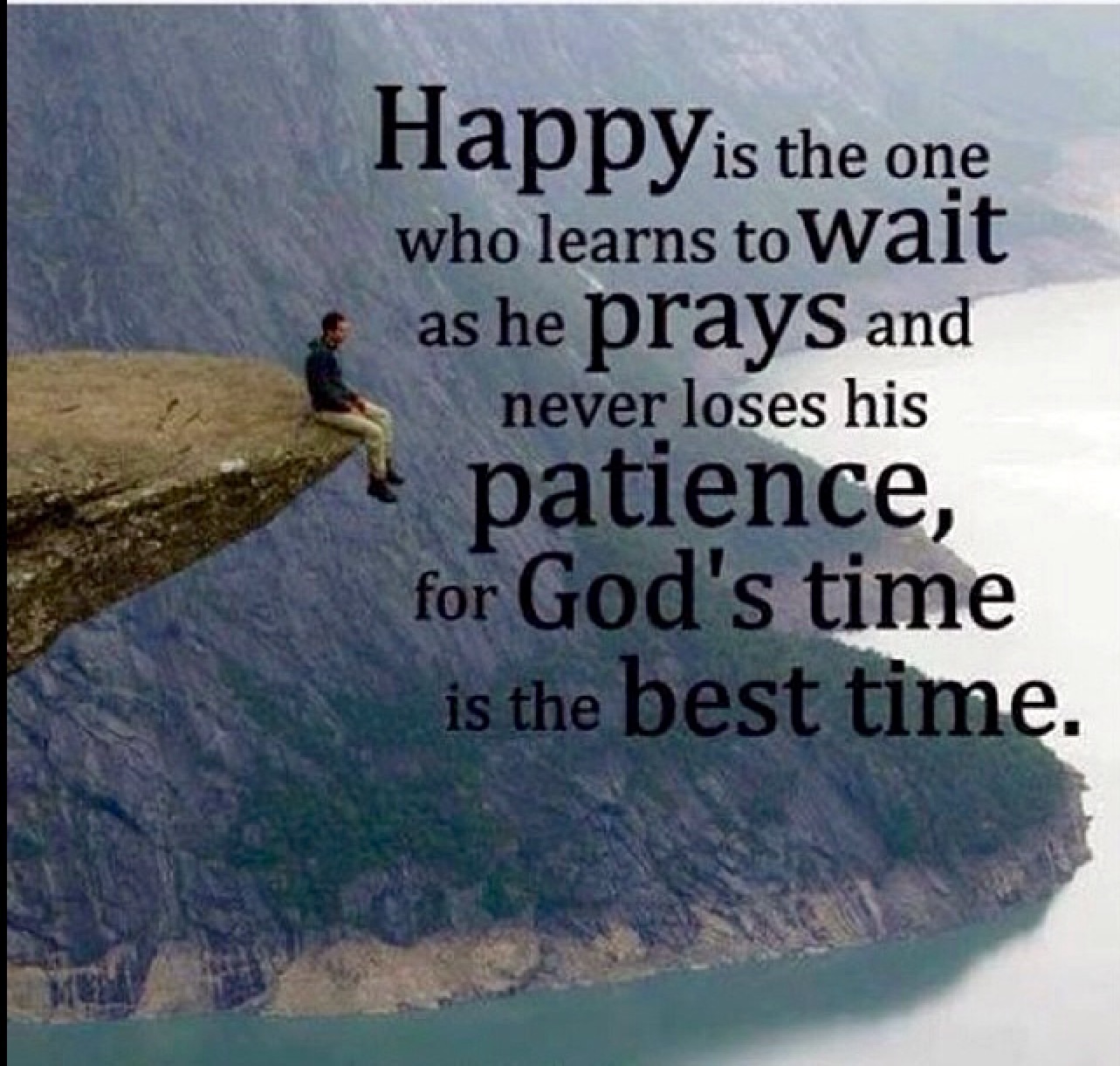
I suppose that of all the disciplines, learning to wait is the hardest. At least that has been my experience.

At some point, I got the notion that waiting meant trusting God and binge-watching Breaking Bad on Netflix. But that’s not waiting. Nor is it sitting with folded hands in your lap and your eyes fixated on the gliding hands of the clock.

Waiting in the biblical sense is more than waiting. It’s more than sitting in one spot fixed expectantly toward the arrival of what you’re waiting for. It’s allowing God to form and mold you into the person who will be ready to receive that future gift.

It involves the discipline of persevering in hope, of training your mind to weed out any distractions to that one dream God has placed in your heart. Waiting means that you take the next of those 10,000 steps toward spiritual maturity and remain obedient in the details.

Yeah, I don’t really know how to wait well. Even after all these years and all the practice I’ve had. But maybe waiting well means simply not giving up. Maybe it’s feeling that you can’t hope any more and finding you can last through the next 24 hours.

Waiting is simple yet hard.