“Our Father in heaven, Reveal who you are. Set the world right; Do what’s best— as above, so below. Keep us alive with three square meals. Keep us forgiven with you and forgiving others. Keep us safe from ourselves and the Devil. You’re in charge! You can do anything you want! You’re ablaze in beauty! Yes. Yes. Yes” (Matthew 6:9-13, The Message).
Recently, I subscribed to yet another email list. This one I think I’ll like. It’s daily prayers and devotionals from one Charles Spurgeon, the late great preacher and theologian from the 19th century. Here’s one that caught my attention:
“Lord, you have heard our prayers, even when we have hardly thought they could be answered. We have been unbelieving, but you have been faithful. We have been undeserving, but your grace has never failed. There are many of us who have known you now as long as Israel knew you in the wilderness, these forty years, and never once have you failed to keep your promise or to remember your people for good.
May our faith grow exceedingly. May we that have had experience of your goodness, feel ashamed to ever entertain a doubt, and when the dark thought ever crosses our mind which would make us mistrust, may we chase it as a strange and vain thought, which must not even lodge, much less dwell, within our hearts.
Amen.“
May that be the prayer of your heart to remind you that God is always faithful even when we’re not. God is still a promise keeper.
I typically will say that I am a fan of change until it happens, then I want it to go back to the way it was before. There are a few instances where I prefer the new over the old, but mostly I just want the old, maybe because I am old.
I think the kind of change I really like is the shiny kind with pictures of dead presidents on it. At least periodically you can take that kind of change to the bank and get cash or make a deposit.
These days more than ever I am thankful for a changeless God. With the culture becoming increasingly chaotic and volatile, I yearn for stability and sameness. I know in this life change is inevitable, but still I want some kind of anchor or cornerstone that won’t move with the shifting sands or turning tides.
I fall back often on the promise that Jesus is the same yesterday, today, and forever. I pray that often to remind myself that I still have a firm foundation when everything else seems to give way. That’s my hope and stay as I look to a day when all will be unending joy and peace and love and rest.
I heard that in the opening ceremony for the 2024 Summer Olympic games in Paris, France, they made a mockery of Christianity. Apparently, people are all offended.
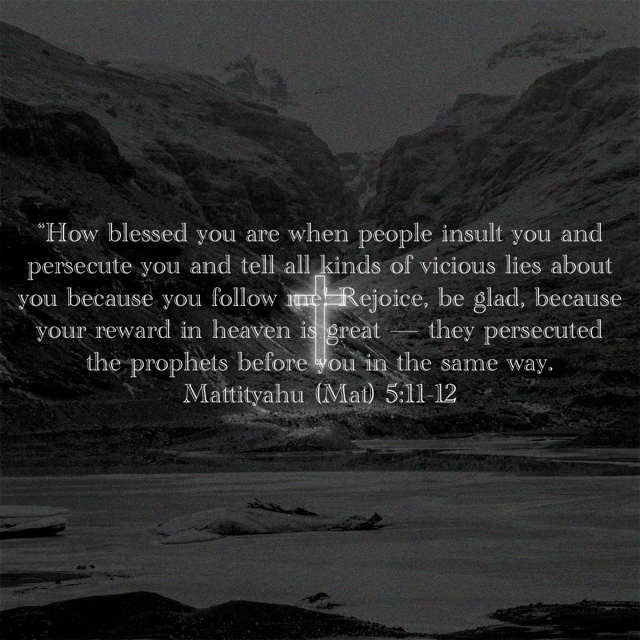
Maybe I should be as well, but it seems to me that means believers are doing something right. At least according to Jesus, they are.
Jesus said that if they hated Him, they will hate us. Jesus’ message was one that got Him crucified. And His message wasn’t merely love God, love people. That wasn’t enough to get Him killed. He claimed the title of Messiah. He said He was the Son of God, equal to God. He even said, “I AM” claiming the divinity as one of the trinity.
Jesus called people to a new way. He called us to live a new way. He said that people would not understand. Not only that, they would hate us. He said to rejoice when we are persecuted and mocked and belittled because our reward is coming.
I don’t think we get credit for being hated when we are obnoxious or arrogant. I don’t think we should rejoice for being persecuted when we’re seeking to make politics the ultimate goal and getting “our” candidate elected takes precedence over preaching the gospel to every nation, tribe, and tongue.
We are not better than anyone else. We of all people know the depth of our depravity, the full wages of what our sins deserve, and what we would have been apart from the grace of God. We know more than anyone how dependent we are on God for anything in this life and for any hope of a next life in heaven.
If people only say nice things about us as Christians, we’re doing something wrong. Or we’re not doing the right things loud enough like loving our enemies, blessing those who curse us, and being salt and light. Jesus said woe to those when all people speak well of you because they did the same for the false prophets. The world says it will only applaud what we say when we sound just like them, but really then we will have zero reason to exist.
I love how the disciples didn’t get offended when they were persecuted and mocked. Even when they were beaten and thrown in prison for preaching about Jesus, they chose to count it all joy. They rejoiced that they had been counted worthy to suffer for the Name. They knew that ultimately nothing could stand against the message of the Cross and that the power of Jesus would prevail as it had at Golgotha over sin, death, and hell.
May we rejoice when people mock us not for being jerks but for being faithful witnesses. May we count it all joy when people mistreat us not for how we shame those who think differently than us but for how we love those whom Jesus loved.
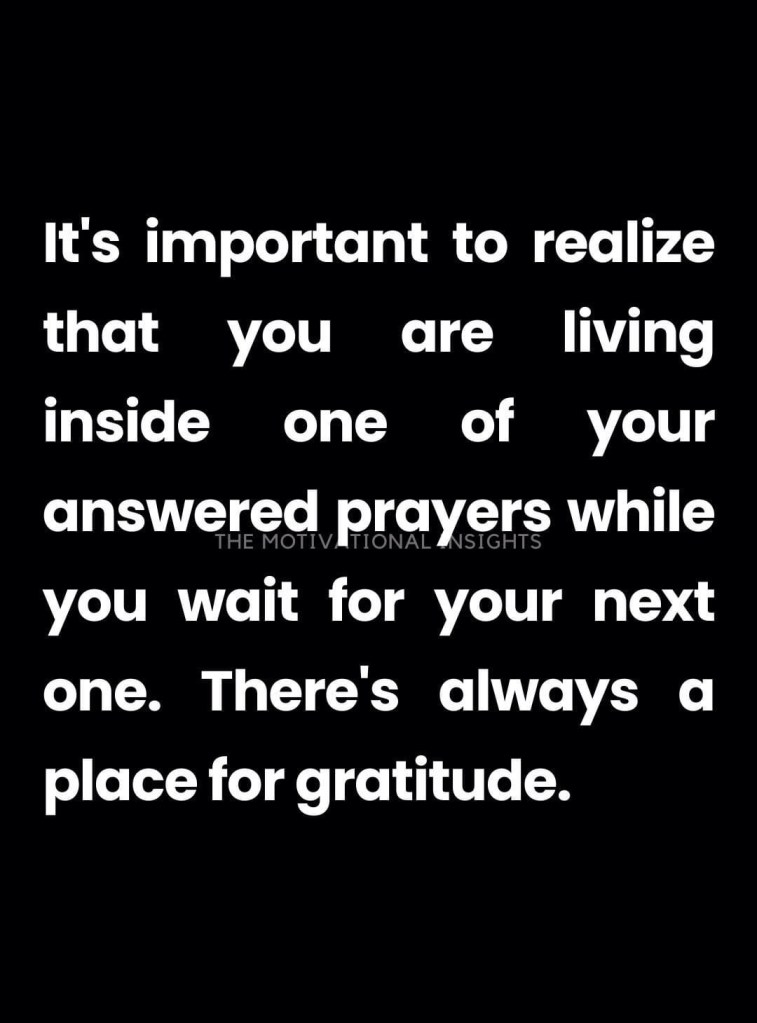
Is it possible that God can speak through an aptly-timed social media meme? If I had to answer that question right now, I’d lean toward yes. I seem to get memes like this one that remind me that gratitude is always appropriate even in seasons of anxiety.
There’s always something to be thankful for. I am most definitely living inside of multiple answered prayers (both from me and from others) while I am waiting on other prayers to be answered. One obvious example that practically stares at me every day is Clifford the Big Red Jeep, the car I prayed for.
So basically while I pray for God’s provision for a job, I am literally driving the answer to a previous prayer. After that, you’d think I’d be all done with questioning God’s timing or wondering if He will really provide this time, but I still do. I identify with those Israelites wandering in the desert who seem to have short-term memories when it comes to the blessings of God and long-term memories when it comes to every hardship.
Even the basic gifts like waking up every morning and having reasonably good health are answered prayers. So is having good eyesight and hearing. So is being able to walk anywhere I want. I am living in all these answered prayers that I routinely take for granted.
God, forgive my doubt and my entitlement. Thank you that you are way more patient with me than I am with you. Even as I pray for You to grant my petitions, grant me to see with Your eyes so that I can trust Your heart and Your timing and not lose heart. Amen.
“A saint is not someone who is good but who experiences the goodness of God” (Brennan Manning).
Has it really been 14 years? It doesn’t seem like it’s been that long, but this is my 5101st blog post.
I understand more as I get older how time really does fly by. These days, I turn around and it’s 2 months away from fall. The next time I turn around, it will be Christmas (hopefully without the bugs and humidity).
I am humbled and in awe that God has allowed me to write these for all these years. I honestly can’t think of too many other things that I’ve done for that long (with the obvious examples of living and breathing). I hope to communicate this in the right way, but there is a kind of pride in being disciplined to write something down every day for 14 years.
But without people to read it, these words don’t mean much. Well, for me they are a kind of therapy, so I guess in that way even if it’s just me reading my own words it’s worth it. But I can’t get over how other people still want to read what I write. That blows my mind and makes me want to keep going.
Here’s to another 14 years (and beyond hopefully). I only know they will continue to get better the more I see and understand the goodness of God on display in my life and in the lives of those around me. God is good.
I was not expecting to not have a job at this point. I honestly wasn’t thinking that far ahead. I loved where I worked. I didn’t always love everything about my job, but I was grateful to be employed (even if it felt like I was driving halfway around the world sometimes).
But here we are. This is one of those seasons that I won’t be able to fully appreciate until it has passed. It reminds me of those disciples who never fully grasped who Jesus was and what He was about until after He departed from them back into heaven.
I’m not one of those people who believe that God’s main goal is to make me wealthy and happy with no struggles or issues in my life. I do think that suffering and hardships are a part of God’s plan that He uses to refine me and conform me into the image of Jesus.
I do believe that in this case my job ended so that something better could begin. Something where I get to utilizes my gifts and passions. Something where I leave work every day feeling I’ve made a difference for the Kingdom. Somewhere where I don’t have to drive as far to get to.
I’m also reminded of the verse about how God’s ways are not mine, nor are God’s thoughts like mine. My mind is very finite (and sometimes more closed than I would like to admit), but God’s is infinite and omniscient. I read today that God chooses for me what I would choose if I knew what He knew and saw the big picture the way He does.
Right now, I want that next thing to be tomorrow. I want it right now. In my own finite humanness, I am sensing my own anxiety and impatience. But I never want to get ahead of God or presume to receive His gifts before I’m ready to receive them or mature enough to handle the responsibilities that come with them.
My prayer is still that of Jehoshaphat of ancient times: “I don’t know what to do, but my eyes are on You.”
God, I trust You with my life, my hopes, my career, and my future. I am still in good Hands.
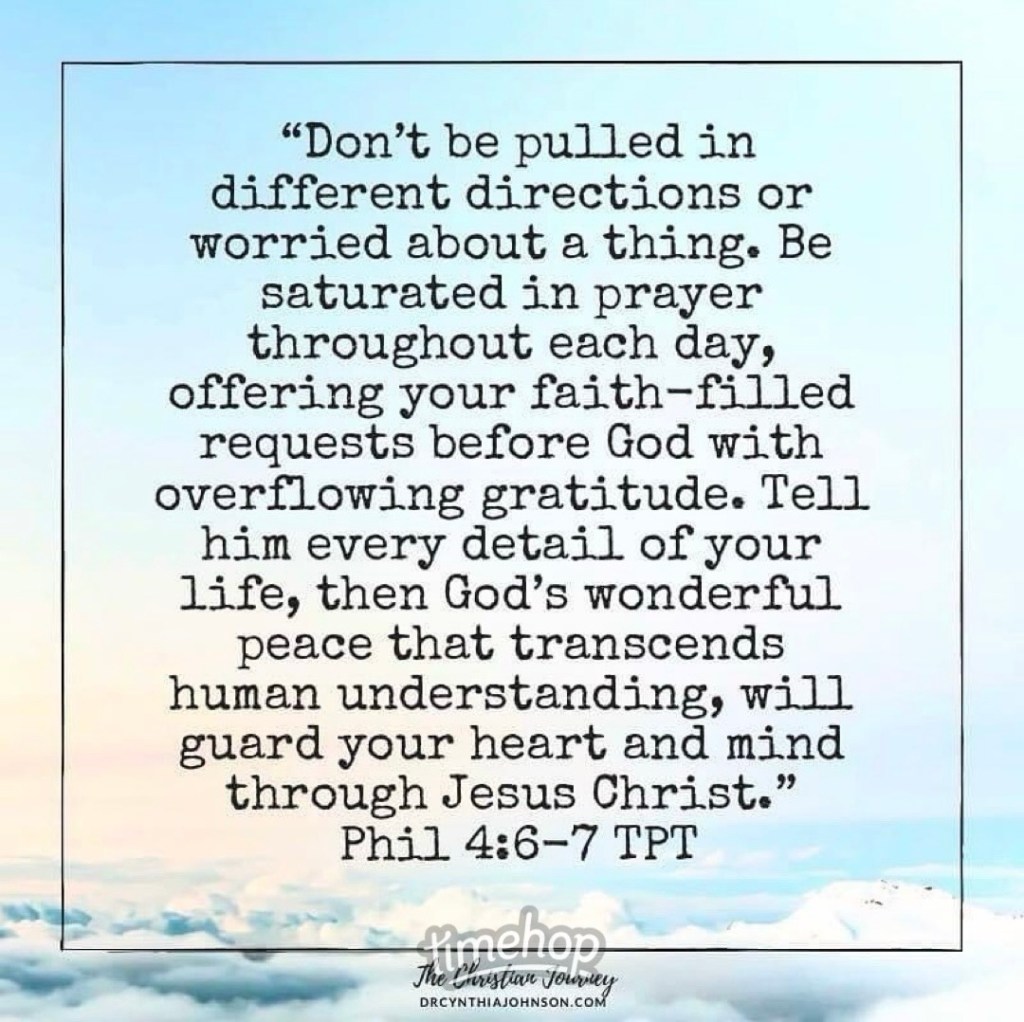
As I heard Sunday, sometimes it’s best to let the Word do the work. With that said, I have very little to add to this Scriptural admonition other than I’d be wise myself to follow it and not just post it. Don’t worry about anything but pray about anything. As I heard it said, be a prayer worrier not a panicked worrier.
That’s not how I would have done it. If I’d had my way, probably Paul would have gotten his just desserts. He’d have received the same as he gave — that’s how Hollywood typically plays it. I can see his death scene playing out like Hans Gruber falling from the top of the Nakatomi Tower at the end of Die Hard.
But thankfully God’s ways are not like my ways. That same Paul went from being enemy #1 to Jesus and the faith to being the biggest champion of Christianity and spreading the gospel. God turned the bad guy into one of the good guys, as we’d say in old Hollywood.
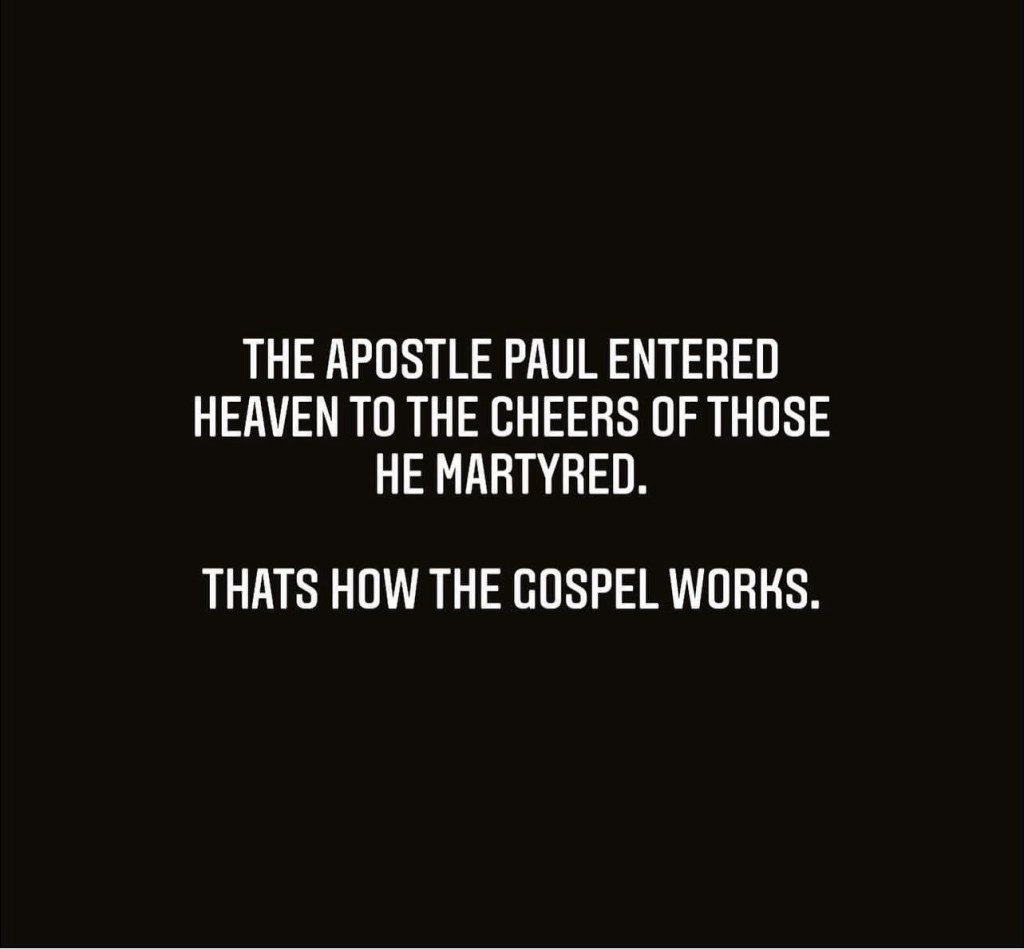
That’s how the gospel works. The very worst of humanity can be transformed into a saint. And by saint, I don’t mean someone who is a notch above the rest of us and super holy. As I’ve heard it said, a saint isn’t someone who is good but who has seen and embraced the goodness of God.
It’s a bit of an ironic twist that the man who formerly persecuted the Church and made so many martyrs ended up himself becoming a martyr for the very faith he once tried to destroy. Again, that’s how the gospel works. That is something only explainable by the mercy of God.
That’s why I think a lot of the current political rhetoric is foolishness. Neither Biden or Trump are beyond the grace of God. That’s why I pray for the salvation of both every single night. Who knows? What an amazing testimony either one (or both) could have. And yes, I also pray for the salvation of Kamala Harris as well.
Who knows what any of us could be apart from the grace of God? Who knows that any of us could descend further than any Hitler or Stalin or Bin Laden? All of us are capable of any kind of evil apart from God’s continuous mercy.
I know that I’m not a believer because I was so very smart to choose Christ. I know it’s not because I was better than anyone else in the world. It’s only because God chose me first and set His love on me that I could even choose Jesus in the first place.
Billy Joel said, ““If I ever reach heaven I expect to find three wonders there: first, to meet some I had not thought to see there; second, to miss some I had expected to see there; and third, the greatest wonder of all, to find myself there.”
I think that any of us who end up in heaven will spend eternity amazed that we somehow made it in despite all our unworthiness and all the rest of that eternity will be our endless gratitude and praise for being there and for Jesus who got us there.
Lately, I’ve been getting a triple dose of The Chosen. I’m watching the latest season on the app, reading the books as they hit the shelves, and listening to the novels based on earlier seasons on Audible.
One thing I notice is how many times the disciples and other followers of Jesus will recite a prayer of thanksgiving that starts “Blessed are You, Lord our God, King of the Universe . . .”
Today, I was reading in my devotional, 52 Hebrew Words Every Christian Should Know, and the word for today just so happens to be berakah. It’s the Hebrew word for blessing. The Jews of biblical times practiced berakah blessings throughout the day. Those are basically short prayers of thanksgiving for things like waking up, watching the sunrise, meals, and various other things. They even have a prayer for going to the bathroom.
In 1 Thessalonians, the Apostle Paul instructs believers to “pray without ceasing (1 Thessalonians 5:17). I don’t think he meant to walk around all day every day with your eyes closed in prayer. There’d be a lot more accidents — especially traffic accidents.
I do think that Paul wanted us to keep a spirit of prayer and an open dialogue with the King of the Universe. One way is to recite these berakah blessings throughout the day. I’m sure there are prescribed prayers you can follow. As a Gentile believer grafted in, I can’t speak with authority on this, but I think it’s okay to make up your own prayers of thanksgiving and blessing.
I like the idea of starting each prayer with “Blessed are You, Lord our God, King of the Universe” because it feels connected to the people of God of old. It’s also a healthy reminder that there is a King and it’s not me. I’m not the one in charge who’s supposed to figure out every detail. That’s God’s job. My job for today is to follow Jesus and the rest will take care of itself.
I have to give credit to the character of Matthew from The Chosen (and to the incredible screenwriters and director). It’s such a great line that fits in with the gospel accounts and message. Follow Jesus, seek the Kingdom of God, and give thanks. That’s my job.





 Ragamuffingospelfan's Blog